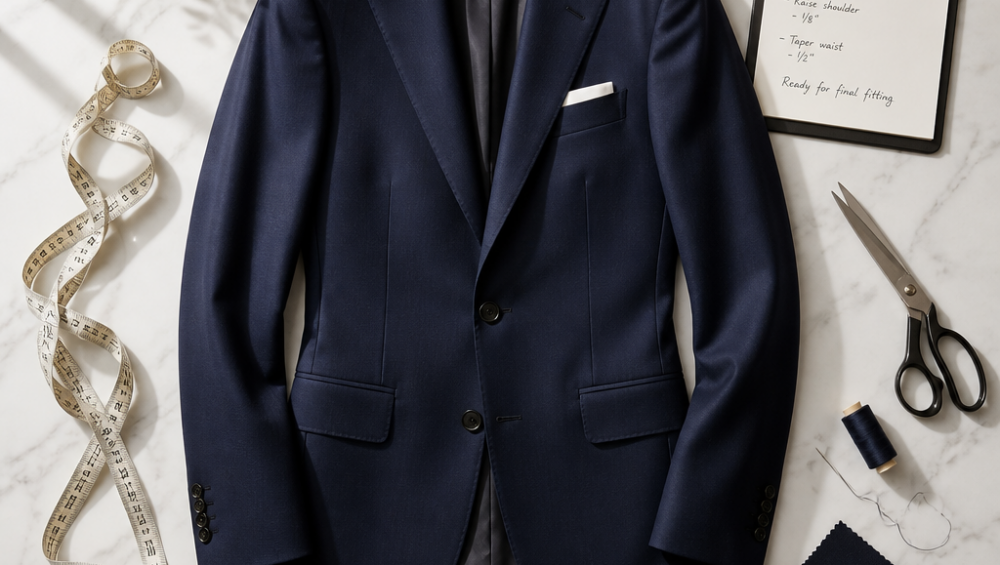
A uniform that doesn’t fit isn’t just uncomfortable. It signals something to every customer who walks through your door. Baggy sleeves, dragging hems, and gaping waistbands send the message that details don’t matter here. Uniform alterations are the practical fix that separates a team that merely wears matching clothes from one that looks genuinely polished and put-together. Whether you run a restaurant, a hotel, a security firm, or a corporate office, the fit of your team’s workwear shapes how customers perceive your entire operation from the first glance. Getting it right is not a luxury. It’s a basic standard of professional presentation.
Table of Contents
- Quick Takeaways
- Why Fit Matters More Than the Uniform Itself
- The Real Cost of Ill-Fitting Uniforms
- Most Common Uniform Alterations Explained
- Alteration Approaches Compared
- Professional Uniform Tailoring for Different Industries
- How to Set Up a Uniform Alteration Program for Your Team
- Frequently Asked Questions
- References
Quick Takeaways
| Key Insight | Explanation |
|---|---|
| Fit affects brand perception instantly | Customers form a judgment about your business within seconds of seeing your staff. A well-fitted uniform projects professionalism; a sloppy one undermines it regardless of logo quality. |
| Standard sizing rarely works for every body | Off-the-rack uniforms are cut to fit a statistical average. Most employees fall outside that average in at least one key measurement, making targeted alterations essential. |
| The most impactful alterations are hem, sleeve, and waist | These three adjustments resolve the majority of fit complaints and deliver the biggest visible improvement for the least cost and turnaround time. |
| Proper fit improves employee comfort and focus | Staff who are constantly adjusting ill-fitting garments are distracted. Clothes that move with the body let employees concentrate on the job, not their clothing. |
| Alterations extend the life of the garment | A well-altered uniform experiences less stress on seams and fabric. Reinforcing high-wear points during the alteration process significantly reduces replacement frequency. |
| Rush and same-day services make bulk alterations practical | Businesses that need to onboard new staff quickly cannot wait weeks. Same-day alteration services ensure employees are properly fitted before their first shift. |
| A guarantee removes the risk for businesses | A professional alteration service that backs its work with a fit guarantee means any issue is resolved at no extra cost, protecting your investment. |
Why Fit Matters More Than the Uniform Itself
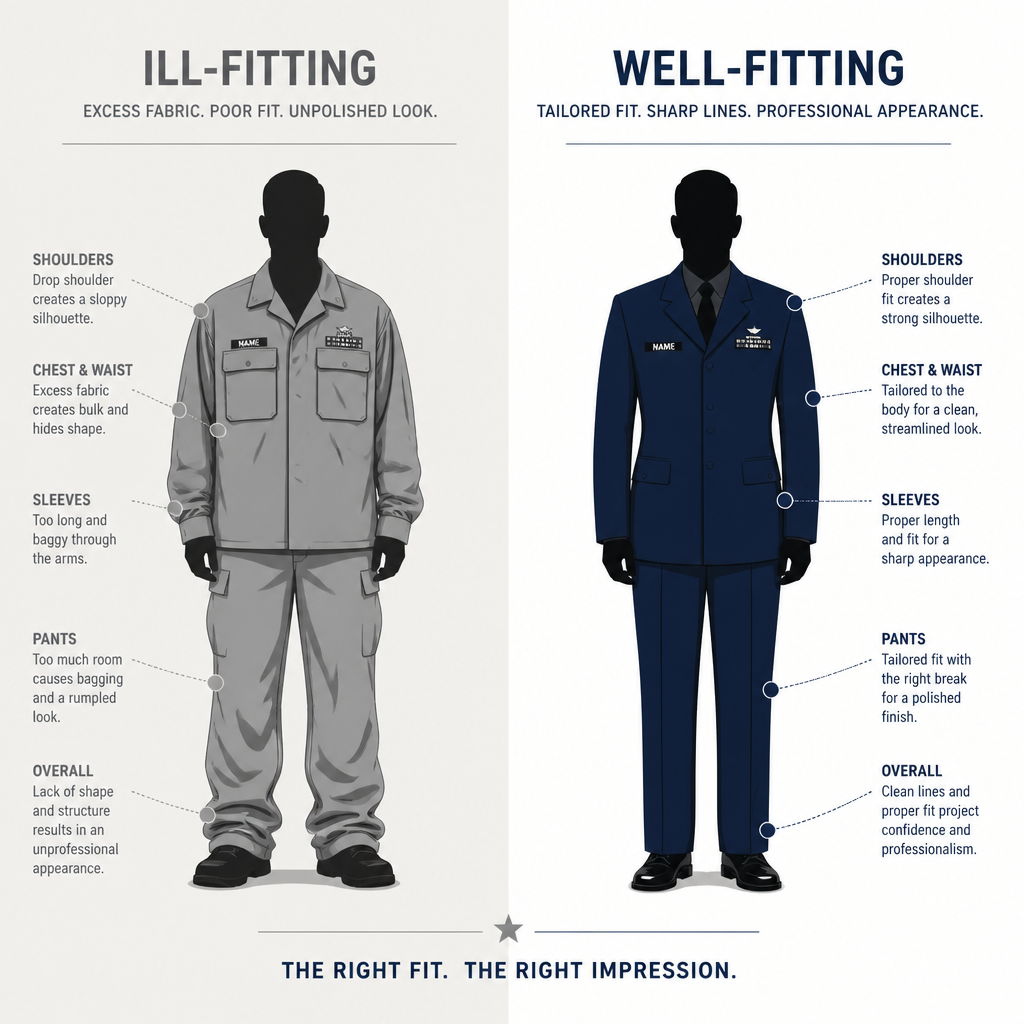
You can spend a significant budget on high-quality uniform fabric, premium embroidery, and well-designed branding, and still have your team look unprofessional if the garments don’t fit. Proper fit is the foundation that makes everything else work. The logo looks better on a jacket that sits correctly on the shoulders. The brand color reads more confidently when the shirt isn’t pulling at the buttons or bunching at the back.
Research cited by uniform industry analysts points to a measurable link between well-fitting workwear and employee happiness at work, with a well-made, well-fitting uniform contributing to higher morale that, in turn, supports productivity. This is not a soft benefit. Staff who feel comfortable and look sharp interact with customers differently. There is more confidence in the approach, more ease in movement, and less self-consciousness that customers pick up on.
Uniforms communicate before words do. The way they fit, coordinate, and represent company values directly impacts brand trust, customer confidence, and employee morale.
The psychology here is straightforward. When employees wear something that fits well, they feel like they belong to a professional team. When they wear something that clearly doesn’t fit, that daily reminder chips away at their sense of being valued. Professional uniform tailoring is one of the most direct signals a business sends to its own staff: we invested in you, and we expect you to show up at your best.
The Real Cost of Ill-Fitting Uniforms
The cost of skipping alterations shows up in ways that are easy to dismiss until you tally them up. The most immediate cost is brand perception. Customers encountering staff whose uniforms look sloppy, regardless of how friendly or competent those staff are, experience a subtle but real drop in confidence about the business they’re dealing with. Studies on visual identity confirm that customers tend to judge the entire organization based on the appearance of the employees they interact with, meaning a single ill-fitting uniform can color how someone perceives your brand overall.
There is also a hidden cost in garment turnover. Uniforms that are too tight strain seams and wear through fabric faster. Uniforms that are too loose catch on equipment, drag on floors, and accumulate damage at contact points. Neither lasts as long as a properly fitted garment. The alteration investment pays back in reduced replacement frequency, which matters significantly when you’re managing workwear for a team of any size.
The Discomfort-Productivity Connection
An uncomfortable uniform is a constant distraction. Staff who are pulling at a waistband that gaps, pushing up sleeves that are too long, or dealing with trouser hems that drag underfoot are not fully focused on their work. Prioritizing customized fits for each employee creates a cohesive and comfortable uniform program that supports the well-being and productivity of the workforce, not just its appearance.
This becomes even more relevant in physically demanding roles. A warehouse worker, healthcare professional, or hospitality staff member needs to move freely all day. Restricted shoulder seams or a waist that cuts in after a four-hour shift are genuine ergonomic problems, not just aesthetic ones. Corporate uniform fit should always account for the physical demands of the role, not just how the garment looks when standing still.
Pro tip: Before ordering a new batch of uniforms for your team, have one sample garment altered to fit a representative employee first. Use that as your benchmark for what “properly fitted” looks like in your specific uniform style, then align bulk orders and individual alterations to that standard.
Most Common Uniform Alterations Explained
Not all alterations are equal in impact or complexity. Knowing which adjustments solve which problems helps you prioritize when budgeting for a team alteration project.
Hemming Pants and Skirts
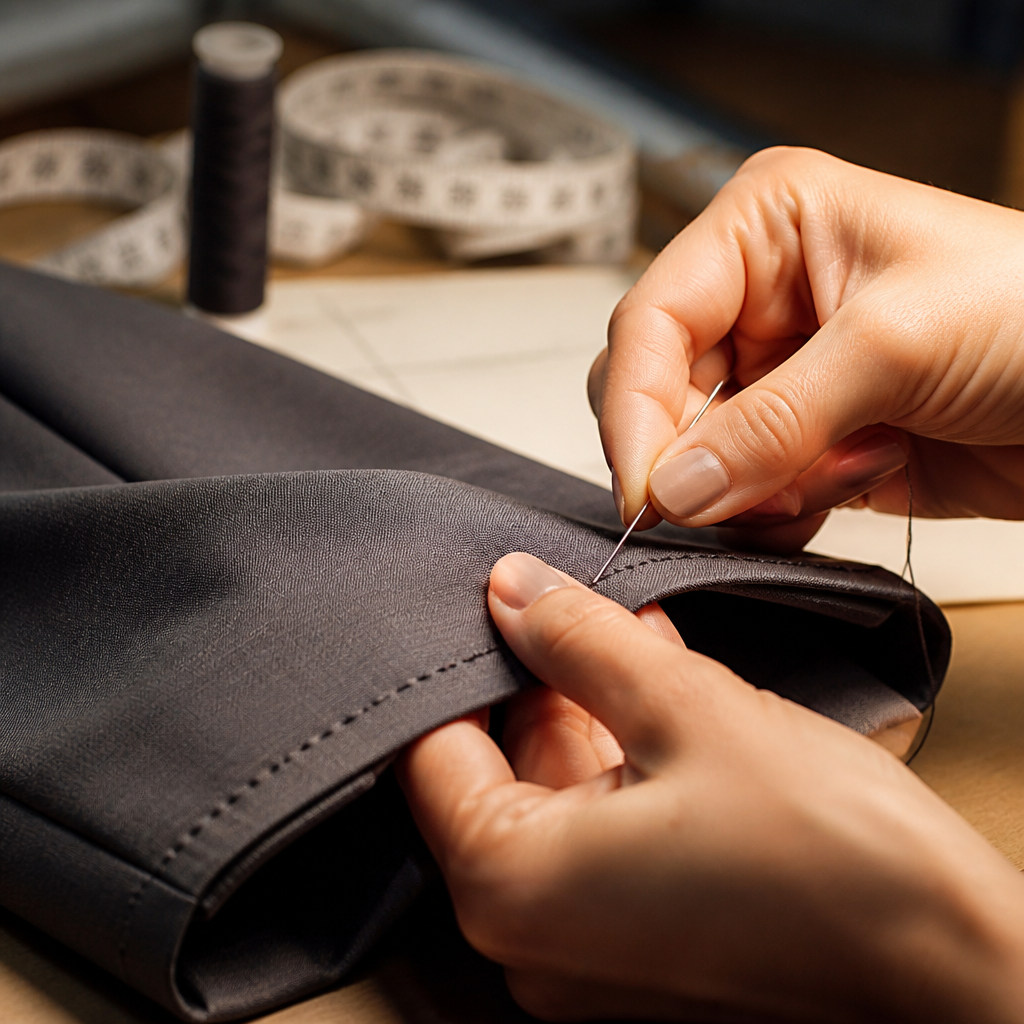
Pant hems are the single most common uniform alteration, and for good reason. An incorrect hem length looks untidy, creates a tripping hazard, and causes the trouser fabric to fray at the bottom far faster than it should. The correct hem creates a clean line that breaks at the shoe, looks intentional, and survives daily wear. A skilled tailor leaves extra fabric in the hem allowance so the garment can be let down later if needed, which is particularly useful for younger employees or for repurposing uniforms across staff members over time.
Sleeve Length Adjustments
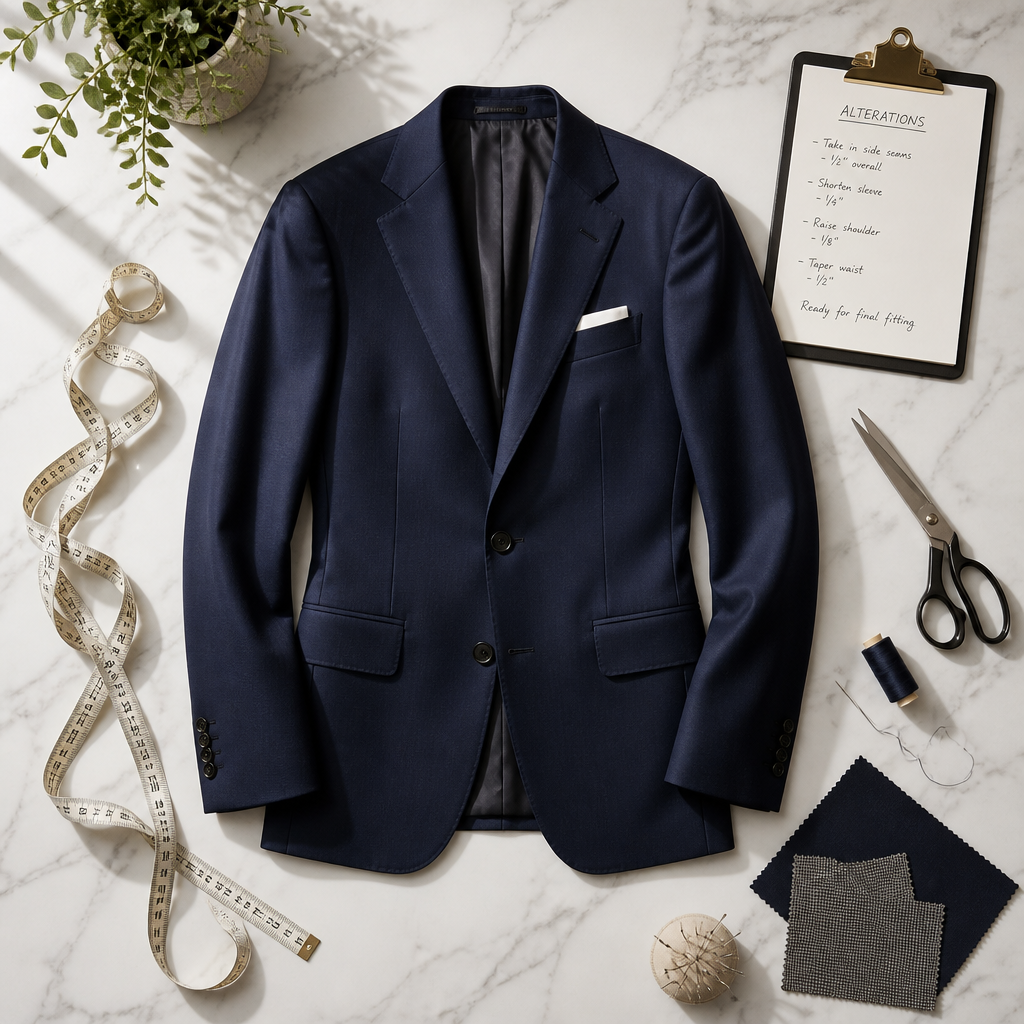
Sleeves that are too long are one of the most visually obvious fit problems in a uniform. On a blazer or jacket, the sleeve should end at the wrist to reveal a small amount of shirt cuff. On a shirt, it should hit cleanly at the wrist bone. Suit jacket sleeves are typically shortened from the cuff to preserve the armhole fit, while shirt sleeves can often be adjusted at the cuff itself. Getting this right immediately elevates the overall look of the uniform without changing any other element.
Waist and Torso Adjustments
Waist adjustments are among the most transformative alterations available. A jacket or shirt that pulls across the chest or hangs loosely at the sides creates a silhouette that looks like borrowed clothing. Taking in a waist involves reshaping the garment’s side seams to follow the natural body line. Most garments can be taken in by two to four inches without compromising their structure. These modifications can also be reversed within reason, which matters for businesses that manage shared or rotated uniform stock.
Shoulder Seam Corrections
Shoulder fit is the hardest alteration to execute and the most important to get right first. A jacket or blazer where the shoulder seam sits off the natural shoulder point looks wrong no matter what else has been adjusted. For team uniforms, this usually means sourcing garments in the correct shoulder width for each employee and then handling all other fit issues through the more straightforward torso, sleeve, and hem alterations.
Alteration Approaches Compared
Businesses have a few practical options for handling uniform alterations. Each comes with different tradeoffs in quality, speed, and cost. The table below gives an honest comparison.
| Approach | Best For | Key Limitations |
|---|---|---|
| Professional alteration service (walk-in) | Teams of any size needing reliable, consistent results with guaranteed workmanship. Same-day and rush turnaround available for onboarding new staff quickly. | Requires employees to visit a location, though many services offer flexible scheduling and no-appointment walk-ins. |
| In-house seamstress or tailor on retainer | Very large organizations with constant uniform turnover and a dedicated HR or facilities team to coordinate fittings. | High fixed cost, inconsistent quality if the hire lacks breadth of alteration experience. Difficult to scale up or down. |
| DIY or staff self-alterations | Minor emergency fixes only, such as a loose button or a very minor hem tack before a shift. | Produces uneven results that are often visible in professional settings. Can void fabric warranties and damage the garment beyond repair. |
For most businesses, a professional alteration service with transparent pricing, walk-in availability, and a workmanship guarantee is the most practical and consistent option. The ability to bring in multiple employees without scheduling weeks in advance, and to receive a clear price before any work begins, removes the friction that causes businesses to keep putting off the alteration step.
Pro tip: When onboarding new employees, build a visit to a professional alteration service into the standard onboarding checklist alongside the uniform issue. Treating fit as a non-negotiable step, rather than an optional upgrade, ensures every team member starts on the right foot from day one.
Professional Uniform Tailoring for Different Industries
The specific alteration priorities shift depending on the industry. A one-size approach to uniform tailoring ignores the real differences in what each workplace demands from its workwear.
Hospitality and Food Service
In restaurants, hotels, and event venues, uniforms are worn for long, physically active shifts. The alteration priorities here are freedom of movement and a clean, consistent silhouette at all times. Trouser hems must be at the correct length because staff are moving constantly, often in tight spaces. Shirt and apron fit matters because wrinkled, bunched fabric reads as sloppy to guests even when the underlying quality is good. Waist and torso adjustments that prevent shirts from untucking during active service are particularly valuable in this context.
Healthcare and Clinical Settings
Scrubs and clinical uniforms need to fit cleanly without excess fabric that could catch on equipment or compromise hygiene protocols. In these environments, sleeve length and trouser hem are the most frequent concerns, combined with ensuring that the garment allows a full range of motion without pulling at the back or shoulders. Comfort over an extended shift is not optional. It directly affects focus and physical wellbeing.
Corporate and Client-Facing Roles
For staff in client-facing corporate roles, such as front-desk personnel, sales teams, and client services, the uniform is a direct extension of the company’s brand identity. Here, professional uniform tailoring must address the full silhouette: jacket fit at the shoulder and chest, trouser break at the shoe, and sleeve length on both jacket and shirt. A single misaligned element in a polished corporate uniform stands out in a way it might not in a more casual setting. The standard here needs to match the standards customers expect from the brand.
Security and Uniformed Services
Security uniforms and other uniformed service roles carry additional requirements. These garments must meet specific appearance standards while also allowing for physical movement, equipment carry, and extended wear. Trouser hems, shirt tucks, and jacket fit all contribute to the overall impression of authority and professionalism that these roles depend on. Reinforcing stress points such as pocket seams and knee areas during the alteration process also helps these heavily worn garments last significantly longer.
Stitch It handles all of these uniform types with the same commitment to fit and finish. Whether you need a uniform alteration for a single new hire or a full team update, the process is designed to be straightforward, transparent on price, and backed by a 30-Day Fit Guarantee.
How to Set Up a Uniform Alteration Program for Your Team
Most businesses that struggle with uniform fit don’t have a systemic problem. They have a process problem. Alterations don’t happen consistently because there’s no clear owner, no budget line, and no established step where it happens. Fixing this is simpler than it sounds.
The first step is to acknowledge that off-the-rack sizing will never produce a perfect fit for every employee. Building alterations into the uniform budget from the start, rather than treating them as a discretionary extra, eliminates the hesitation. Transparent, upfront pricing from a professional service makes this straightforward because you can estimate costs accurately before ordering.
The second step is to designate a single point of contact for uniform management. This person handles the alteration scheduling, tracks which employees have been fitted, and manages replacements as staff change. Without a clear owner, uniform fit degrades over time as new hires receive uniforms that haven’t been altered because no one made it a priority.
The third step is to use a service with genuine walk-in availability and fast turnaround. A program that requires appointments booked weeks in advance will break down as soon as the business gets busy. Same-day and rush services for urgent situations, combined with standard quick turnaround for routine alterations, keeps the program running smoothly regardless of staffing changes.
For businesses that also need to keep uniforms clean and pressed to the same standard as their fit, pairing the alteration service with a professional dry cleaning service from the same provider creates a consistent care routine without managing multiple vendors.
Frequently Asked Questions
How much do uniform alterations typically cost?
Costs vary depending on the type and number of adjustments needed. A standard pant hem, which is the most common uniform alteration, starts at $14.89 at Stitch It. More complex adjustments such as waist restructuring, shoulder corrections, or multiple combined alterations will be priced higher. The key is working with a service that provides a transparent, upfront quote before any work begins so there are no surprises on the invoice.
Can alterations be done on all types of uniform fabrics?
Professional tailors work with a wide range of fabrics including polyester blends, cotton twill, stretch fabrics, and heavier duty materials used in security and industrial uniforms. Specialist techniques are required for each fabric type to avoid puckering, distortion, or thread mismatch. This is one of the clearest reasons to use a professional service rather than attempting alterations in-house. The wrong technique on a synthetic blend can damage the garment permanently.
How long do uniform alterations take?
Standard alterations such as hemming or sleeve adjustments can often be completed same-day at a professional alteration service that offers walk-in appointments. More complex work involving multiple adjustments or structured garments may take one to a few days. Rush services are available at most professional alteration locations for situations where a new employee needs their uniform ready before their first shift.
Is it worth altering uniforms for temporary or seasonal staff?
Yes, particularly for customer-facing roles. The brand perception impact of an ill-fitting uniform is the same whether the employee wearing it has been with the company for five years or five weeks. For seasonal staff in hospitality, retail, or events, a quick hem and sleeve adjustment takes minimal time and cost but significantly improves the overall team presentation during a period when customer volume is often at its peak.
What is a 30-Day Fit Guarantee and why does it matter for businesses?
A 30-Day Fit Guarantee means that if the alteration doesn’t deliver the correct fit, the service provider will fix it at no additional charge within thirty days of the original work. For businesses managing uniform alterations across a team, this removes the financial risk of any adjustment that misses the mark. It also signals that the provider stands behind the quality of their work, which is the foundation of a reliable ongoing business relationship.
How do I manage alterations when staff sizes change over time?
The most practical approach is to build periodic uniform reviews into your HR calendar, typically aligned with annual reviews or at the start of a new season. At these points, employees can bring in garments that no longer fit well for adjustment. Uniforms with sufficient seam allowance can often be taken in or let out by a professional tailor, extending the garment’s useful life without a full replacement. Keeping records of each employee’s alteration history also speeds up the process for repeat adjustments.
Can a professional alteration service handle large team orders efficiently?
Yes. A well-established alteration service with multiple locations and walk-in availability can manage team-scale projects effectively. The key from the business side is coordinating employee visits in batches, providing clear garment labeling so altered items are returned to the right person, and giving the service advance notice when you’re bringing in a large group. Same-day and rush turnaround options mean that even urgent bulk needs can be accommodated without derailing onboarding timelines.
If you’ve recently updated your team’s workwear or navigated a uniform alteration project, share what worked or what you’d do differently. Your experience could help other businesses get their teams looking and feeling their best.
We would love your feedback and any insights you would share with others. What perspective would you add?
References
- How well-designed company uniforms boost employee productivity and morale
- Why customized uniform fit supports employee well-being and performance
- How uniform fit and visual consistency affect brand trust and customer confidence
- Five uniform attributes that improve employee performance and comfort
- How uniform design decisions shape employee morale and workplace culture