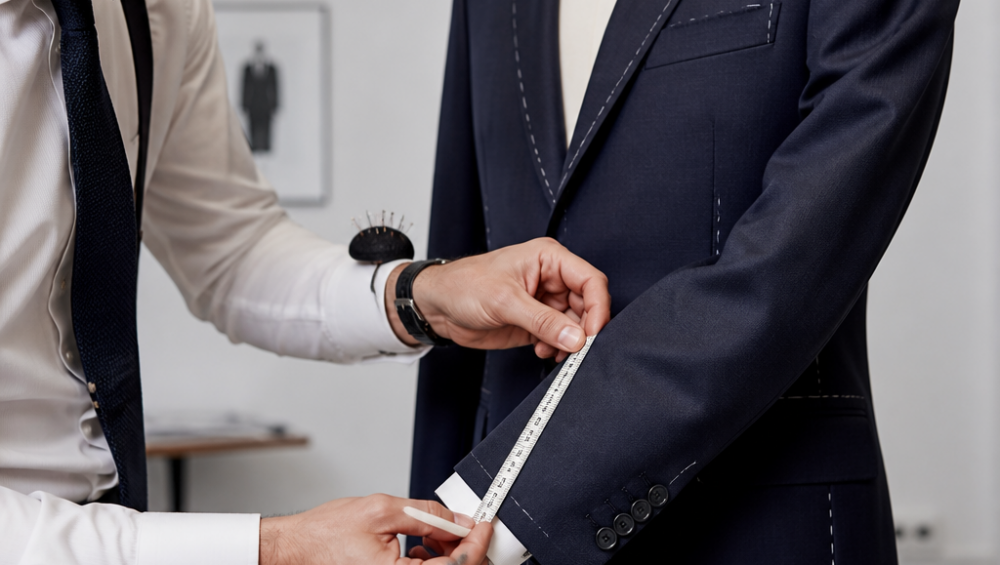
The sleeve length on your jacket is arguably the single detail that separates a suit that looks “fine” from one that makes people stop and notice. Off-the-rack suits are cut for a statistical average, and your arms almost certainly are not average. A jacket sleeve alteration is not a luxury or an afterthought – it is the most visible fix in suit tailoring, and skipping it is the reason so many men look like they borrowed their jacket from someone else. If you have ever caught a glimpse of your reflection and felt something was slightly off, the sleeves are the first place to look.
Table of Contents
- Quick Takeaways
- Why Sleeve Length Defines Suit Fit
- How to Measure Correct Jacket Sleeve Length
- Types of Jacket Sleeve Alterations
- Working Buttonholes: What Every Suit Owner Should Know
- Sleeve Alteration Comparison: Cuff vs. Shoulder
- Formalwear and Bridal Jacket Sleeve Considerations
- Frequently Asked Questions
- References
Quick Takeaways
| Key Insight | Explanation |
|---|---|
| The standard cuff exposure rule | Your jacket sleeve should end just above the wrist bone, exposing roughly 1/4 to 1/2 inch of shirt cuff when your arms hang at your sides. |
| Working buttonholes change everything | If your jacket has functional (surgeon’s cuff) buttonholes, shortening from the cuff is extremely difficult. The alteration usually must come from the shoulder instead, which is a more complex and costly job. |
| Shortening is almost always easier than lengthening | Lengthening a sleeve depends entirely on how much hidden fabric allowance exists inside the existing seam. Many jackets have little to none. |
| Sleeve pitch matters as much as length | If the sleeve twists forward or pulls at the shoulder when you raise your arm, the issue is pitch, not just length. A skilled tailor addresses both together. |
| Non-functioning buttons are actually an advantage | Decorative sleeve buttons can be repositioned during alteration, giving the tailor far more flexibility to achieve the right length. |
| Shirt sleeve length must be set first | Altering a jacket sleeve without first confirming your dress shirt sleeve length gives you a moving target. Fix the shirt, then address the jacket. |
| Body composition changes affect sleeve position | A suit altered years ago may need re-checking if your chest or shoulder fit has shifted, as the whole sleeve can ride out of position when the upper jacket shifts. |
Why Sleeve Length Defines Suit Fit
Most people assess suit fit starting with the shoulders, then the chest. That is sensible, because those areas are harder and more expensive to fix. But once you are past the fitting stage and standing in a finished suit, the eye goes straight to the wrists. The cuff relationship between your shirt and your jacket is a dynamic detail – it moves when you shake hands, gesture, or reach for a glass, and those small moments are exactly when people form an impression.
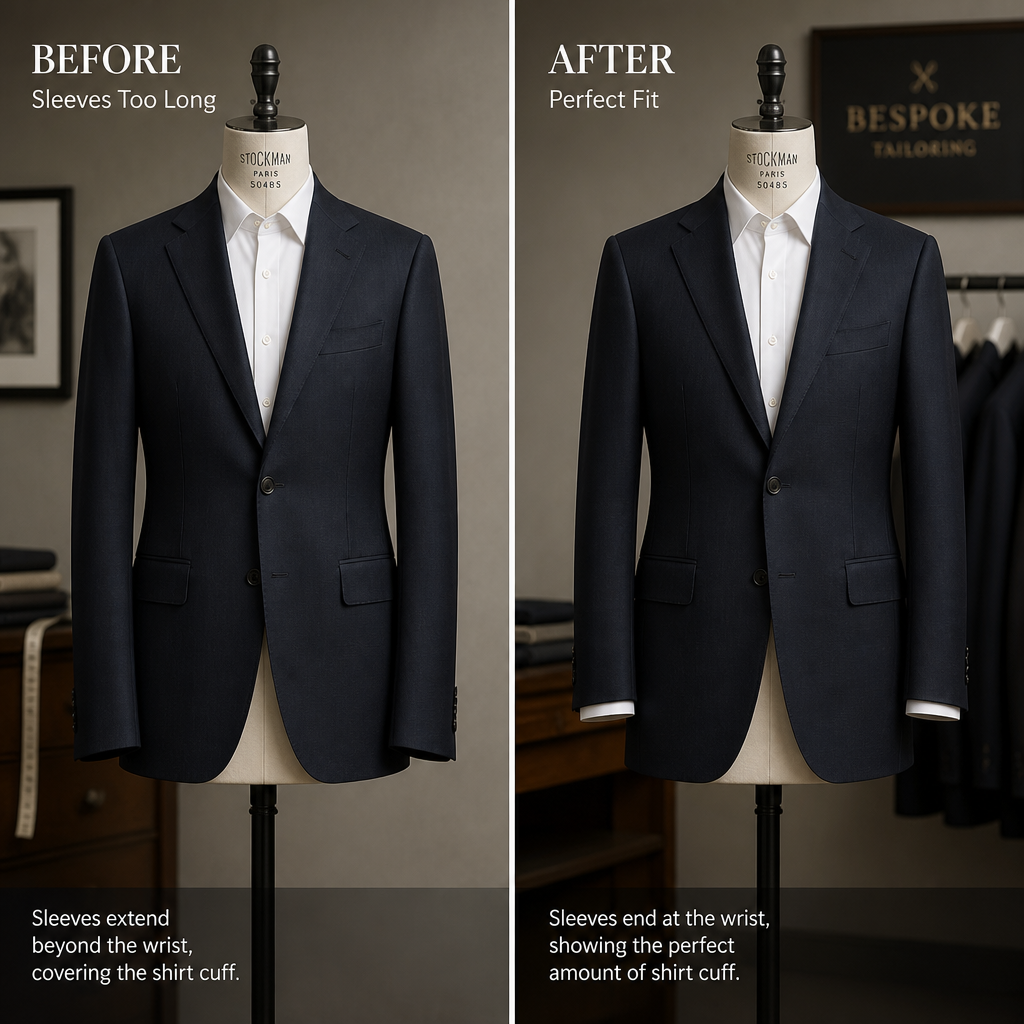
A sleeve that is too long swallows your shirt cuff entirely and makes the jacket look as though it belongs on a larger frame. A sleeve that is too short exposes too much shirt, which reads as ill-fitting rather than fashion-forward. Getting this proportion right through a proper jacket sleeve alteration is not about vanity. It is about wearing clothes that look like they were made for you, because functionally, they now are.
Sleeve length is the detail a stranger notices in the first three seconds. Everything else requires them to look twice.
The other reason sleeve length matters so much is proportion. When the sleeve hits the correct point on your wrist, it anchors the entire vertical line of the jacket. It frames your hands, completes the shoulder-to-cuff silhouette, and makes the jacket appear longer or shorter in a flattering way without actually changing the body length at all.
How to Measure Correct Jacket Sleeve Length
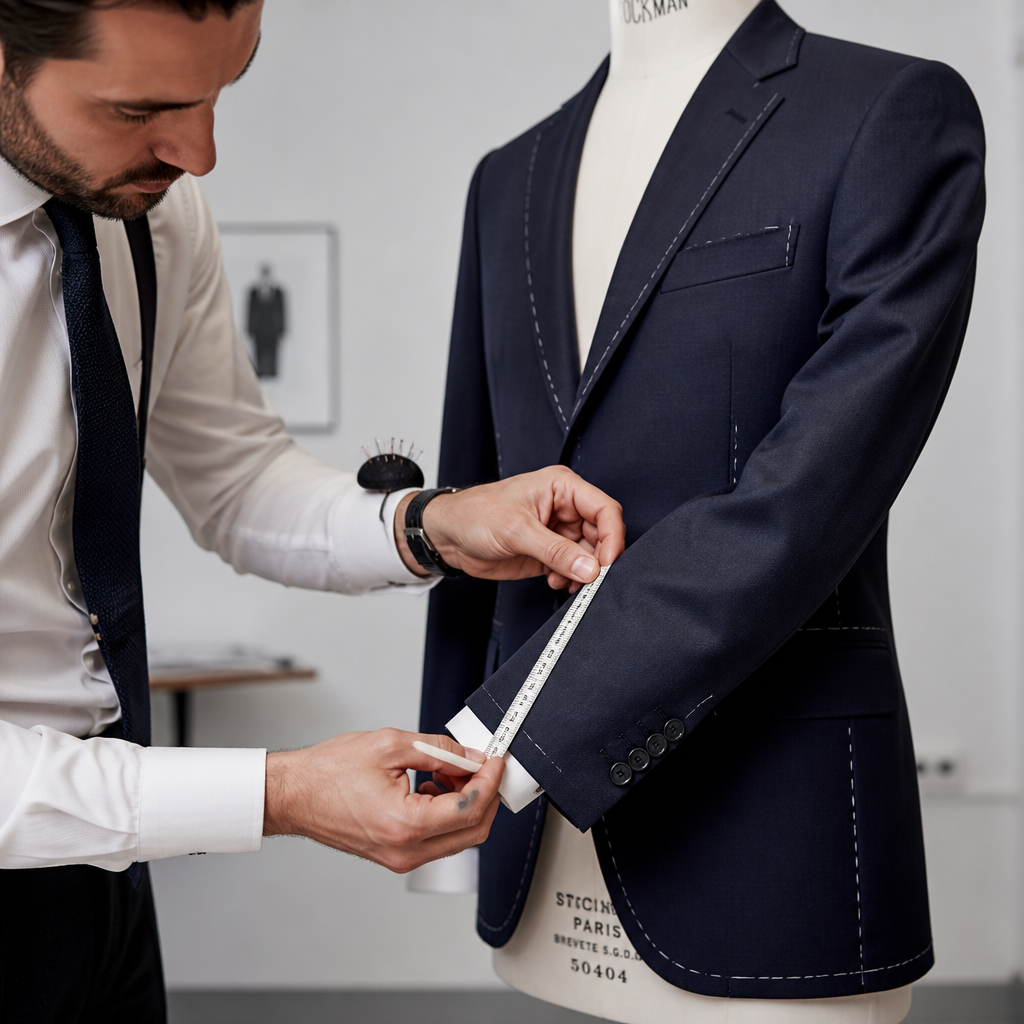
The benchmark is straightforward: the jacket sleeve should end just above your wrist bone, and when your arms rest at your sides, between 1/4 and 1/2 inch of shirt cuff should be visible below the jacket cuff. That small band of white or dress-shirt fabric is not accidental – it is intentional, and it signals that both garments fit correctly.
To measure accurately, use a flexible tape. Start at the center back of the neck, go across to the shoulder seam, and then down the outside of the arm to the wrist bone with a slight bend in the elbow. A straight arm overstates length; a natural bend reflects how the arm actually hangs. Measuring over a thick sweater or heavy shirt will also throw the number off, so measure over the dress shirt you intend to wear with the suit.
The shirt sleeve must be correct first
A mistake many people make is bringing in a jacket for sleeve alteration without first confirming that their dress shirt sleeves are fitted properly. If the shirt sleeve is too long, it will bunch at the wrist and make the jacket look short even after a precise alteration. If the shirt sleeve is too short, no amount of jacket adjustment will create that clean cuff reveal. The shirt is the foundation. Set it first, then bring the jacket into alignment with it.
Pro tip: When going in for a jacket sleeve fitting, wear the dress shirt you plan to pair with that jacket. The tailor needs to see both garments together to set the right length. A generic measurement taken over a T-shirt will not give you an accurate result.
Style and context shift the target slightly
The traditional rule calls for about 1/2 inch of shirt cuff showing. In a conservative professional context – finance, law, formal events – staying at the lower end of that range, around 1/4 inch, is appropriate. For a more fashion-forward look or a less formal occasion, up to 3/4 inch of shirt cuff can work well. The sleeve should never extend past the heel of your palm regardless of personal style preference, and it should never fully hide the shirt cuff on a formal occasion.
Types of Jacket Sleeve Alterations
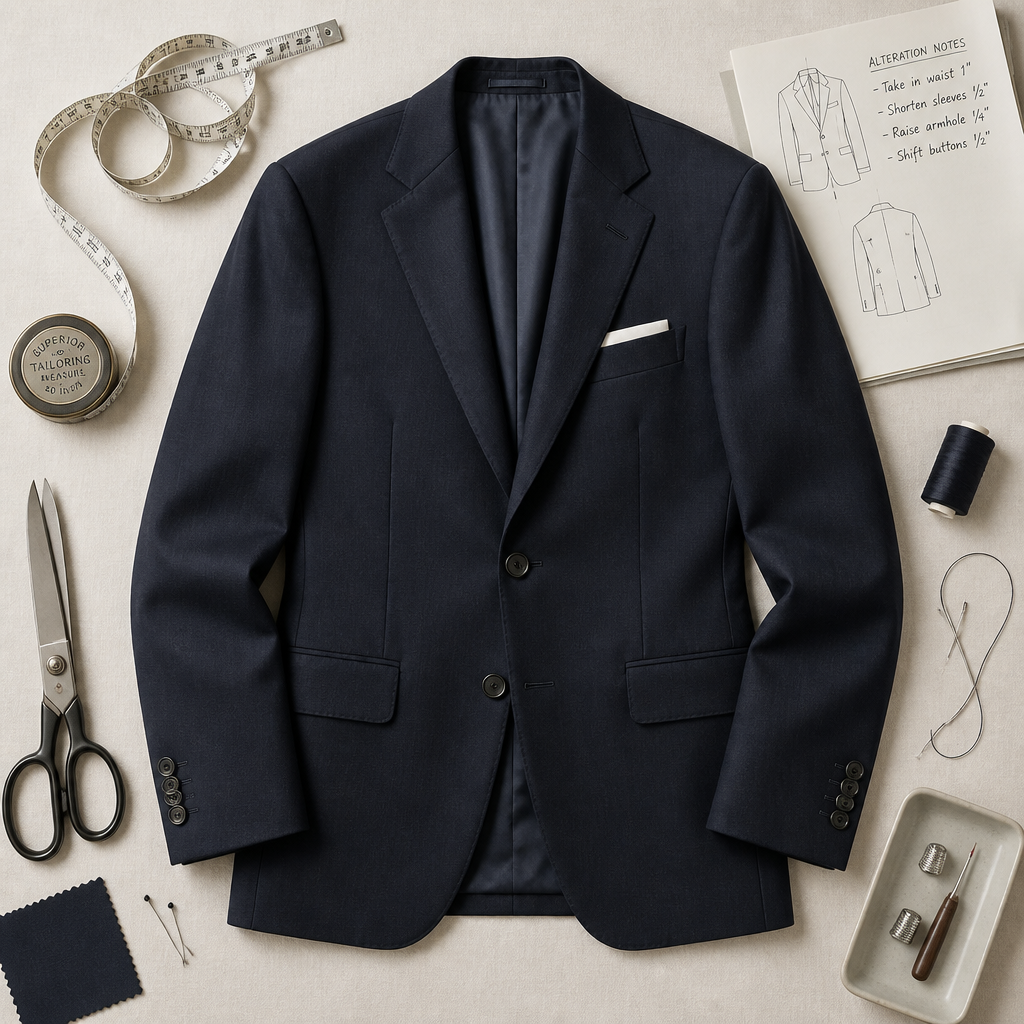
Not every sleeve alteration is the same job. The complexity, time, and skill required vary significantly depending on what needs to change and how the jacket is constructed.
Shortening from the cuff (the standard alteration)
This is the most common jacket sleeve alteration and applies to jackets with non-functioning, decorative buttons on the sleeve. The tailor removes the buttons, opens the cuff hem, takes up the required amount of fabric, restitches the hem, and repositions the buttons. When done correctly, the alteration is essentially invisible from the outside. This is a relatively quick job for an experienced tailor and is well within the skill set of any professional alterations shop.
Shortening from the shoulder
When a jacket has working buttonholes on the cuff, shortening from the cuff is not a realistic option because you cannot reposition a cut buttonhole. The alteration must instead be made at the shoulder, where the sleeve is detached, the required length is removed from the top, and the sleeve is reattached. This is significantly more involved than a cuff alteration, as it requires matching the sleeve pitch, the lining, and the seam structure. It is also the approach a skilled tailor uses when a sleeve needs its pitch corrected at the same time.
Lengthening a jacket sleeve
Lengthening depends entirely on how much fabric is hidden inside the existing seam allowance. Some jackets have generous allowances that give a tailor an inch or more to work with. Others have been cut close and offer virtually nothing. Before assuming lengthening is possible, a tailor needs to open the seam and check. If there is insufficient allowance, the only option is to add a new strip of fabric, which is a more complex repair and may not match perfectly on finished or lined sleeves.
Pro tip: If you are buying an off-the-rack suit with the intention of having the sleeves lengthened, inspect the inside of the cuff before purchasing. Open the hem slightly and look for the amount of fabric turned up inside. Less than half an inch of hidden fabric makes lengthening very difficult; more than an inch gives you real flexibility.
Working Buttonholes: What Every Suit Owner Should Know
Surgeon’s cuffs – also known as working buttonholes or functional buttonholes – are the buttons on a jacket sleeve that actually open. Historically, surgeons and doctors could unbutton and roll back their jacket sleeves before operating, which is how the detail got its name. They are now largely decorative in function, but they remain a marker of jacket quality, particularly in bespoke and higher-end tailoring.
The challenge is practical: once a buttonhole is cut into fabric, it cannot be moved. This means that if you need to shorten a jacket with working buttonholes, the alteration cannot come from the cuff end. The sleeve must be shortened from the shoulder. This is a more skilled and more labour-intensive job, and it requires a tailor who is genuinely comfortable with sleeve construction – not just basic hemming.
Many lower-priced ready-to-wear jackets now feature what look like working buttonholes but are in fact stitched or pseudo-functional – they can be opened, but the cuff has no proper placket behind them. A careful inspection before alteration will reveal which type you are dealing with. When in doubt, ask. A professional tailor will check before quoting the job.
The “kissing buttons” detail
Some high-quality suits feature what is called kissing buttons – where the buttons on adjacent sleeves slightly overlap each other rather than sitting apart with a gap. This is a detail specific to bespoke and made-to-measure tailoring, and maintaining it during an alteration requires careful repositioning. If your suit has kissing buttons and needs a sleeve alteration, make sure your tailor understands what the finished detail is supposed to look like before any work begins.
Sleeve Alteration Comparison: Cuff vs. Shoulder
Choosing between a cuff alteration and a shoulder alteration is not a stylistic preference – it is determined by your jacket’s construction. Here is how the two approaches compare across the factors that matter most.
| Factor | Shortening from the Cuff | Shortening from the Shoulder |
|---|---|---|
| Best suited for | Jackets with non-functioning (decorative) sleeve buttons | Jackets with working (functional) buttonholes |
| Complexity | Moderate – button removal, hem adjustment, button repositioning | High – full sleeve detachment, pitch matching, lining realignment |
| Risk of visible change | Low when done by a skilled tailor | Higher if sleeve pitch is not matched precisely |
| Also corrects sleeve pitch? | No – only addresses length | Yes – pitch issues can be addressed simultaneously |
| Ability to also lengthen | Limited by available seam allowance | Limited by available seam allowance at shoulder |
| Turnaround at a professional shop | Typically faster, often same-day or next-day | Requires more time due to complexity |
Formalwear and Bridal Jacket Sleeve Considerations
Formalwear and bridal jacket alterations bring their own set of pressures. The stakes are higher – a wedding, a gala, or a major professional event – and the timelines are often tight. Sleeves on formalwear jackets frequently involve more decorative detail: covered buttons, silk or satin facings, piped cuffs, or elaborate lining work that needs to be matched after the alteration is made.
For tuxedo jackets with silk-faced or grosgrain cuffs, sleeve alterations require extra care to preserve the facing material and ensure the fold and press finish correctly. A sleeve that has been shortened carelessly on a tuxedo jacket will show a visible change in the way the silk sits at the cuff, which is noticeable under formal lighting. This is precisely the type of alteration where you want a professional with specific experience in formalwear alterations, not a general garment repair shop.
Planning the timeline for event suits
The single most common mistake people make with formalwear is leaving alterations too late. Sleeve alterations on a standard suit with decorative buttons can often be turned around quickly – same-day at some shops for straightforward jobs. But a tuxedo with working buttonholes, a jacket with a complex lining, or any garment requiring shoulder-level alteration needs more time. For weddings specifically, most professionals recommend having all jacket alterations completed at least two weeks before the event, with a final fitting scheduled a week out to catch any issues.
Rush and same-day services do exist at professional shops for straightforward sleeve shortening jobs, and they are genuinely useful in time-sensitive situations. But the more complex the construction, the less realistic same-day turnaround becomes. Be honest with your tailor about your timeline from the first appointment, not after they have already started the work.
When the jacket is part of a suit set
If you are altering the sleeves of a jacket that is part of a matched suit, always bring the trousers to the same fitting session. Proportions work together, and a tailor who can see the full outfit will make better decisions about sleeve length and overall visual balance. This is especially true for suit tailoring done ahead of a formal event, where the complete look matters as much as each individual garment.
Frequently Asked Questions
How much does a jacket sleeve alteration typically cost?
The cost depends on the type of alteration and the jacket’s construction. Shortening from the cuff on a jacket with decorative buttons is the most straightforward and generally the least expensive option. Alterations from the shoulder, or on jackets with working buttonholes, involve considerably more work and cost more accordingly. At Stitch It, pricing is transparent and available upfront – you will know what the job costs before any work begins, with no surprises at pickup.
Can any jacket sleeve be shortened, or are there limits?
Almost any sleeve can be shortened to some degree, but the presence of working buttonholes, limited seam allowance, or delicate facing materials can restrict how the alteration is done. A jacket with functioning buttonholes must almost always be shortened from the shoulder rather than the cuff. The practical limits are structural, not skill-based – a tailor will assess the jacket and tell you exactly what is and is not achievable before starting.
How long does a jacket sleeve alteration take?
A standard cuff shortening on a jacket with decorative buttons can often be done the same day at a professional alterations shop. More complex work – shoulder-level alterations, working buttonhole jackets, or formalwear with detailed facings – typically takes longer. At Stitch It, same-day and rush services are available for walk-ins on qualifying alterations, so it is worth asking when you drop the jacket off.
Should I get both sleeves altered at the same time, even if only one is wrong?
Yes, always. Arms are not perfectly symmetrical, and the way a jacket sits on your shoulders can cause one sleeve to hang slightly differently from the other. When a tailor adjusts sleeve length, they assess both sides together and set the correct length based on how the jacket actually sits on your body. Correcting only one sleeve without checking the other is a shortcut that often creates a new imbalance.
What is the difference between sleeve length and sleeve pitch, and do I need to know?
Sleeve length is how far the sleeve extends toward your hand. Sleeve pitch is the rotational angle at which the sleeve hangs from the shoulder – when it is wrong, the sleeve twists forward or backward and pulls uncomfortably when you move your arm. Both can be addressed by alteration, but pitch adjustment requires the sleeve to be detached from the armhole and reattached at a corrected angle. If you notice your jacket sleeve twisting or pulling rather than simply hanging too long or too short, mention both the pitch and the length to your tailor from the start.
Is a jacket sleeve alteration worth it on a less expensive suit?
Yes. The cost of a sleeve alteration is a small fraction of what most suits cost, and it has a disproportionate effect on how the suit looks. A well-fitted sleeve on a modest suit reads significantly better than an ill-fitted sleeve on an expensive one. If you wear the suit regularly – for work, formal events, or occasions that matter – the alteration pays for itself in confidence and appearance almost immediately.
Have you had a jacket sleeve altered and noticed an immediate difference in how the suit looked and felt? Share your experience in the comments – we would love to hear what worked for you.
References
- How long suit jacket sleeves should be: the standard fit rule explained
- How to properly measure suit sleeve length for accurate alterations
- What a tailor can and cannot do: a guide to suit alterations
- Five practical tips on suit alterations from a menswear perspective
- Surgeon’s cuffs and working buttonholes: what they mean for alterations