
Most people drop a suit or a wedding dress at the counter, collect a plastic-wrapped garment days later, and never wonder what happened in between. The name is misleading. Dry cleaning does use liquid, but it is a solvent rather than water, and that single difference is why a jacket can come back cleaner without shrinking, stretching, or losing its shape. This guide walks through how dry cleaning works one stage at a time, the way a production team moves a garment from the counter to the rack. If you have ever wondered why some stains need pretreating or why pressing matters as much as washing, the steps below explain the logic behind each decision.
Table of Contents
- Quick Takeaways
- Inspection and Tagging at the Counter
- Pretreatment and Stain Removal
- The Solvent Wash Cycle
- Extraction and Drying
- Finishing, Pressing, and Reshaping
- Final Inspection and Packaging
- Solvent Options Compared
- Common Mistakes That Damage Garments
- Frequently Asked Questions
- References
Inspection and Tagging at the Counter
The process starts before any machine runs. At the counter, a technician checks each garment for stains, tears, missing buttons, loose linings, and any detail that needs special handling. This inspection is the step most customers never see, yet it decides how the rest of the job goes.

Care labels come first. Manufacturers print cleaning codes that tell you whether a garment can be dry cleaned, and the letter inside the symbol indicates which solvent types are safe to use. A label that says dry clean only is a clear instruction, but many items carry codes that allow more than one method, and the counter must match each garment to the right process.
Reading the Care Label
The label is the first piece of evidence in the job. A wool blazer marked for professional cleaning tells the plant to avoid water, while a rayon blouse with a wet-clean symbol may be routed differently. In practice, we flag any conflicting label before the garment is tagged, because a rushed job on a mislabeled piece is where shrinkage and dye bleed usually start.
Pocket Checks and the Ticket
Every pocket gets emptied, and that matters more than people think. A pen left in a shirt pocket can leak ink across the lining, and a tissue can leave lint on a dark suit that becomes permanent after pressing. Each item is then tagged with a ticket number linked to the customer’s order, the stains noted, and any repair requests, so nothing gets separated from its paperwork later.
Pro tip: Point out every stain you know about at the counter, even faint ones. A stain noted on the ticket gets pretreated, while one discovered after cleaning is often harder to remove because heat and solvent can set it.
Pretreatment and Stain Removal
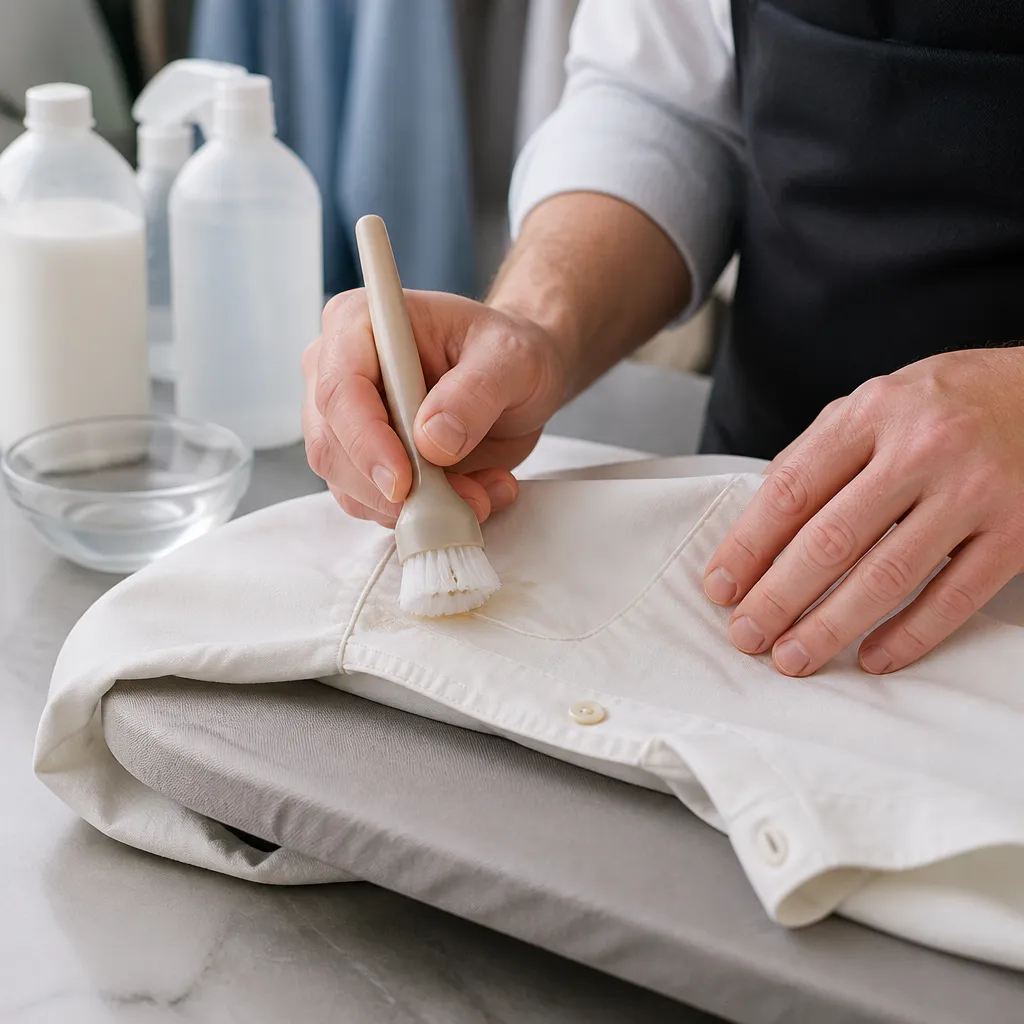
Pretreatment is where a skilled spotter earns the price of the job. Solvent is very good at dissolving oily soils, but it does not remove everything, and many stains need a targeted treatment before the garment enters the machine. Working on a stain by hand is slower than loading a basket, but it costs far less than explaining a permanent mark.
Protein, Tannin, and Oil Stains
Stains fall into broad chemical families, and each responds to different agents. Protein stains such as blood, egg, and dairy respond to cool water and enzyme-based products, and heat cooks them into the fiber. Tannin stains like coffee, tea, wine, and fruit need a different approach, while oil-based stains such as salad dressing, butter, and makeup dissolve in solvent but still need a spotting step to lift the pigment.
Why Heat Is the Enemy of a Stain
A common mistake at home is applying hot water or a hair dryer to a stain before it has been identified. Heat binds many proteins and tannins to the fabric, which turns a fixable mark into a permanent one. We keep pretreatment cool until the spotter knows what is on the garment, and we test colorfastness on an inconspicuous area before using any agent on dyed silk or acetate.
Pretreatment also protects trim. Beads, sequins, and metallic thread can react to some chemicals, so the spotter checks the decoration before applying anything. A stain removal that dulls a sequin gown has still damaged the gown.
The Solvent Wash Cycle
Once a garment is pretreated and checked, it goes into a machine that resembles a front-loading washer but operates as a closed system. The drum holds the garments, and solvent is pumped through them in a controlled sequence. Because the machine is sealed, solvent vapor stays inside, and recovery equipment captures it for reuse.
Most of the cleaning happens here. Solvent dissolves oils, waxes, and greasy soil that water alone would leave behind, which is why a wool coat often looks fresher after dry cleaning than after a home wash. Each load runs at a set temperature and time, and the cleaner adjusts those settings for fabric type and dye sensitivity.
How Solvent Moves Through the Load
The drum rotates at a moderate speed so the solvent can soak through layers of fabric, including the lining and padding inside a jacket. Filters in the system catch lint, buttons, and grit, and they must be cleaned on a schedule. A poorly filtered machine redeposits soil onto clean clothes, which is why a dirty filter can ruin a load of white shirts faster than any stain.
Why Water Is Used Only in Small Amounts
Dry cleaning machines typically add a small amount of water along with detergent, because some soils dissolve better with a trace of moisture. The amount is kept low on purpose, since too much water would swell natural fibers and bring back the shrinkage risks that dry cleaning is meant to avoid. That balance is one reason a plant needs to know the fiber content before it starts a run.
The solvent wash does not soak a garment the way a home washer does. The control over moisture, time, and agitation is the real product, and it is what keeps structured clothing looking structured.
Extraction and Drying
When the wash is complete, the machine does not simply open the door. It drains the solvent from the washing chamber, then spins the basket to pull as much liquid as possible out of the fabric. Extraction is where most of the solvent leaves the load, and it sets up the drying stage that follows.
The extraction cycle refers to draining the solvent and accelerating the basket to 350 to 450 rpm, which throws much of the solvent off the garments. Speed matters, because a basket that spins too slowly leaves more solvent behind and lengthens drying. An overloaded basket can also wrinkle or stretch garments, so load size is part of the same decision.
Drying With Warm Air and Tumbling
After extraction, the drum is warmed with air and rotated gently to evaporate what remains. The air passes through a condenser that collects solvent vapor so it can be recovered rather than vented. Temperature stays moderate, since high heat can set residual stains and cause plastic buttons or foam shoulder pads to deform.
Why Overdrying Causes Problems
Overdrying is a quiet source of damage. Garments that stay in a hot drum too long become brittle, and fibers such as wool and silk can lose their hand, which is the feel and drape the customer paid for. Experienced cleaners stop the dryer when a garment is nearly dry and finish with a short cooling tumble, so the fabric relaxes rather than stiffens.
Finishing, Pressing, and Reshaping
A garment that comes out of the dryer is clean, but it is rarely ready to wear. Wrinkles, collapsed pleats, and flattened collars are the normal result of tumbling, so finishing is the stage that makes a jacket look tailored again. This is the part of the process that separates a careful cleaner from a fast one.
Steam Pressing Versus Form Finishing
Shirts, blouses, and trousers usually go on a press with a steam cycle and a vacuum that pulls moisture out of the fabric as the press closes. Jackets and structured garments take more work. They are placed on a form that matches the body shape, and steam is applied while the garment is held in position, which restores the shoulder line and chest. Pressing the wrong way can flatten a lapel permanently, so the presser needs to know how the garment is built.
Buttons, Pleats, and Structured Shoulders
Buttons are checked before pressing because a plastic button placed on a hot press can crack or melt. Pleats on skirts and trousers are reset by hand or by a pleating machine, depending on how sharp the garment needs to be. Structured shoulders need a form, because a flat press pushes the padding out of place and leaves a wrinkled seam.
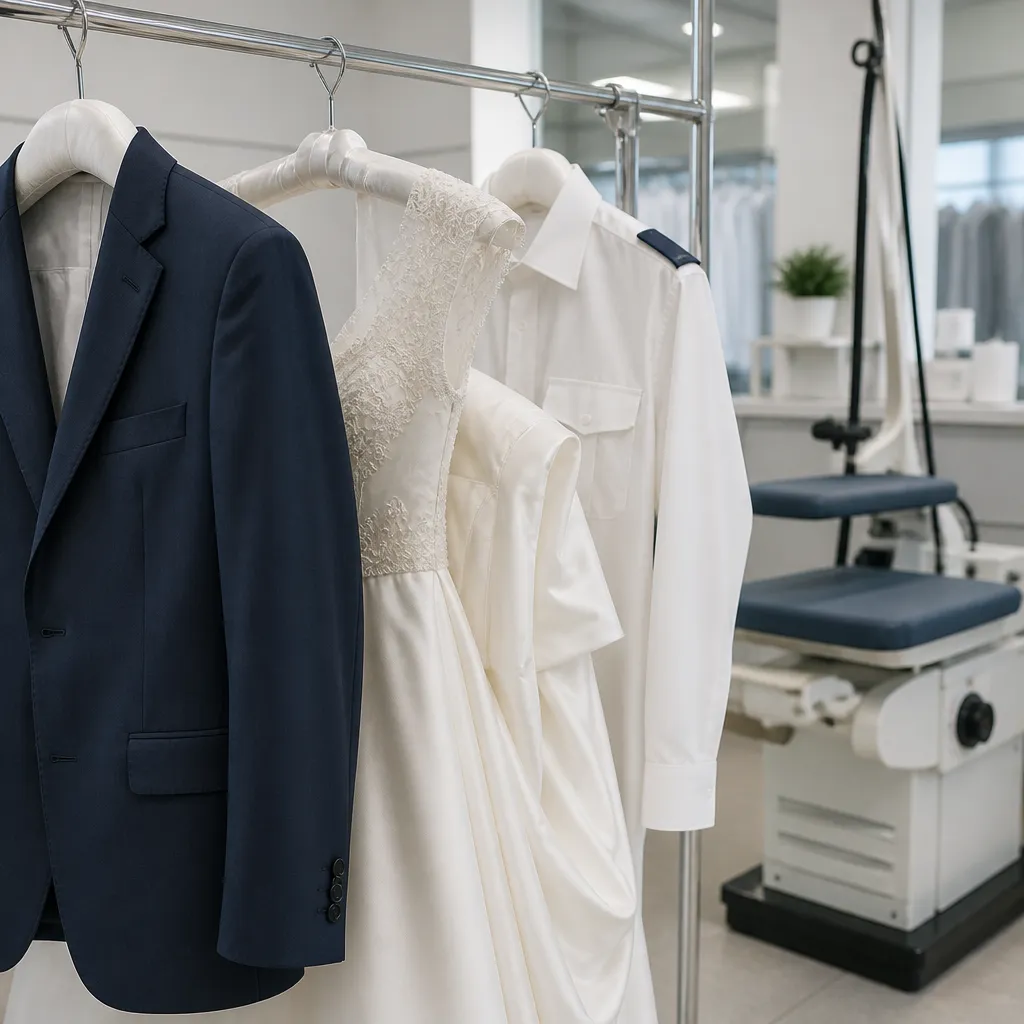
Bridal wear and formalwear demand the most attention at this stage. A gown with boning, beading, or a layered skirt needs each section supported while steam is applied, so the fabric does not sag or crush the trim.
Final Inspection and Packaging
Before a garment leaves the plant, it is inspected again against the original ticket. The checker looks for remaining stains, pressing marks, missing trim, and any requested repair. A garment that fails this check goes back to the right station rather than to the customer.
Packaging is the last step, and it does more than presentation. Clear bags keep dust off the garment and reduce the chance of snags, while hangers that match the garment’s weight keep shoulders from stretching. Garments stored for a long time should be fully dry and kept away from sealed plastic that traps moisture, a point most people miss.
Repairs and Alterations Before Pickup
Many customers pick up a cleaned garment and find a loose button or a hem that needs adjusting. When repairs happen in the same location, the garment does not change hands between shops, which keeps the job on schedule. Hems start at $14.89 at Stitch It, and a quick fix can be handled while the garment is still in the production flow.
What the Ticket Tells You at Pickup
The ticket is worth reading at pickup. Our 30-Day Fit Guarantee is designed for alterations, so ask about its terms when you collect altered garments. If something on the ticket does not match what you receive, raise it before you leave, because the plant’s records are the basis for any follow-up.
Frequently Asked Questions
Is dry cleaning really dry?
No. The process uses a solvent instead of water, which is where the name comes from, but the garment is still wet with solvent during the cycle. The solvent is removed through extraction and drying, which is why the finished garment feels dry and clean.
Can every garment be dry cleaned?
Most can, but the care label is the final authority. Some items carry codes that prohibit solvent cleaning, and some beaded or glued pieces are better handled by hand. When in doubt, ask the counter before dropping anything off.
Does dry cleaning remove every stain?
No, and any cleaner who promises that is overselling. Oily soils dissolve well in solvent, but protein stains, set-in tannins, and stains that were heated before treatment can remain. Early identification and pretreatment give the best chance of full removal.
Is dry cleaning safe for silk and wool?
It can be, when the cleaner matches the process to the fiber and the label. Silk and lightweight wool benefit from careful cycle settings, gentle drying, and proper finishing. Mention the fiber content when you drop off the item so the plant can choose the right method.
Why does a freshly cleaned garment sometimes smell like solvent?
A small amount of residual solvent can remain briefly after finishing, and it usually dissipates within a short period. Hanging the garment in a ventilated area for a while before sealing it in a closet helps. If a strong smell persists, return the garment and ask the plant to recheck the drying and extraction steps.
What step in the dry cleaning process surprises you most, and has a garment ever come back looking different than you expected?