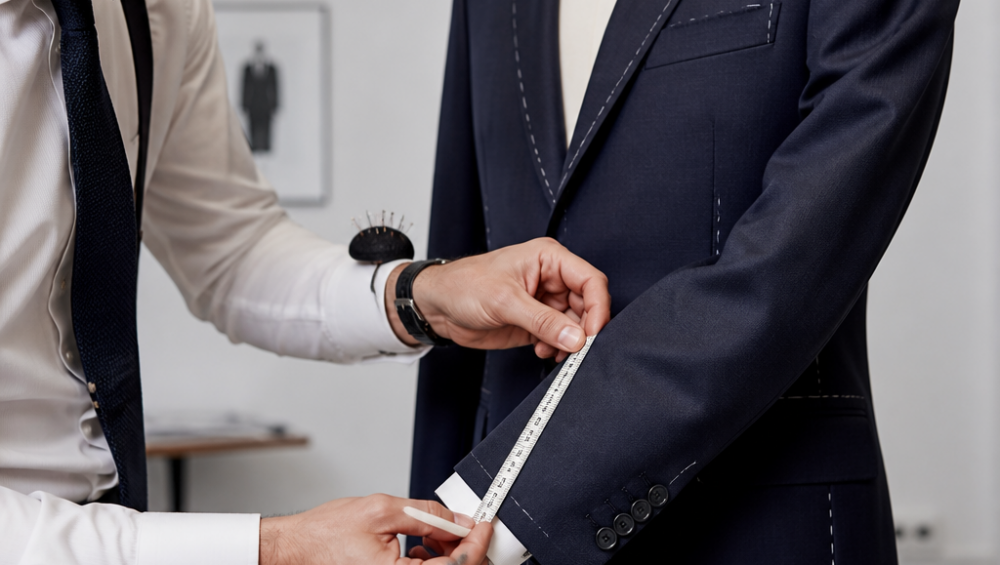
A blazer does not look expensive because of its label. It looks expensive when the shoulders sit cleanly, the sleeves stop at the right point, and the body follows your shape instead of hanging off it. Most off-the-rack jackets miss on at least two of those points, which is why a moderately priced blazer can look cheaper than it is. The right blazer alterations can close most of that gap, often for less than the cost of a new jacket. Here are the five changes our alteration team is asked for most often, what each one does, and where the limits are.
Table of Contents
- Quick Takeaways
- Sleeve Length and Cuff Showing
- Waist Suppression for a Cleaner Silhouette
- Getting the Jacket Length Right
- Shoulder Seams: What You Can and Cannot Fix
- Sleeve Width and Armhole Tailoring
- How to Brief Your Tailor Without Wasting a Fitting
- Comparing the Three Fixes That Matter Most
- Frequently Asked Questions
- References
Sleeve Length and Cuff Showing
Sleeve length is the alteration that changes how a blazer reads from across a room. When the sleeve covers the back of your hand, the jacket looks borrowed, no matter what the label says. When it stops at the wrist bone, the jacket looks chosen.
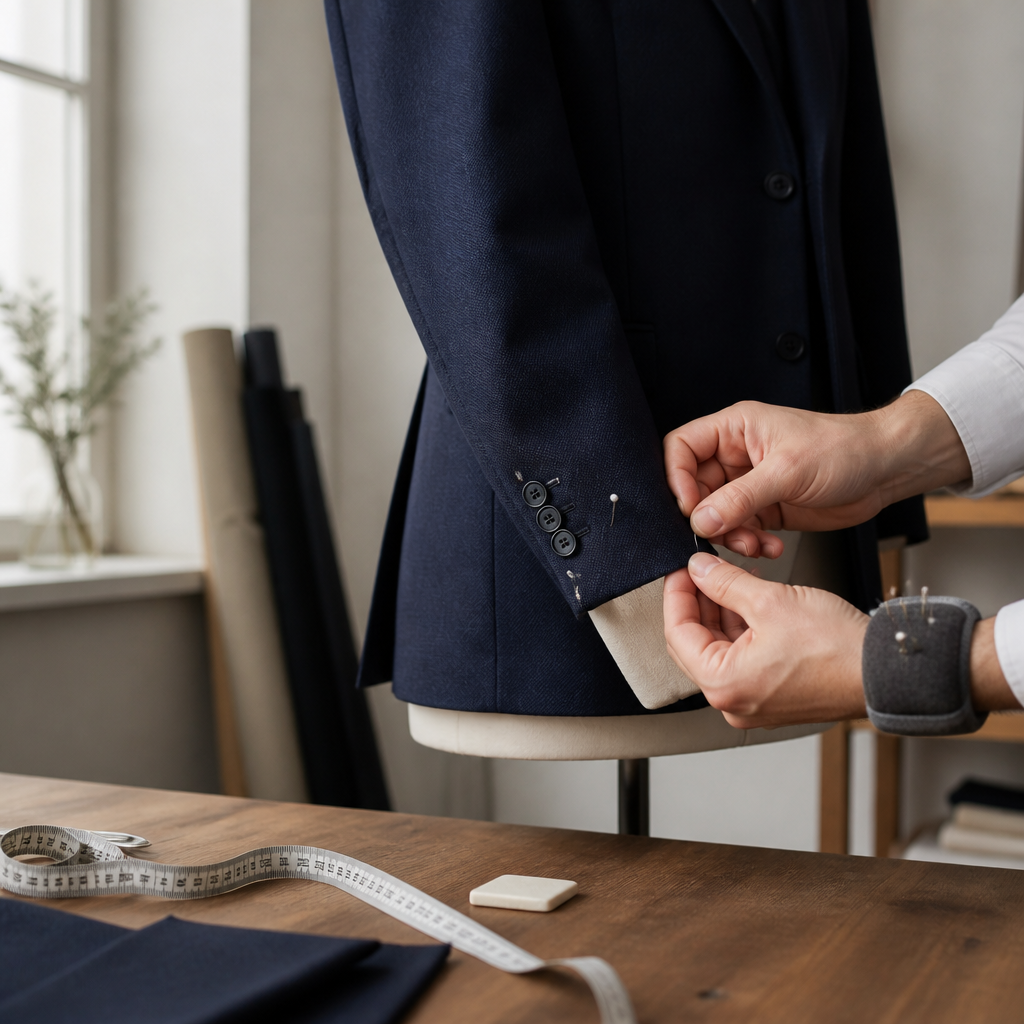
Most clients who bring in a blazer they like but do not love are describing sleeves. The usual target is a shirt cuff that shows about half an inch below the jacket sleeve. That small strip of crisp shirt is one of the clearest signals that a jacket was fitted to a specific person.
How a tailor finds the right sleeve point
The tailor asks you to stand with your arms relaxed, then bend the elbow slightly, then return to neutral. Each position moves the sleeve a little, so a single measurement taken with the arm hanging can be off in a way you notice after a full day of wear.
Your shirt matters too. A sleeve shortened for a bare wrist will look wrong the moment you wear a dress shirt underneath, because cuff thickness and cuff length vary between shirts.
What to ask for when the sleeve is too long
Shortening usually happens at the cuff, which keeps the original sleeve buttons and vent intact where possible. Some jackets have functional buttonholes or a lining that makes the work slower, so ask how the vent and lining will be handled before you agree to the job.
Pro tip: Bring the shirt you plan to wear with the blazer to the fitting, and stand with your arms relaxed before the tailor marks anything. A cuff measured without a shirt is often off by enough to matter.
Waist Suppression for a Cleaner Silhouette
A blazer that hangs straight from the armpit to the hem looks like a box, and boxes are rarely associated with money. Waist suppression, often called taking in, brings the side seams and back seam closer to the body so the jacket follows your natural shape.
How the side seams create the shape
The tailor typically works on the side seams and sometimes the center back seam, tapering the jacket from the armhole down to the waist. Done well, the change is subtle. The jacket still closes comfortably, but the waist reads as defined rather than baggy.
Lining is the complication. The work usually means opening the lining at the seams, adjusting the shell and lining together, and resewing both, so expect a longer turnaround than a simple hem.
Where suppression stops working
Taking in too much is the most common mistake. The armholes get tight, the jacket pulls across the back when you reach forward, and the cut starts to look strained instead of tailored. A good tailor checks arm movement and button closure before the jacket leaves the bench.
If the jacket is already cut very wide through the chest, suppression alone will not solve the problem. In that case, the sensible move is to prioritize sleeve and length work, or to accept that the jacket works better as a casual piece.
Getting the Jacket Length Right
Jacket length changes the proportions of your whole outfit. A jacket that ends too high can shorten your legs and make trousers look overly long, while one that drops too far can make the hips look heavy. Most blazers we see are wrong by a small amount, and that small amount is enough to make the whole look feel off.
The seat test
A practical benchmark is for the hem to cover the seat, landing roughly at the mid point of the hips. Stand in front of a mirror with the jacket buttoned and check the hem with your arms at your sides, then check it again with your hands in your pockets.
When the jacket is too long, the tailor shortens the body at the hem. Pocket and vent positions usually stay where they are, which keeps the jacket looking like the original design rather than a copy of it.
Why length and sleeve must match
Length and sleeve length have to agree. If the body is shortened but the sleeves stay long, the jacket looks like a larger version of a smaller jacket. Fix both in the same visit so the proportions stay consistent.
Pro tip: Sit down in the jacket during the fitting. If the hem rides up noticeably or pulls across the back, the body is too short or too tight, and that is worth raising before the work is finished.
Shoulder Seams: What You Can and Cannot Fix
Shoulders are the part of a blazer that tailors can least easily change, and the part most shoppers try to ignore. The shoulder seam should sit at the edge of your shoulder bone. When it hangs past that point, the jacket looks oversized from the first second you see it.
Why shoulders are the hardest fix
Moving a shoulder seam changes the structure of the jacket, including the padding and the way the sleeve is set. Some tailors can make modest adjustments, but large changes usually mean rebuilding the jacket, which costs more and rarely returns it to its original character.
Treat shoulders as a buying decision, not a repair job. If the shoulder is wrong when you try the jacket on, the right answer is usually to walk away rather than pay for a major alteration.
How to check shoulders before you commit
Stand naturally with your arms relaxed and look at the seam from the side. It should sit at the edge of the shoulder, and the fabric over the top should lie smooth without drag lines. Ripples or a visible dent near the collar usually mean the jacket is too large through the shoulder.
Fit problems often show up after a few wears, not in the fitting room, which is why our 30-Day Fit Guarantee is built around that timeline. Check the shoulders early, while you still have time to act on what you find.
Sleeve Width and Armhole Tailoring
A sleeve that is wide at the top and bulky at the cuff makes even a well-cut jacket look inexpensive. This is one of the most common problems with ready-made blazers, and it is easy to miss on the rack because the jacket looks fine when you hold it up.
Spotting sleeves that are too wide
Look at the sleeve from the front with your arm hanging. If you can fit more than a finger inside the sleeve at the elbow, or if the sleeve looks like a tube rather than tapering toward the wrist, the width needs attention.
How a tailor narrows the sleeve
The tailor takes in the sleeve seam, tapering from the underarm down to the cuff. The sleeve still has to allow full arm movement, so the armhole and underarm are checked after the change. A sleeve that is too narrow pulls when you reach forward, which looks worse than a sleeve that is slightly full.
A jacket that fits your shoulders and sleeves will almost always look more expensive than one with a better label and a poorer fit.
Because this work sits close to the underarm, ask the tailor to check your range of motion before you leave. Lift your arm, reach across your body, and lower it again while standing in front of a mirror.
How to Brief Your Tailor Without Wasting a Fitting
Vague instructions produce vague results. Telling a tailor to make the jacket look better gives them nothing to work with, while saying the sleeves cover your knuckles and the waist gapes when you button the jacket gives them a clear target.
Describe what you see, not what you want
Point to specific areas such as the shoulder, the sleeve, the waist, or the hem. Describe what happens when you move, such as the jacket riding up when you raise your arms. This language helps the tailor identify the right fix on the first attempt.
Bring the clothes you will actually wear
Bring the shirt, the shoes, and, if the blazer is part of a suit, the trousers. A jacket fitted over a bare shirt can look different once a thicker dress shirt goes underneath, and shoe height changes how the trouser hem sits.
Ask how long the work will take and whether lining or vents need extra time. Stitch It offers same-day and rush services for walk-in clients, but a blazer with lining, several fixes, or a tricky vent may need a longer turnaround. Ask at the counter so you can plan around the event you are dressing for.
Comparing the Three Fixes That Matter Most
If you can only afford one or two changes, prioritize by impact. Sleeve length has the biggest visible effect for the least risk, waist suppression is the next most noticeable change, and shoulder work is the one most likely to cost more than the result is worth.
Start with sleeves, then move to length, then decide on waist work. Sleeve and length changes affect the proportions most, so once they are right you will see exactly how much waist shaping the jacket still needs.
Pro tip: Decide which fix matters most for how you will wear the blazer. If it mostly goes over jeans or a casual shirt, sleeve and length work usually matter more than waist shaping, and that focus keeps the budget under control.
Frequently Asked Questions
Can every blazer be tailored?
No. Shoulders are the main limit, since a seam that sits well past the shoulder bone usually needs a rebuild. Some fabrics, especially stiff or delicate ones, also show needle marks or creases after structural changes, so ask about the fabric before committing.
Should I take a blazer in or let it out?
Taking in is easier and more common, because it works within the existing seams. Letting out depends on the seam allowance left in the jacket, and many ready-made blazers have very little, so a tailor will tell you quickly whether there is room to go larger.
How long does a blazer alteration take?
Simple hem or sleeve work can often be done quickly, and same-day or rush options are available for walk-in clients. Blazers with lining, multiple fixes, or delicate vents take longer, so it is worth asking for a timeline at drop-off.
What should I check before buying a blazer I plan to alter?
Check the shoulders first, because they are the hardest part to fix. Then look at the sleeve length, waist, and sleeve width, which are usually manageable with a tailor, and confirm that the jacket still fits comfortably through the arms when you lift them.
Tell us which of these five fixes made the biggest difference to a blazer you own, or what a tailor told you that changed how you shop for jackets.
We would love your feedback and any insights you would share with others. What perspective would you add?