Most people walk out of a store with formalwear that fits in two or three places and gapes, bunches, or drags everywhere else. The suit jacket pulls across the shoulders, the trousers break three inches too low, the dress hem sweeps the floor when you are 5’4″. None of this means the garment is wrong for you. It means it was cut for a statistical average that does not exist. Formalwear alterations are what close the gap between a rack purchase and a garment that looks like it was built around your body. This guide walks through every major alteration for both suits and dresses, what is realistic to change, what is not, and how to get the result you actually want.
Table of Contents
- Quick Takeaways
- Why Off-the-Rack Formalwear Almost Never Fits
- Suit Alterations: What to Prioritize
- Dress Alterations: How to Get a Formal Gown Fitting Right
- What Alterations Cannot Fix
- Alterations Comparison: Easy vs. Complex vs. Avoid
- Timing and What to Bring to Your Fitting
- Frequently Asked Questions
- References
Quick Takeaways
| Key Insight | Explanation |
|---|---|
| Buy for the shoulders first | On a suit jacket, shoulder fit is the hardest and most expensive thing to alter. Every other adjustment is easier once the shoulders sit correctly. |
| Sleeve length is the fastest upgrade | Shortening jacket sleeves so roughly a quarter to half an inch of shirt cuff shows is one of the most visible signs of a well-fitted suit, and it is a straightforward alteration. |
| Hem complexity depends on the fabric and trim | A plain hem is quick. A gown with beading, horsehair braid, or lace appliques at the hem requires the embellishments to be removed and reapplied by hand. |
| Taking in is easier than letting out | Garments can only be let out as far as the seam allowance allows. If you are between sizes, size up and have it taken in rather than buying smaller and hoping for extra fabric. |
| Waist suppression transforms a jacket silhouette | Taking in the jacket sides to follow the natural waist creates shape without any structural reconstruction. It is one of the most cost-effective alterations available. |
| Bring the right shoes and undergarments | Hem length on a dress is determined with the shoes you will actually wear. The correct undergarments affect how a bodice sits. Both must be present at every fitting. |
| Stitch It’s 30-Day Fit Guarantee removes the risk | Professional alterations at Stitch It are backed by a 30-Day Fit Guarantee. If the fit is not right, they make it right, which matters on an expensive formal garment. |
Why Off-the-Rack Formalwear Almost Never Fits
Ready-to-wear garments are cut to a standardized set of measurements that represents a blend of averages. Your body is not an average. Your torso might be longer than standard, your shoulders broader, your hips proportionally wider than your waist. The garment cannot know this. What it produces is a fit that is acceptable in one or two dimensions and noticeably off in the rest.
The gap between “fits off the rack” and “looks custom” is almost always closed with targeted alterations. A suit that seats correctly in the shoulders but has excess fabric through the waist and sleeves that run two inches past your wrist is a good candidate. A formal gown that fits the bust but pools on the floor is not a poorly designed dress, it is an unaltered one.
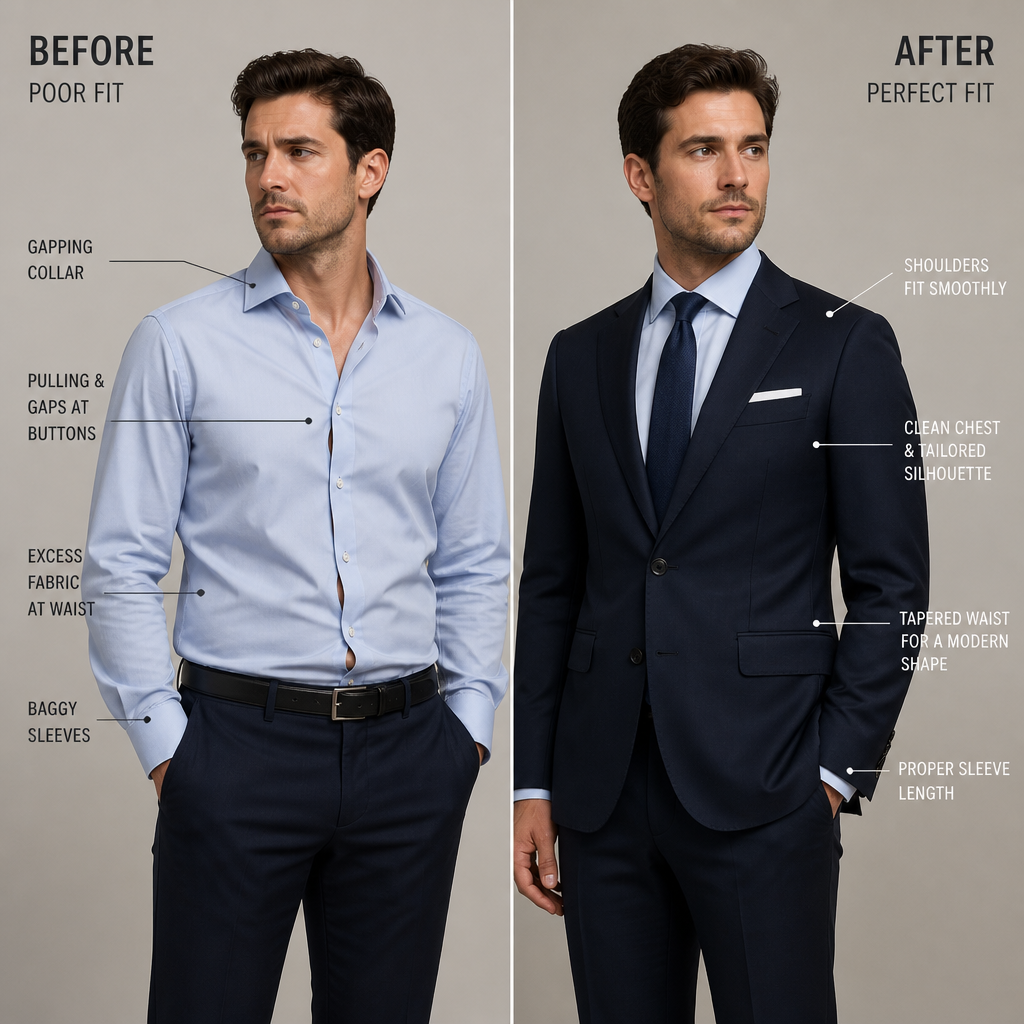
A well-fitted suit does more than look visually appealing. It transforms how you move and carry yourself. The clean shoulder line, the precise sleeve length, the way the trousers break just above the shoes: these details set a garment apart without demanding attention.
The good news is that the alterations needed to achieve that result are mostly straightforward, and for most formal garments, they are not expensive relative to the cost of the garment itself. The key is knowing which changes are easy, which are complex, and which are not worth attempting.
Suit Alterations: What to Prioritize
A suit alteration is not one thing. It is a set of individual adjustments, each with its own cost, complexity, and impact on the final look. Knowing which ones to prioritize stops you from spending money on changes that will not be noticed and missing the ones that will.
Jacket Alterations: Start Here
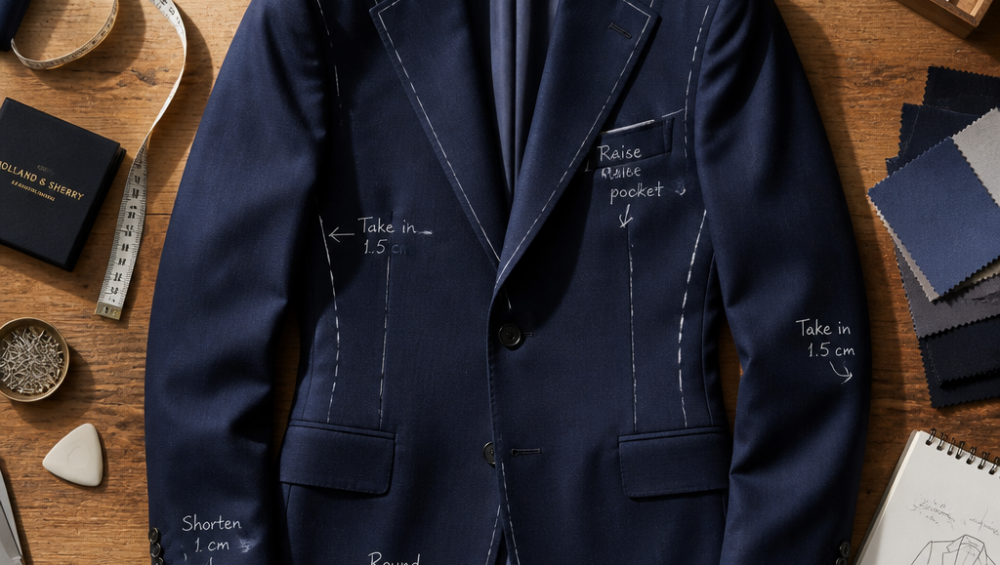
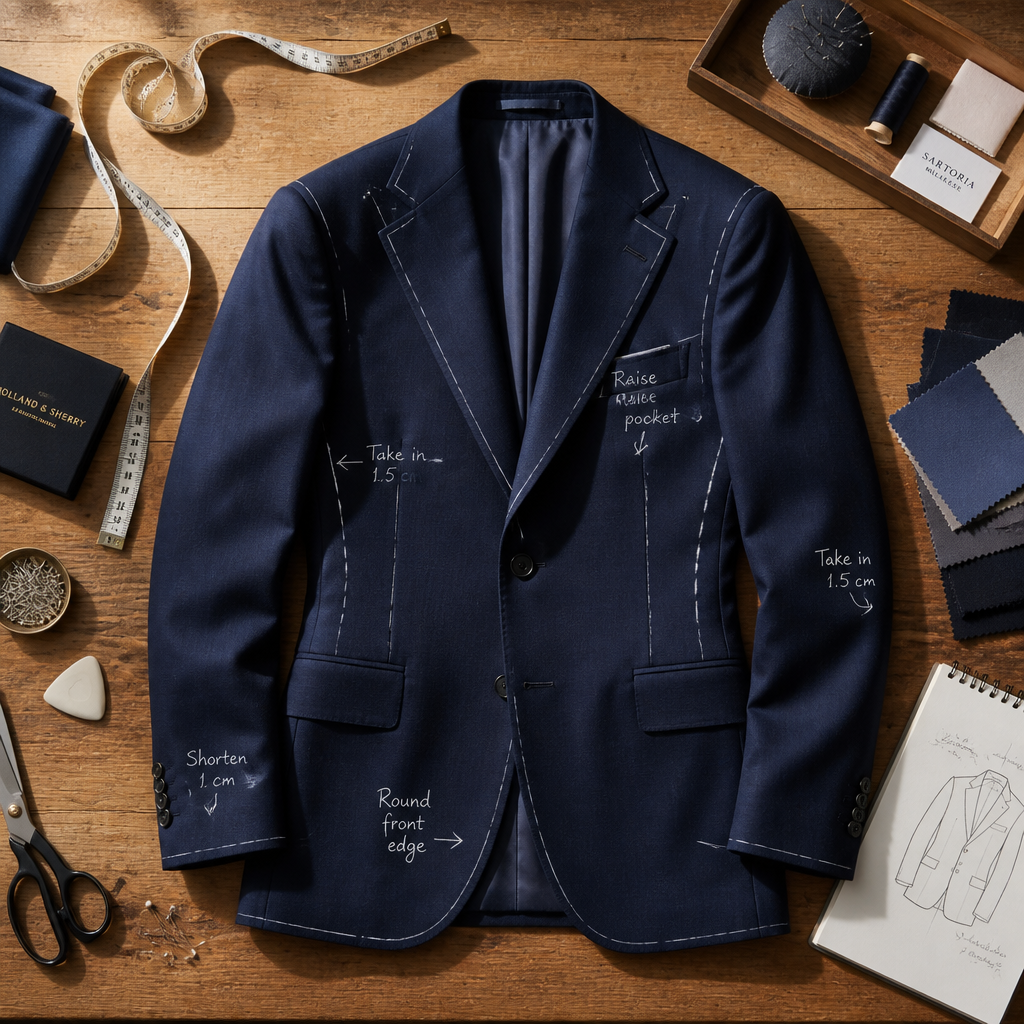
The shoulders are the foundation of a jacket fit. The shoulder seam should sit exactly at the edge of your shoulder bone, not hanging over your arm and not pinching in from the side. If the shoulders fit, most other jacket adjustments become straightforward. If they do not, no amount of waist or sleeve work will fully correct how the jacket looks.
Waist suppression is the change that makes the biggest visual difference. A standard jacket is cut with generous room through the midsection. Having the sides taken in to follow your natural waist creates shape and removes the boxy silhouette that makes suits look dated. This is a standard, relatively affordable alteration.
Sleeve length is the most visible fit signal to anyone who knows what to look for. Jacket sleeves should end just above the wrist, showing roughly a quarter to half an inch of shirt cuff. If the sleeves run past that point, shortening them is one of the first adjustments to make. A note on functional buttonholes: if the sleeve has working buttons, shortening from the cuff end becomes more complex. In that case, a skilled tailor may shorten from the shoulder seam, which takes more time and costs more.
Trouser Alterations: Three Changes, Maximum Impact
Trousers offer three high-impact alterations. Hem length sets how the trouser breaks over the shoe, and getting this right is the single fastest way to improve how a suit reads from across the room. Waist adjustment at the back seam adds or removes up to a couple of centimetres to improve comfort without affecting the trouser’s front. Tapering the leg narrows the silhouette and modernizes a cut that was made for a looser fit.
Pro tip: When hemming trousers, bring the exact shoes you will wear with the suit to your fitting appointment. The height of the heel or the profile of the shoe changes where the hem should sit. Hemming with the wrong shoes is one of the most common alteration mistakes that needs to be redone.
Dress Alterations: How to Get a Formal Gown Fitting Right
Dress alterations for formal and evening wear follow a different logic than suit alterations. The silhouette of a gown is defined by how it interacts with the bust, waist, and hips. Any change in one of those areas ripples through the others. This is why fitting a formal dress takes more sessions than fitting a suit, and why you should not expect a single appointment to be the final one.
Hemming a Formal Gown
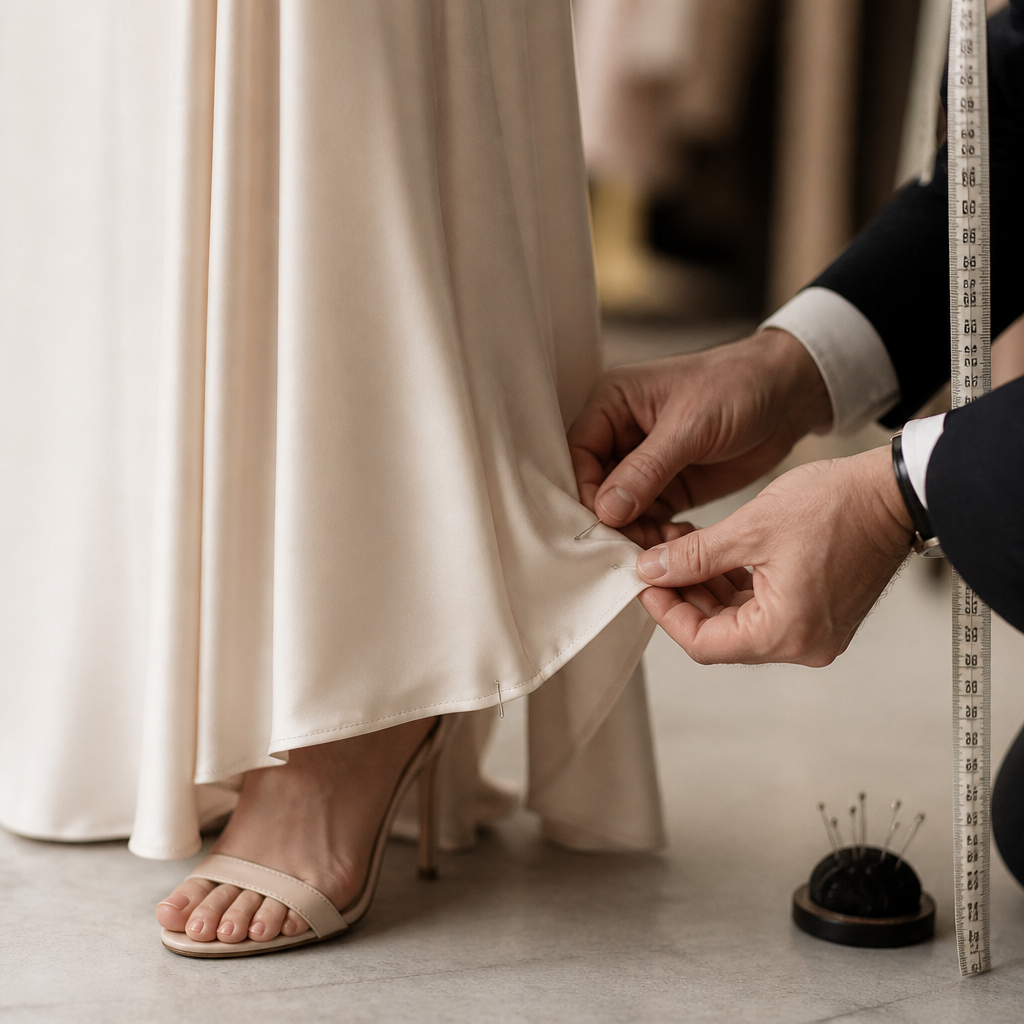
Hemming is the most requested alteration for formal dresses. A plain hem on a simple fabric is a quick job. The complexity rises significantly when the hem has embellishments. A gown finished with horsehair braid requires the braid to be carefully removed, the fabric shortened, and the braid reattached precisely so the skirt maintains its intended sweep. A hem with heavy beading or lace appliques requires those elements to be detached, the hem reduced, and each embellishment reapplied by hand so the modification is invisible.
This takes time, and it should. Rushing a beaded hem alteration produces a result that is visible and difficult to reverse.
Bust, Waist, and Hip Adjustments
Taking in or letting out through the body of a formal gown involves opening the side seams, back seams, or princess seams and removing or adding fabric. The goal is to bring the silhouette close to the body without distorting the original design lines. For gowns with internal boning or corsetry, the tailor must also adjust the boning channels to align with your ribcage and waist, which is a highly technical adjustment that requires experience with structured formalwear.
If the dress has a corset back, there is often more flexibility, since the lacing allows a range of fits without structural changes. If it is a fully sewn-in bodice, the seam allowance is the only material available to work with.
Pro tip: When buying a formal dress off the rack or online, always size up if you are between sizes. Making a garment smaller is easier than making it bigger, and a well-done alteration taking in a larger size will be invisible. A gown that is too small for you has nowhere to go.
Strap and Neckline Adjustments
Straps that are too long cause the bodice to drop, which pulls the entire structure of the dress down. Shortening straps is a common and relatively simple alteration. Adjusting the neckline itself, particularly on a dress with beading or lace along the edge, is more involved and should be discussed clearly with your tailor before committing. Not all neckline modifications are reversible.
What Alterations Cannot Fix
This is the part of formalwear alteration advice that is most often left out. There are structural limits to what any tailor can do, and understanding them saves you money and prevents disappointment.
On a suit jacket, the shoulder is the line beyond which alterations become impractical. Narrowing the shoulders by more than a small amount requires deconstructing the entire upper jacket, repositioning the sleeves, and reassembling the structure. The cost often exceeds the value of the garment. Similarly, increasing the chest measurement significantly is limited by the seam allowance built into the jacket. Most ready-to-wear jackets have around an inch of spare fabric that can be let out. Beyond that, the fabric simply does not exist.
On a formal dress, changing the overall silhouette, converting a fitted gown to an A-line, for example, is not a practical alteration. The dress would need to be largely reconstructed. A skilled tailor at a professional shop like Stitch It’s formalwear alteration service will be direct with you about what is achievable and what is not. That honesty is a sign of competence, not limitation.
The other hard limit is weight change. If you are planning to alter a formal garment months before an event with the expectation of a significant body change, wait. A dress or suit altered for your current measurements and then altered again after a change will have stressed seams and less fabric margin to work with the second time.
Alterations Comparison: Easy vs. Complex vs. Avoid
| Alteration | Complexity Level | Notes |
|---|---|---|
| Trouser hem (plain fabric) | Easy | Standard alteration, fast turnaround, high visual impact |
| Jacket sleeve shortening (no working buttonholes) | Easy | Straightforward cuff end adjustment, immediately noticeable improvement |
| Jacket waist suppression | Easy to Moderate | Side seam adjustment, large visual impact, widely available |
| Gown hem with beading or horsehair braid | Complex | Embellishments must be removed and reapplied by hand; requires an experienced seamstress |
| Bodice take-in on boned/corseted gown | Complex | Boning channels must be realigned; not a job for a general tailor |
| Jacket sleeve shortening with working buttonholes | Complex | May require shortening from the shoulder seam; costs more and takes longer |
| Jacket shoulder restructuring | Avoid unless essential | Requires full deconstruction of the upper jacket; cost often disproportionate |
| Increasing chest size beyond seam allowance | Avoid | Fabric simply does not exist beyond the built-in allowance |
| Full silhouette change (e.g., fitted to A-line) | Avoid | This is essentially reconstructing a new garment, not altering an existing one |
Timing and What to Bring to Your Fitting
Timing is where people most often get into trouble with formalwear alterations. The assumption is that alterations are fast and can be left until the week before. In practice, complex alterations on beaded gowns or fully structured suit jackets take time to do properly, and most professional shops have a queue. For a wedding or major event, scheduling your first fitting three to four months ahead is a practical target. This leaves room for a second fitting if adjustments need adjusting.
Rush and same-day services exist for simpler work. A trouser hem or a straightforward sleeve shortening is a realistic same-day job at a shop equipped to handle it. Stitch It offers same-day and rush services for walk-ins on eligible alterations, which is useful when a work event or occasion comes up without much notice.
What to Bring to Every Fitting
Bring the shoes you will wear. For a dress, hem length is set with those specific shoes on, and doing it any other way means the hem is wrong. Bring the undergarments you will wear under the dress. The way a structured bodice sits changes with different undergarments underneath it. For a suit, bring the dress shirt you plan to wear, because shirt collar bulk and shirt cuff length both affect how the suit is assessed.
If you have altered the garment before, mention it. Existing alterations affect the seam allowance available for further work, and a tailor needs to know what they are working with before they commit to a change.
Pro tip: Take photos of the fit at each stage of alterations, front and back. It is easy to lose track of what changed between fittings, and having a visual record helps you and your tailor communicate clearly about what still needs adjustment.
Frequently Asked Questions
How much does formalwear alteration typically cost?
Costs vary by alteration type, fabric, and complexity. Simple hem alterations for trousers or dress hems start from around $14.89 at Stitch It. More complex work, such as a beaded gown hem or a full bodice take-in on a structured dress, will cost more because of the labour and time involved. Always get a quote before work begins so there are no surprises.
How long do suit alterations take?
Standard alterations like trouser hemming or jacket sleeve shortening can often be done same-day or within a few days at a well-staffed shop. More involved work, like waist suppression combined with sleeve shortening and trouser tapering, typically takes one to two weeks. Rush services are available at Stitch It for eligible alterations if you are short on time.
Can any suit be made to look custom-fitted through alterations?
A suit that fits in the shoulders and is within a reasonable range in the chest can be significantly improved through alterations. Waist suppression, sleeve shortening, and trouser hemming together produce a result that reads as custom-fitted. The exception is a suit that is too large through the shoulders and chest, where alterations become structurally difficult and disproportionately expensive.
Is it better to size up or size down when buying a formal dress?
Size up. Making a garment smaller is easier and cleaner than making it bigger. Letting out seams is limited by the seam allowance built into the dress, which on many formal gowns is minimal. A dress that is one size larger than needed gives a skilled seamstress clean, untouched fabric to work with when taking it in.
What is the hardest alteration to do on a formal gown?
A hem on a heavily embellished gown, particularly one with beading or lace appliques along the hem edge, is one of the most labour-intensive formal alterations. Every embellishment must be removed by hand, the fabric shortened, and the embellishments reapplied so the change is invisible. It requires patience, skill, and time. This is not work to hand to a tailor without experience in formal or bridal alterations.
Does Stitch It offer a guarantee on formalwear alterations?
Yes. Stitch It backs all workmanship with a 30-Day Fit Guarantee. If the fit is not right after the alteration, they will make it right. For formal garments where the stakes are high and the investment is significant, this kind of guarantee matters.
Should I bring my formal dress in before or after dry cleaning?
For a garment you have worn, dry cleaning before alterations is the better approach. Fabric can shrink slightly or change shape after cleaning, which means a hem set on an uncleaned garment may not sit the same after the first clean. Stitch It offers both dry cleaning and alteration services, so both can be handled in one visit at the same location.
Have you recently had a suit or formal dress altered, and were there any surprises along the way? Share your experience in the comments.
References
- Evening dress alteration techniques for formal and embellished gowns
- A detailed guide to what a tailor can and cannot alter on a suit jacket and trousers
- Men’s suit alterations broken down by type, complexity, and practical value
- How a suit should fit: a reference guide to shoulder, sleeve, and trouser proportions
- Formal and bridal dress alteration costs and what to expect from the fitting process