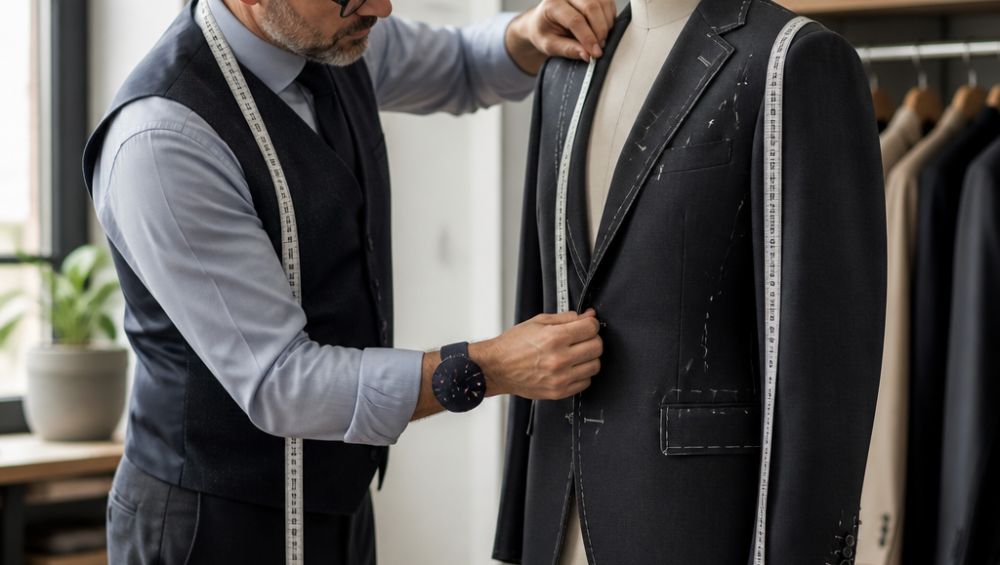
Most people spend real money on clothes that almost fit. The shoulders are right but the waist billows. The length is perfect but the seat pulls. Off-the-rack clothing is designed around statistical averages, not your actual body, and no average fits any individual person all the way through. Expert tailoring is the practice that closes that gap, converting a garment that was built for the masses into one that looks as though it was made specifically for you. It costs far less than people expect, and the visible difference is immediate.
Table of Contents
- Quick Takeaways
- Why Off-the-Rack Almost Always Needs Work
- What Expert Tailoring Actually Does to a Garment
- Garments That Benefit Most from Professional Alterations
- Alteration Approaches: A Practical Comparison
- The Fit Guarantee Difference
- Custom Fit Clothing for Special Occasions
- How to Get the Most from Your Alteration Appointment
- Frequently Asked Questions
- References
Quick Takeaways
| Key Insight | Explanation |
|---|---|
| Fit starts at the shoulders | Shoulder seams must sit at the edge of your shoulder bone. Almost everything else on a jacket can be altered, but moving shoulders significantly is structurally complex and expensive. Buy for the shoulders first. |
| Taking in is easier than letting out | A skilled tailor needs seam allowance to release fabric. If a garment is too tight across the chest or seat, there may not be enough fabric to work with. Slightly loose is always the safer starting point. |
| Hemming changes everything | Trouser hem length affects how an entire outfit reads. Even a half-inch too long or too short makes otherwise well-fitted trousers look cheap. It is also one of the most affordable and fast alterations available. |
| Waist suppression transforms silhouette | Taking in the side seams of a jacket or dress to follow the natural waist creates shape without restricting movement. This single change is often what separates a boxy, forgettable look from a genuinely sharp one. |
| Rush service is a real option | For last-minute events, same-day and rush alteration services mean you do not have to walk into an occasion wearing something that does not fit. The key is walking in early enough in the day for the work to be completed. |
| Bridal and formalwear need specialist hands | Structured gowns, lined suits, and beaded fabrics require a tailor with experience handling those specific constructions. General alteration experience is not the same as formalwear-specific expertise. |
| A 30-Day Fit Guarantee removes the risk | When an alteration provider backs their work with a written fit guarantee, you have a real safety net. If the fit is not right after the first wear, you can return without cost or argument. |
Why Off-the-Rack Almost Always Needs Work
Clothing manufacturers produce garments in sizes that reflect average body proportions. Those proportions are loosely defined and vary significantly between brands, countries of manufacture, and even different lines within the same brand. A size medium is not a universal measurement. It is a best guess.
The result is that most people wear clothes that fit reasonably in one dimension and poorly in at least one other. A shirt might button across the chest but hang like a sack at the waist. Suit trousers might sit correctly at the waist but stack three inches of excess fabric over the shoe. A dress might fall beautifully from the hips but sit an inch too low at the neckline. None of these issues are flaws in the garment itself. They are just the natural outcome of mass production meeting an individual body.
Custom fit clothing does not have to mean custom-made from scratch. It means taking what already exists and adjusting it precisely to the body that will wear it. That is exactly what professional alterations accomplish, and in most cases the work takes days, not weeks.
What Expert Tailoring Actually Does to a Garment
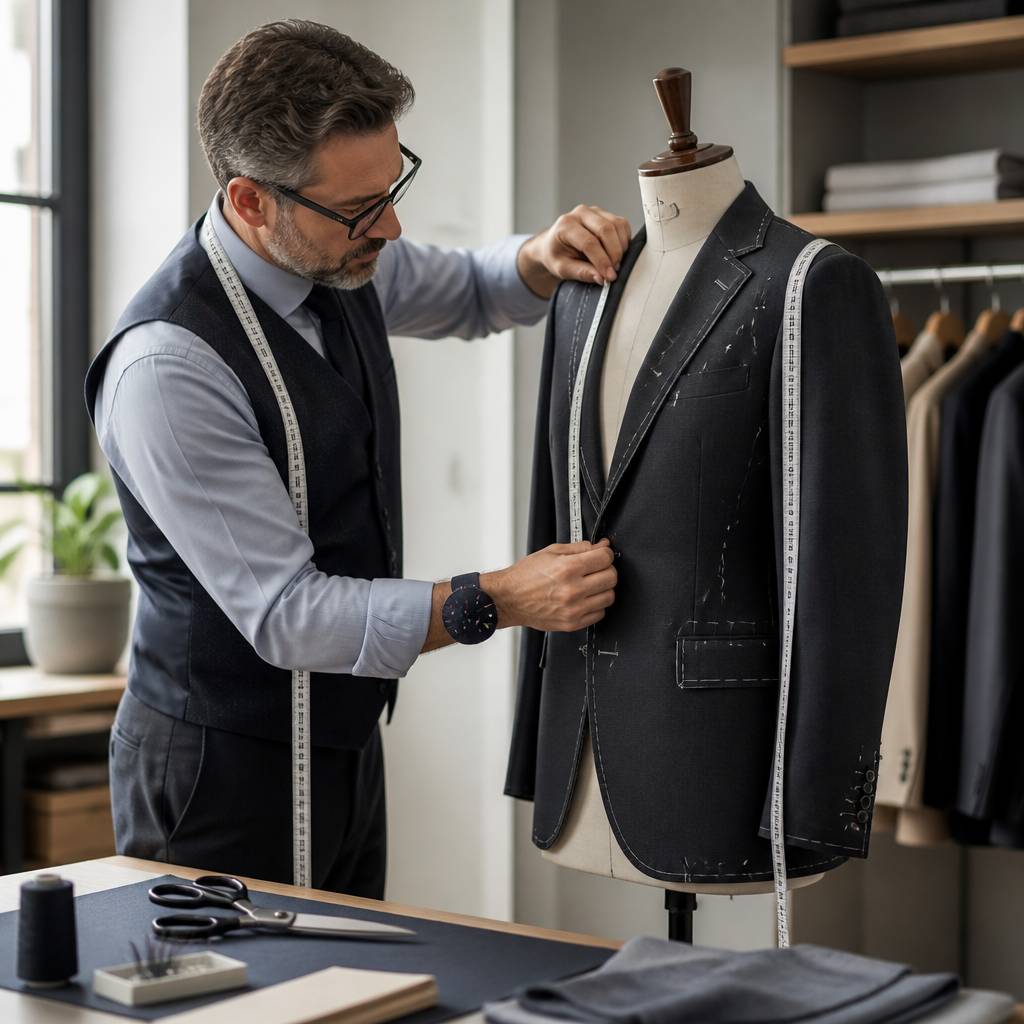
There is a meaningful difference between someone who can sew and someone who understands garment construction well enough to alter it without compromising its integrity. Expert tailoring is the second thing. A trained tailor reads a garment’s seams, lining, interfacing, and existing construction before touching it, and every cut or stitch is made with the finished result in mind.
The Core Adjustments That Change How a Garment Looks
Waist suppression is the single most impactful change a tailor makes to a jacket or dress. By taking in the side seams to follow the natural waist, the garment moves from boxy to shaped without adding any restriction. The change typically involves one to two inches of fabric on each side seam, and the visual effect is dramatic.
Sleeve length adjustment is one of the most common requests and one of the most noticeable fixes. A jacket sleeve that covers the shirt cuff completely looks unfinished. One that shows a half-inch to three-quarters of an inch of shirt cuff looks intentional. This is an adjustment measured in centimetres, not centimetres.
Trouser tapering updates the leg silhouette from a dated cut to a contemporary one. A wider leg does not have to be discarded. A tailor removes excess fabric from the outseam or inseam to produce a clean, modern line from hip to hem. Combined with correct hem length, the result is trousers that work for a contemporary professional wardrobe.
What a Tailor Cannot Reliably Change
Shoulders are the structural foundation of any jacket or coat. Moving the shoulder seam inward or outward by more than a small amount requires rebuilding the entire upper portion of the garment, including the sleeve insertion. It is possible, but it is expensive and the results are not always predictable on a lined, structured jacket. This is why the rule in professional alterations is to buy suits and structured jackets so that the shoulder fits correctly before anything else is assessed.
Significant chest alterations are similarly constrained by the seam allowance built into the garment. If there is not enough extra fabric sewn into the seams, letting out a too-tight chest is not possible. Off-the-rack garments vary widely in how much seam allowance they include, and a tailor will check this before committing to any release alteration.
A well-fitted garment changes the way a person carries themselves. The fit is the first thing every observer registers, even when they cannot name why someone looks polished or put-together.
Garments That Benefit Most from Professional Alterations
Not every item in a wardrobe needs a tailor’s attention. Some basics, particularly jersey knits and casual pieces with generous cuts, are forgiving enough that minor fit imperfections read as intentional. But certain garments reward alteration work so reliably that skipping the tailor is a genuine mistake.
Suits and Blazers
A suit is the garment most people associate with tailoring, and for good reason. It is structured, layered, and worn in contexts where appearance is under genuine scrutiny. The jacket body, sleeve length, and trouser hem are all standard alteration targets. The combination of these three adjustments, when done well, elevates an off-the-rack suit into something that registers as made-to-measure to anyone looking at it.
Dress Trousers and Jeans
Trouser length is the most frequently requested alteration across all garment types. It is fast, reliable, and affordable. Beyond hemming, a tailor can also adjust the waistband, take in the seat for a cleaner rear silhouette, and taper the leg. Jeans respond particularly well to tapering and hemming, and the cost is low relative to the improvement.
Dresses and Skirts
Hem length, waist darts, and bust adjustments are the primary targets for dresses. A dress that fits at the bust but hangs straight through the waist can be given shape through side seam work and strategic darting. A skirt hemmed to the correct length, rather than the manufacturer’s default, immediately looks more intentional.
Shirts and Blouses
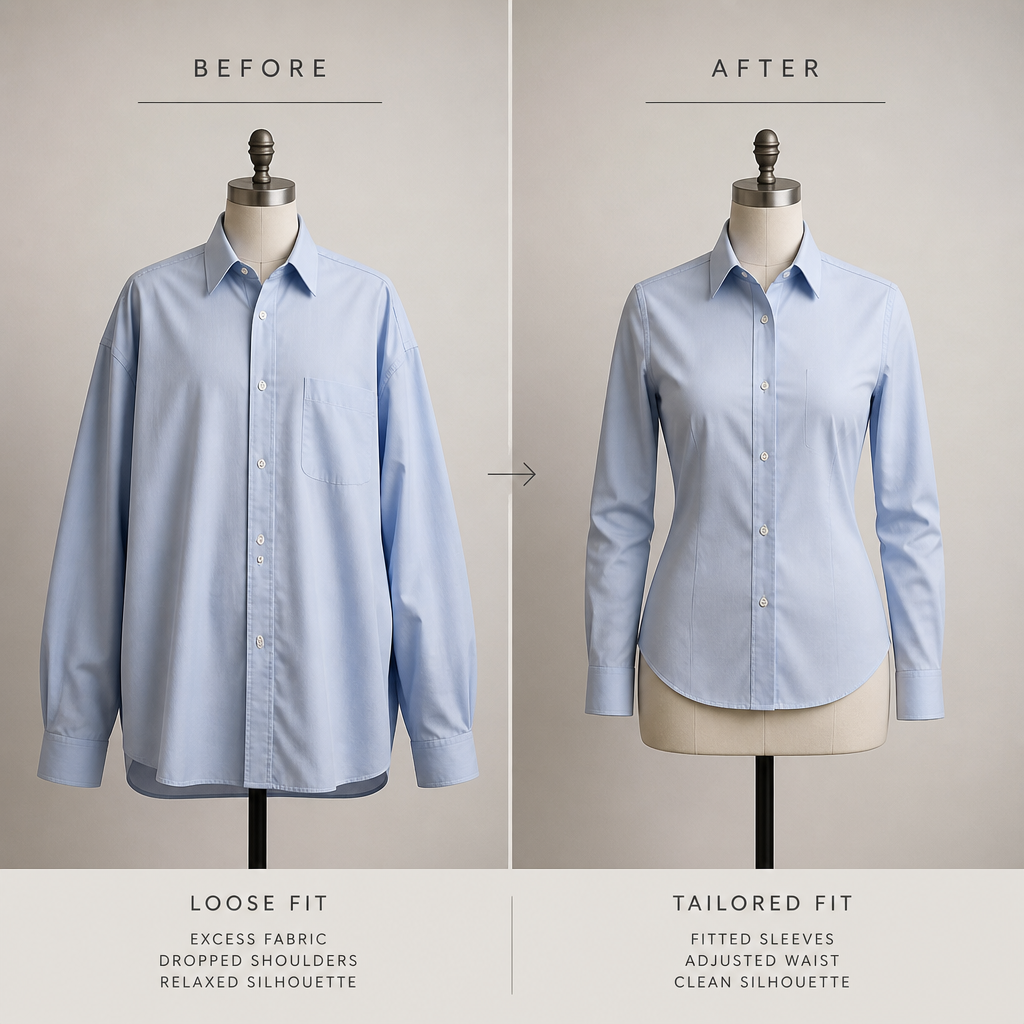
Button-down shirts that fit at the shoulders will almost always have excess fabric at the waist. A tailor takes in the side seams from hem to underarm to create a fitted silhouette that is still comfortable in motion. Sleeve length can be shortened at the cuff, and the body length can be adjusted for a clean tuck or an untucked hem.
Pro tip: When buying a button-down shirt or blazer, prioritize shoulder fit above all else. Every other dimension can be adjusted by a competent tailor. The shoulders cannot be moved without a major reconstruction.
Alteration Approaches: A Practical Comparison
| Approach | What It Delivers | Best Used For |
|---|---|---|
| Single-alteration (hem or taper only) | Corrects one specific fit issue, fast turnaround, lowest cost entry point | Trousers, jeans, skirts where the only issue is length or leg width |
| Multi-point alteration (waist, sleeve, hem) | Addresses several fit issues in one session, garment reads as near-custom | Off-the-rack suits, blazers, structured dresses worn to professional or formal events |
| Specialist formalwear alteration | Handles complex constructions including linings, boning, beading, and structured silhouettes | Wedding gowns, bridesmaid dresses, tuxedos, gala and event formalwear |
In practice, most people underestimate how much a multi-point alteration changes a garment. The difference between fixing only the hem and fixing the hem, waist, and sleeve length simultaneously is the difference between a garment that looks adjusted and a garment that looks like it was made for you.
The Fit Guarantee Difference
One of the legitimate criticisms of alteration services is that the outcome is sometimes subjective. A garment can leave the shop technically correct and still not feel right when you put it on in different shoes or with different posture. A 30-Day Fit Guarantee, like the one offered at Stitch It, addresses this directly. If the fit is not right after wearing, you bring it back and the issue is corrected at no additional charge.
This matters because fit is not always fully assessable on a hanger or in a fitting room without the shoes, undergarments, and movement patterns you use in real life. A guarantee means the assessment period extends into actual wear, which is the only honest test of whether an alteration has worked.
Pro tip: Wear the shoes and undergarments you plan to wear with the finished garment when you come in for your fitting. Heel height changes hem length requirements for trousers and dresses by a measurable amount, and a fitting done in flat shoes for a garment intended to be worn in heels will produce the wrong result.
Custom Fit Clothing for Special Occasions
Formalwear, bridal wear, and uniforms share one characteristic: they are worn in high-visibility situations where a poor fit is immediately noticeable. This is the category where cutting corners on alterations is most costly.
Bridal Alterations
Wedding gowns almost never fit off the rack or even off the boutique floor without alteration. The construction of a bridal gown is more complex than everyday clothing. It typically involves boning, structured bodices, multiple fabric layers, and often embellishment that must be carefully moved or resewn around any alteration. A specialist in bridal alterations knows how to handle these materials without distorting the design. Trusting this work to a general seamstress with no formal gown experience is a risk not worth taking on a garment worn once in a lifetime.
Allow more time than you think you need. Bridal alterations typically require multiple fittings, and the timeline should account for that. Walking in weeks before the event rather than days is the right approach.
Formalwear and Suits
Rented and purchased formalwear benefits from the same multi-point alteration logic as everyday suits, but the stakes are higher and the construction is often more complex. Formalwear alterations performed by an experienced tailor ensure that a rented tuxedo or purchased evening suit looks as intentional as anything custom-made, at a fraction of the cost.
Uniform Alterations
Workwear and uniform alterations are a practical category often overlooked in conversations about tailoring. A uniform that fits well is more comfortable to work in across a full shift, projects a more professional image, and requires less frequent replacement because it is not subject to the stress of a poor fit pulling on seams. Organizations that invest in properly fitted uniforms see tangible benefits in both staff appearance and garment longevity.
How to Get the Most from Your Alteration Appointment
A common mistake is arriving at an alteration appointment without having thought through how the garment will actually be worn. The tailor can only pin and measure what is in front of them. If you bring the wrong shoes, forget to mention that the jacket will be worn over a specific type of shirt, or do not communicate clearly what you want the silhouette to look like, the result will reflect that gap.
Bring the garment clean. Tailors work closely with fabric and need to handle it extensively. A garment that has been worn and not cleaned is both unprofessional to bring in and harder to work on accurately.
Be specific about your preferences. “Take it in a bit” means different things to different people. Bring a reference image if that helps communicate the silhouette you want. A good tailor will listen to this, assess whether it is achievable with the specific garment, and tell you honestly if the goal is realistic.
Ask about same-day service if timing is a concern. Walk-in same-day service is available for many standard alterations, including hems and basic taper work. For complex formalwear or bridal work, more lead time is needed, but for everyday garments the turnaround is often faster than people assume.
For everyday alterations on casual and professional wardrobe staples, no appointment is needed at Stitch It locations. Walk in, get fitted, and leave with a clear timeline and transparent pricing from the start.
Frequently Asked Questions
How much does expert tailoring typically cost for basic alterations?
Basic alterations like trouser hems start from $14.89 at Stitch It. More involved work such as jacket waist suppression, sleeve shortening with button detail, or bridal gown fitting will cost more because the labour is more complex. The best practice is to ask for a quote at the fitting, where the tailor can see the actual garment and give an accurate figure. Transparent, upfront pricing before any work begins means no surprises at pickup.
Can a tailor fix a suit jacket that is too big in the chest?
In many cases, yes. A tailor can take in the side seams and back seam to reduce the chest and waist circumference, creating a more fitted silhouette. The limiting factor is seam allowance. If the original garment was made without much extra fabric in the seams, there is a ceiling on how much can be taken in. A tailor will check the seam allowance before quoting the work. If the chest is dramatically too large, a new garment in a smaller size may be the better starting point.
What is the difference between tailoring and standard alterations?
In practical terms, tailoring refers to the broader craft of shaping garments to fit specific bodies, often involving a detailed assessment of multiple fit points and the construction of the garment. Alterations are specific changes made to an existing garment, which may be one adjustment or several. Both terms are used interchangeably in professional alteration shops, and the quality of the result depends on the skill of the person doing the work, not the label used for the service.
How long do clothing alterations take?
Standard alterations like hemming trousers or tapering a shirt can often be completed same-day with walk-in service. More complex work such as jacket refit, bridal gown alterations, or uniform batch work requires more time and typically involves at least one fitting appointment. If you have a specific event date, communicate that at your first visit so the tailor can confirm whether the timeline is achievable and whether rush service applies.
Is it worth altering inexpensive off-the-rack clothing, or only expensive pieces?
The value of an alteration is measured against what you paid for the garment and how often you will wear it. A $60 pair of trousers that you wear twice a week is a much better candidate for a $20 hem than a $300 pair worn once. Price does not determine whether a garment is worth altering. Frequency of wear, how much better it will look with the fix, and whether the fabric and construction can handle the alteration are the real factors to weigh.
Do I need an appointment for clothing alterations at Stitch It?
No appointment is needed at Stitch It locations. Walk-ins are welcome, and same-day and rush service options are available for many standard alterations. For bridal or complex formalwear, it is sensible to come in as early as possible before your event date to allow for multiple fittings if needed, but you do not need to book in advance to get started.
Have you had a tailoring experience that completely changed how a garment fits and feels? Share what made the difference in the comments below.