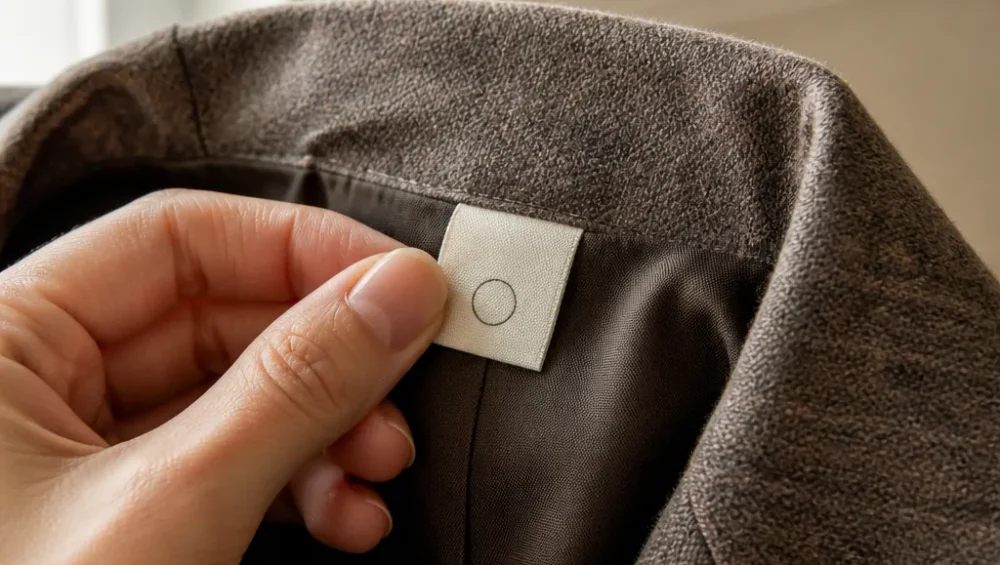
Plenty of good clothes get ruined by a care label that was read too quickly, or read and then ignored. The “dry clean only” tag sits inside a collar or side seam, and many people treat it as a suggestion rather than a warning. In our shop, the pattern is familiar: a wool blazer that loses a size after one home wash, or a silk dress with a water ring that spreads across the bodice. This guide explains what the dry clean only label really means, how to read the symbols around it, and when the instruction is worth following.
Table of Contents
- Quick Takeaways
- What the Dry Clean Only Label Actually Says
- Why Manufacturers Put It on Clothes
- Reading the Dry Clean Symbol Beyond the Words
- Comparing Cleaning Methods for Labeled Garments
- What Happens If You Ignore the Label
- Reading the Rest of the Care Label
- Stains on Dry Clean Only Fabric
- How Alterations Fit Into Care Decisions
- Frequently Asked Questions
- References

What the Dry Clean Only Label Actually Says
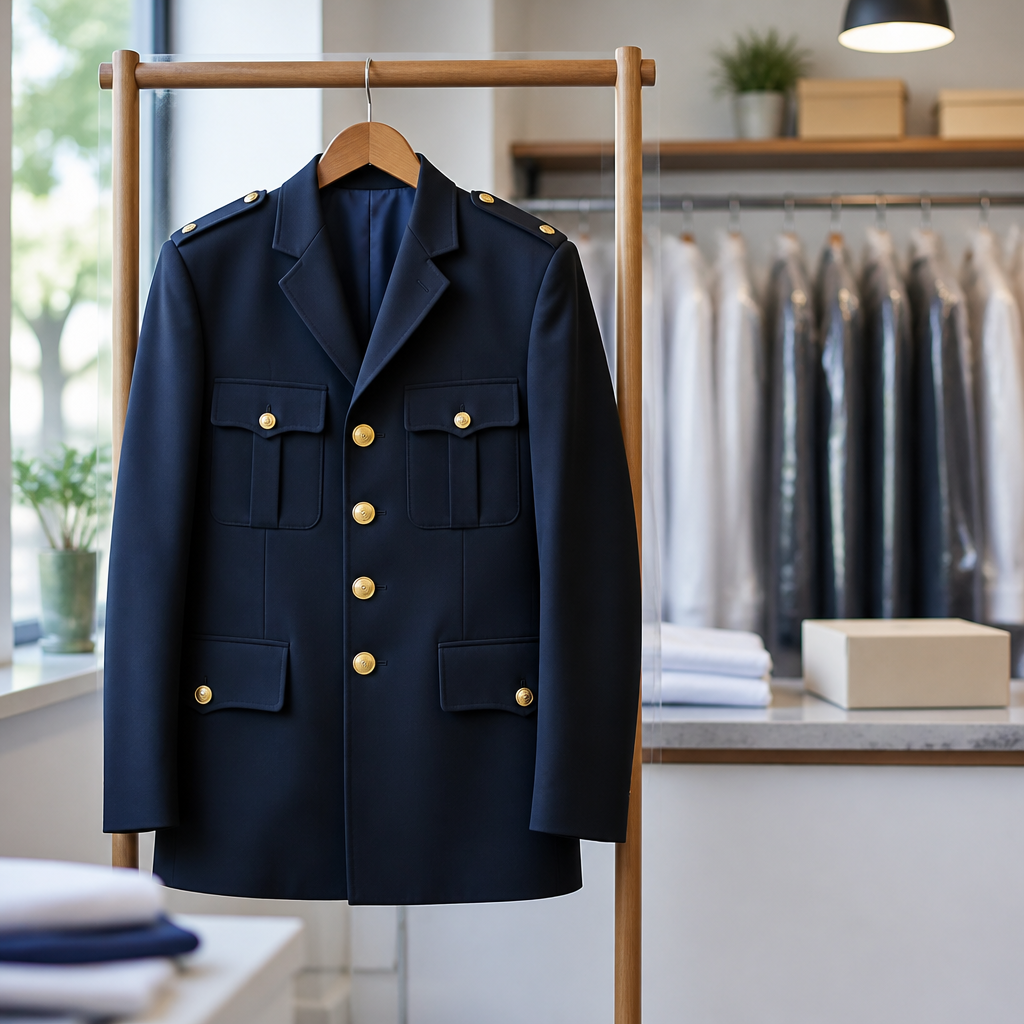
A dry clean only label is a recommendation from the garment maker. It means the manufacturer believes professional dry cleaning is the only safe way to clean the piece without damaging it. That is the most useful way to think about the phrase, because it tells you whose judgment is behind the instruction.
The label is not a legal rule for your closet, and nobody is going to check your laundry. The real question is whether you want to accept the risk. For a cheap cotton top that you wear twice, that trade may be fine. For a lined wool coat or a bridal bodice, it usually isn’t.
Who Writes the Instruction
Brands choose dry clean only when a garment combines materials that react differently to water. A silk lining sewn into a wool shell is a common example, as is a structured jacket with fused interfacing. The label reflects the weakest part of the garment, not the strongest.
That means a garment can look sturdy and still carry the instruction. The outer fabric might handle a gentle wash fine, while the lining or the collar stiffener cannot.
Why the Word “Only” Carries the Weight
People often skip the word “only,” and it is the part that matters most. A label that says “dry clean” usually means the item can be cleaned that way safely, with other methods possibly allowed. “Dry clean only” means the maker has ruled out water-based methods entirely.
Pro tip: When you buy a garment, photograph the care label before you cut off the tags. Many labels are printed on a woven strip that fades or gets lost after a few cleanings, and a photo saves you from guessing later.
Why Manufacturers Put It on Clothes
Most dry clean only instructions come down to a few construction problems that show up only after water and heat are applied. Knowing those problems helps you judge whether a garment is a true risk or a cautious label on a simple piece. The label is a shortcut, and the reasons behind it are usually practical.
Interfacing, Linings, and Glued Seams
Fused interfacing uses a heat-activated adhesive that can bubble, separate, or stiffen unevenly after water and agitation. A collar that looks crisp after professional cleaning can lose its shape at home, and once the bond lets go, pressing will not fix it. Lapels and waistbands are the most common casualties.
Linings add another layer of risk. A lining may shrink at a different rate than the shell, so the garment puckers or pulls across the back. You often cannot see this until the piece is dry and already misshapen.
Dyes and Prints That Run
Deep or dark dyes, particularly on silk, rayon, and some blends, can bleed or leave visible rings. Water rings on silk are a classic example: the fabric dries with a clear edge because the dye or finish moved toward the spot. Our experience is that a water ring is harder to fix than the original stain, since the whole panel may need to be cleaned to blend it out.
The dry clean only label is the maker’s warning about the most fragile part of the garment, and that part is often hidden inside a seam where you will never look.
Knitwear and Synthetics in the Gray Zone
This is where the label gets confusing. While many brands list certain synthetic fabrics as dry clean only, most can be safely washed when handled delicately. That gap explains why people wash these items at home and why the results vary.
A plain synthetic knit with no lining or trim may survive a careful hand wash, but a structured piece with beading, a lining, or a fused collar belongs with a professional cleaner. If you want to test a knit at home, pick the least visible item you own, not the one you paid the most for.
Reading the Dry Clean Symbol Beyond the Words
The written phrase is only half the message. The symbol on the label is standardized, and once you learn the main shapes, you can read a care label in a few seconds, even if the wording is in a language you don’t speak well. The circle is the one to recognize first.
The Plain Circle
The dry clean symbol is a circle indicating that the garment is best cleaned by a professional dry cleaner, and it advises against washing anything marked with it. That is the core instruction. The plain circle is the cleaner’s signal, and the rest of the symbols inside or below it tell the cleaner how to proceed.
Letters or bars inside or beside the circle are the details. They narrow down which solvents the cleaner should use and how gentle the process needs to be. You do not need to memorize every variation, but you should know that the circle means the professional route.
The Crossed-Out Circle
A crossed-out circle means the garment should not go to a dry cleaner at all. This is a different instruction from the plain circle, and people confuse the two more often than you would expect. If you see the crossed version, tell your cleaner or tailor before anything else, since the fabric or finish may be sensitive to the solvents used in standard dry cleaning.
Pro tip: If a label has a plain circle and a crossed-out circle on different garments you own, treat each one separately. Do not assume a sister piece from the same brand uses the same finishing method.
Comparing Cleaning Methods for Labeled Garments
Once you know what the label says, the next question is which route to take. The three realistic options for a dry clean only garment are professional cleaning, careful home hand washing, and spot treatment. Each one fits a different kind of garment, and each one carries a different risk.

Three Common Routes
Professional dry cleaning is the default for structured tailoring, formalwear, bridal pieces, and anything lined. Its drawbacks are cost and turnaround time, and the quality depends on the cleaner knowing the fabric. Home hand washing is a riskier option that works only on some sturdy synthetic knits. Spot treatment is useful for small fresh marks, but it can leave its own ring if you use too much liquid.
What Happens If You Ignore the Label
Ignoring a dry clean only label rarely causes an instant disaster. The damage usually shows up after the garment has dried, pressed, and been worn a few times. By then, the options for repair are narrower and the cost is higher.
Shrinkage and Shape Loss
Wool and rayon can shrink when they are wet, and structured garments lose shape when water breaks down their internal support. A jacket that fit well after its last professional cleaning may pull across the shoulders after one home wash. The problem is that the fabric may feel fine while the garment has already changed.
Shape loss also affects trousers and skirts with waistband interfacing. The waistband can roll or buckle, and the hem may drop unevenly, leaving you with a fit issue that looks like a tailoring problem.
When Damage Is Hard to Reverse
Puckered seams, lifted interfacing, and faded prints are difficult to undo by pressing. A tailor can sometimes adjust the fit to hide minor distortion, but cannot restore a finish that has been dissolved or a bond that has separated. That is why early action matters more than clever rescue attempts.
If a garment has already been washed at home, bring it in before you try to press it back into shape. Pressing with too much heat can set a distortion permanently, and a professional can often assess the damage more accurately when the garment is still in its original state.
Pro tip: If you accidentally wash a dry clean only item, do not dry it in a machine dryer. Lay it flat on a towel in the shade, shape it by hand, and get it to a cleaner as soon as possible.
Reading the Rest of the Care Label
The dry clean symbol does not appear on its own. Most care labels include a small set of symbols for washing, drying, bleaching, and ironing, and some of them affect how a professional cleaner handles the garment after the solvent stage. Reading the full set gives you a complete picture before you decide anything.
Washing, Drying, and Bleach Symbols
Tide’s guide to laundry symbols explains that dry clean only garments must be taken to a dry cleaner to remove dirt or other stains. The other symbols usually describe what to avoid. A washtub marks washing guidance, a square with a circle inside covers tumble drying, and a triangle covers bleaching.
A label may also show a bar or dot that indicates a gentler setting. You do not need to be a laundry expert to read these. Just note which symbols are crossed out, since those are the actions the maker most wants you to avoid.
Ironing Dots and Finishing Heat
The iron symbol tells you how hot the finishing can be, usually with one to three dots. Dots matter because fused interfacing and synthetic fibers can melt or shine under the wrong heat. Even after professional cleaning, a garment can be damaged at the ironing stage if it is pressed too hot.
In practice, use a pressing cloth on the wrong side and start with the lowest setting that works. If the garment still wrinkles, lower heat with steam is usually safer than higher heat without it.
Stains on Dry Clean Only Fabric
Stains are where people most often make the wrong move. A spill on a dry clean only garment tempts you to start scrubbing right away, but the first few minutes matter more than the stain removal method you pick. Most of the damage from a spill comes from rubbing and from adding water.
Blot First, Then Stop
Blot with a dry cloth or paper towel to absorb as much liquid as possible, then stop. A matcha spill on a cotton shirt is a useful comparison: the common home routine involves pre-treating with a color-safe stain remover and washing with baking soda. Those steps belong to garments the label allows in water, not to a silk blouse marked dry clean only.
Keep the cloth dry and light. Press gently, lift, and repeat with a clean section of the cloth. The goal is to remove the liquid, not to spread the stain across the fabric.
Telling the Cleaner What Happened
Give the cleaner the details that change the process. Tell them what the stain was, how long it has been there, whether you rubbed or applied anything to it, and whether the garment got wet. Those four facts help the cleaner choose between a spot treatment and a full cleaning cycle.
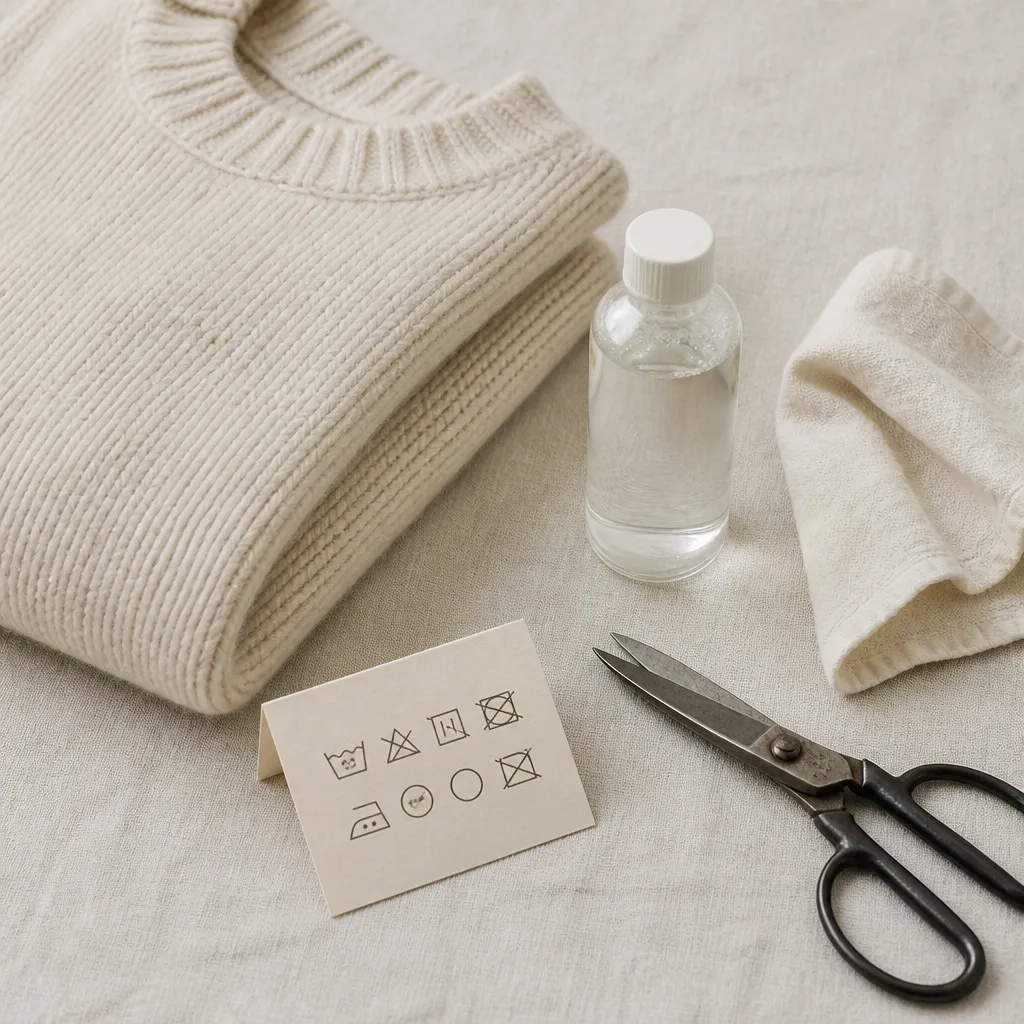
Stains left for days often need more than a basic spot treatment, and some marks set permanently if heat gets applied before cleaning. A short note on the garment tag or a quick message at drop-off is worth the thirty seconds it takes.
How Alterations Fit Into Care Decisions
Alterations and cleaning affect each other more than most people expect. A tailor who cuts a seam before checking the label can create a problem the cleaner cannot solve. Sequencing the two services correctly protects both the fit and the fabric.
Order of Operations for Tailoring
Clean the garment before its final fitting whenever the fabric is likely to change shape. Wool and rayon can shift after cleaning, and a hem marked to the exact length before cleaning may end up uneven. Showing the label at the first fitting lets the tailor plan the order.
Once the label is clear, the tailor knows which cleaning method applies and whether any alteration should wait. This is the step most people skip, and it is the one that prevents the most avoidable damage.
Hem Pricing and Fit Checks
At Stitch It, hem pricing starts at $14.89, and we check the care label at drop-off so the cleaning method is confirmed before any seam is opened. If a fit still feels off after the work is finished, our 30-Day Fit Guarantee is there for exactly that kind of follow-up. Clear communication at the start saves both the garment and the time you would otherwise spend on a second visit.
Pro tip: Wear the shoes you plan to wear with the garment to your fitting, and bring the care label along. Your tailor can see both the fit and the cleaning instruction in one visit.
Frequently Asked Questions
Can I hand wash a dry clean only garment if it looks sturdy?
You can, but you accept the risk. A plain synthetic knit with no lining or trim may survive a careful hand wash in cool water, while a structured jacket, a lined skirt, or anything with a fused collar should go to a professional cleaner.
What is the difference between “dry clean” and “dry clean only”?
“Dry clean” usually means the garment can be professionally cleaned safely, and other methods may also be allowed. “Dry clean only” means the maker has ruled out water-based methods entirely, so follow it closely.
What does a crossed-out dry clean circle mean?
A crossed-out circle means the garment should not be dry cleaned at all. Tell your cleaner or tailor before anything else, since the fabric or finish may react to the solvents used in standard dry cleaning.
Does dry clean only mean the fabric is delicate?
Not always. The label often reflects the most fragile component, such as a lining, interfacing, or dye, rather than the outer fabric. A durable-looking wool can still carry the instruction because of how it is built.
Can I remove a stain from a dry clean only item at home?
Blotting with a dry cloth is safe and usually the right first step. Avoid applying water, stain removers, or baking soda to the area, since those steps can leave rings or shift dye. Take the garment to a cleaner as soon as you can.
Will a dry cleaner change the fit of a garment?
Cleaning can change fit on some fabrics, especially wool and rayon, which is why it helps to clean before the final fitting. A good cleaner and tailor will coordinate the order so the finished garment sits as intended.
Tell us about the garment that taught you to read a care label, and what you would check differently now.
We would love your feedback and any insights you would share with others. What perspective would you add?
References
- Real Simple explainer on what the dry clean only label means and when to follow it
- Green Shield Organic guide to laundry symbols and the dry clean circle
- Tide guide to reading laundry symbols, including the dry clean only mark
- Kair article on which synthetic fabrics labeled dry clean only can be washed by hand