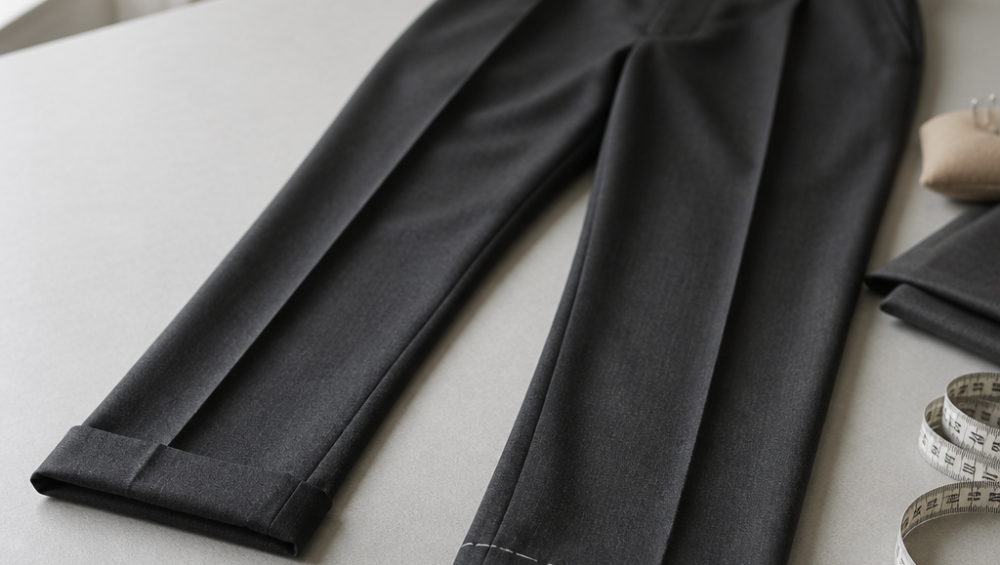
Walk into any alteration counter with a pair of khakis and a pair of charcoal dress trousers, and you will often hear the same question: can one hem work for both? The short answer is no, and the reason has more to do with how the fabric behaves than how the pants look. Dress pants are usually woven from worsted wool, polyester blends, or tropical suiting, and they are finished to hang with a clean, nearly invisible line. Chinos are cotton twill built for daily wear, and their hem usually shows a deliberate row of stitching. Choosing the wrong hem type on either one is the most common reason a fresh alteration looks off within a month.
Table of Contents
- Quick Takeaways
- Why Fabric and Cut Decide the Hem
- Dress Pants Hemming Techniques
- Chino Hemming Techniques
- Hem Break and Stacking
- Comparison of Hem Methods
- Common Mistakes at the Counter
- Pricing and Turnaround
- How to Brief Your Tailor
- Frequently Asked Questions
- References
Quick Takeaways
| Key Insight | Explanation |
|---|---|
| Dress pants usually get a blind hem | The stitches sit inside the fold so nothing shows on the front of the leg, which suits wool and suiting. |
| Chinos usually get a topstitched hem | A visible row of stitching matches the casual character of cotton twill and holds up to frequent washing. |
| Check the hem allowance before cutting | Published allowances run about 1 1/4 to 1 1/2 inches for women’s slacks and about 2 inches for men’s trousers, so measure the fold before anyone trims. |
| Break matters as much as stitch type | The amount of fabric that lands on the shoe changes the visible line more than the hem technique does. |
| Expect cotton to move after washing | Unwashed chinos can lose length after the first wash, so plan the final length around a laundered pair. |
| Ask for a trial press on heavy fabric | Wool suiting holds a crease differently than cotton, and a pressed test fold reveals the true line before the hem is sewn. |
Why Fabric and Cut Decide the Hem
The fabric tells you which hem to use before you touch a sewing machine. Worsted wool and suiting drape heavily, recover well from pressing, and show every visible stitch as a flaw, which is why tailors lean toward hidden finishes. Cotton twill is sturdier, more textured, and designed to look relaxed, so a visible topstitch reads as intentional rather than sloppy.
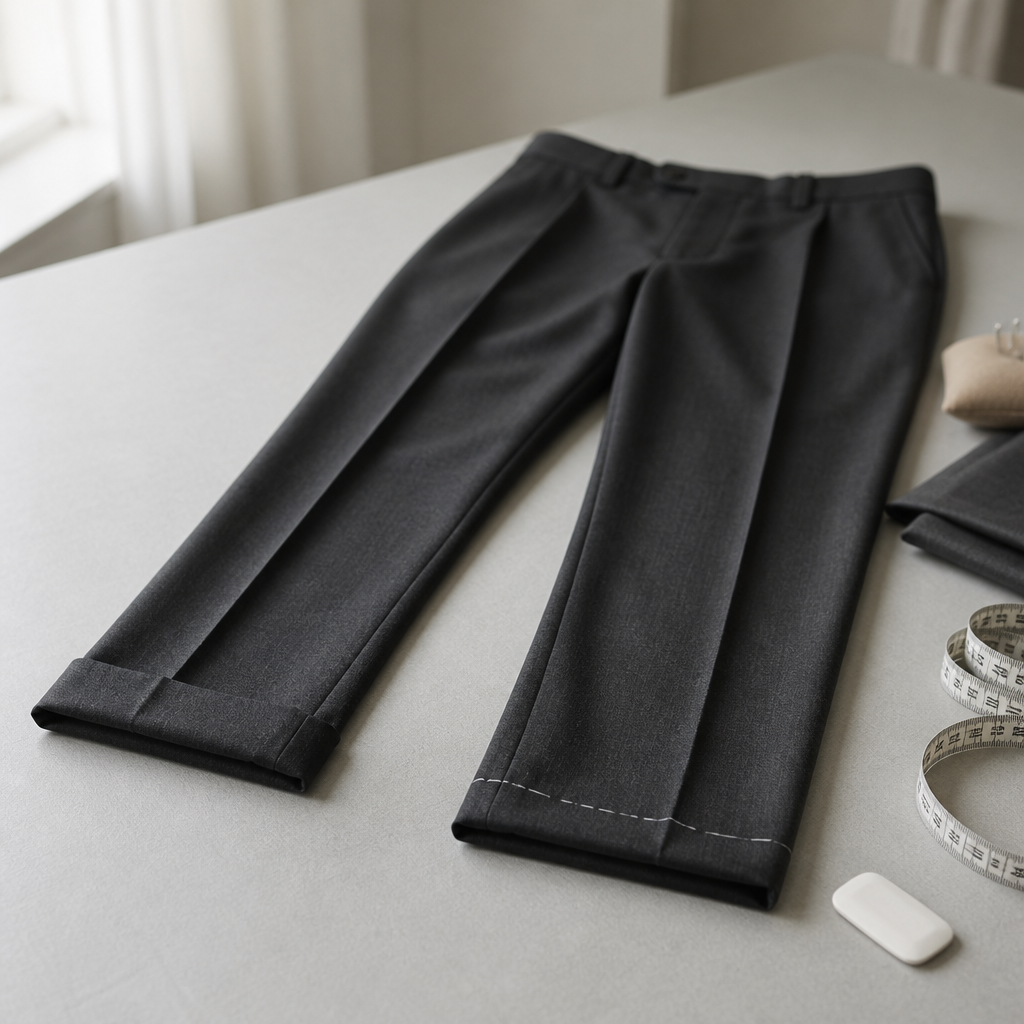
Cut matters too. Dress trousers are typically built with a slimmer, more structured leg, a higher rise, and a crisp crease at the front. Chinos often have a looser leg, a softer waistband, and pockets and seams that were designed for everyday movement. When you change the hem on a slim tailored leg, you also change how the pant falls over the shoe, and that is where many alterations go wrong.
In practice, the weight of the fabric and the type of crease are the two questions to answer first. A heavy wool trouser with a sharp front crease needs a hem that disappears into the fold. A cotton chino with a soft or no crease can carry a visible topstitch without looking out of place.
The hem should match the fabric’s personality. If the pants are meant to look formal, the stitching should disappear, and if they are meant to look casual, the stitching should be part of the design.
Pro tip: Before you drop off any pair, look at the original hem from the inside. If you see a visible topstitch with a wide allowance, that pair was built for a casual finish, and the tailor should keep that style rather than switching it to a blind hem.
Dress Pants Hemming Techniques
For most dress pants, the correct answer is a blind hem, usually stitched by hand or with a blind hem foot on a machine. The thread catches only a few threads of the outer fabric, so the stitch is almost impossible to see from the front. This is the technique that keeps a suit trouser looking like a suit trouser after the hem has been moved.
The Blind Hem on Worsted Wool
On worsted wool, a blind hem is usually the cleanest option. The tailor folds the hem up, presses the crease, and stitches the top of the hem to the inside of the leg with a small, nearly invisible catch. Done well, the finished leg shows no thread on the outside, even when the trouser is viewed up close.
A common mistake is pulling the thread too tight. A tight blind hem will pucker the outside of the leg and pull the crease out of line, and the problem often appears only after the first sit-down. A good tailor leaves enough slack that the fabric lies flat when the trouser is worn.
Hem Allowance for Tailored Trousers
Published guidance puts the typical hem allowance for women’s slacks at about 1 1/4 to 1 1/2 inches, or roughly 3 to 4 cm, and about 2 inches, or about 5 cm, for men’s trousers. That allowance is the fabric the tailor has to work with, and it is why you should never assume a pair can drop a full inch without checking. A pair with a shallow allowance may not allow a deeper hem without showing the old line.
In practice, the allowance also decides whether a blind hem is possible at all. If the fold is too shallow, the stitch has nowhere to catch, and the tailor may need to press a new crease or move to a different finish. Always ask how much fabric remains before agreeing to a length.
Chino Hemming Techniques
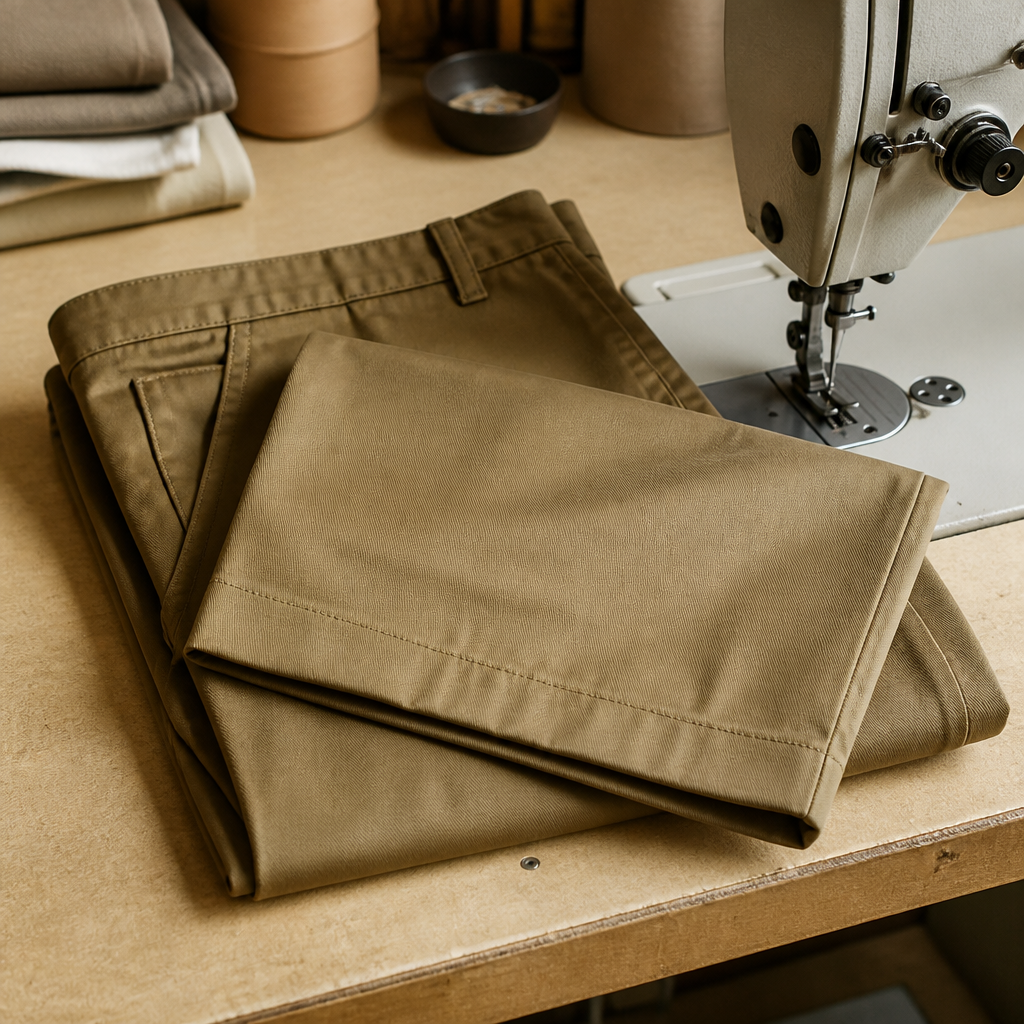
Chinos usually take a topstitched hem. The tailor folds the hem, sews a visible row of stitching near the edge, and the line becomes part of the pant’s look. Because cotton twill is designed for everyday wear, the topstitch matches the fabric and holds up well to repeated washing.
The Topstitched Hem for Cotton Twill
The topstitch is typically sewn with a matching or contrasting thread that echoes the original stitch on the pant. Some chinos carry a double row of stitching, and copying that detail matters. If the original has two rows and the new hem has one, the difference will be obvious to anyone who looks closely.
A topstitch also has a practical benefit. It holds the fold in place through washing and drying, so the hem stays flat rather than rolling up after a few months. For a pair you wear to the office or on weekends, that reliability often matters more than invisibility.
Shrinkage and Length Planning
Cotton twill can shrink, and the amount depends on whether the chinos were pre-shrunk and how they are laundered. A pair that feels perfect in the fitting room can end up short after one hot wash and a dryer cycle. That is why we often recommend planning the length around a laundered pair, or allowing a small margin when the chinos are new.
If you own a pair that has already been washed several times, you can usually measure the finished length directly. Compare the hem to the shoe, check the stack, and mark the new length while the pants are on. That approach avoids the most frustrating return visit, where a freshly hemmed pair turns out to be a half inch too short.
Hem Break and Stacking
The hem technique controls how the stitch looks, but the break controls how the leg meets the shoe. A break is the fabric that gathers on top of the shoe, and it changes the silhouette more than most people expect. Dress pants and chinos can use very different breaks, and the choice should match the shoe and the occasion.
Break Options for Dress Pants
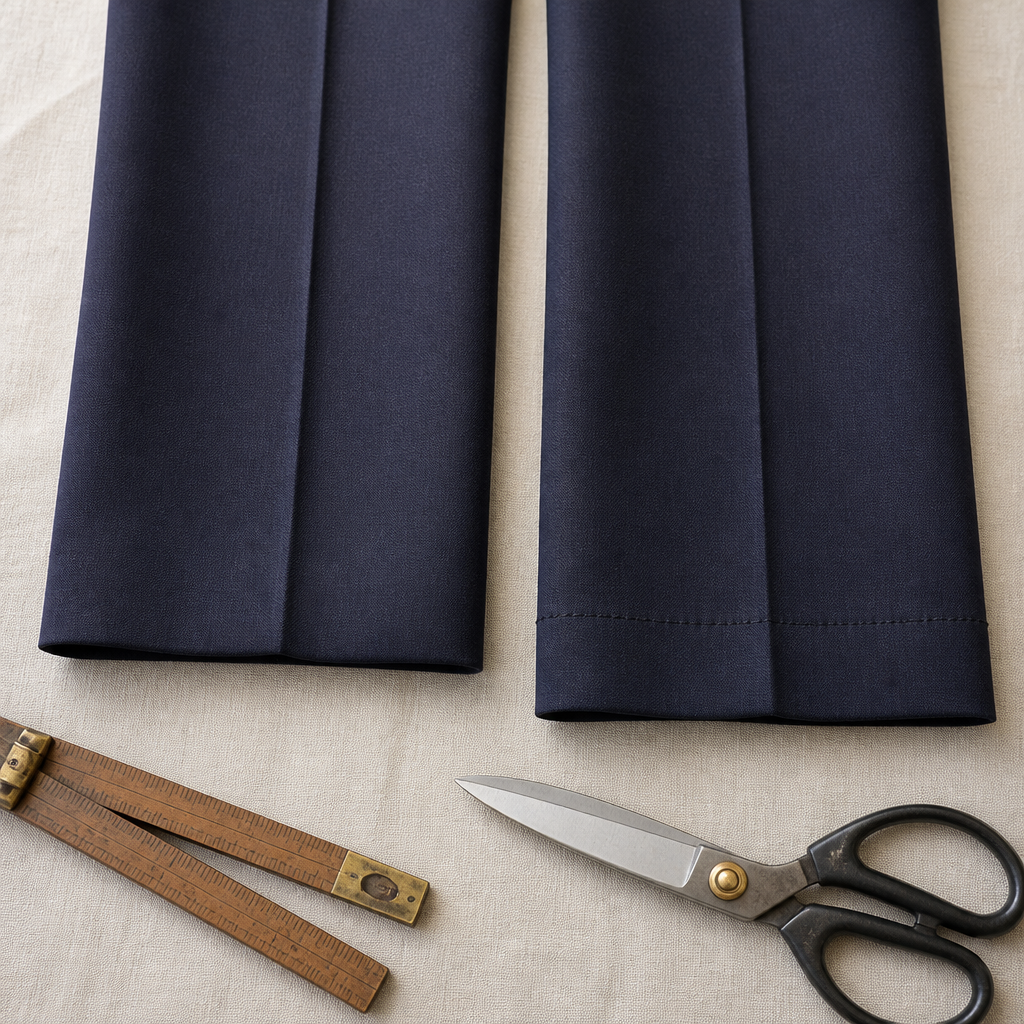
Dress pants often look best with a half break or a slight break. A half break shows a small crease where the fabric meets the shoe, while a slight break leaves a gentle fold that barely touches the top of the shoe. A full break, with a deep fold and a bunched look, reads as dated for most modern tailored wear.
The break is also tied to the shoe’s shape. A pointed dress shoe will show more fabric bunching than a rounded oxford, so the hem should be planned around the shoe the client wears most often. Bring that shoe to the fitting if you can.
Why Chinos Sit Higher on the Shoe
Chinos usually look right with little or no break. A pair that falls just to the top of the shoe, or sits about a quarter inch above it, gives a clean casual line. If the same pair is hemmed for a full break, it can look careless, especially with loafers or sneakers.
This is one reason the hem type and the break should be decided together. A topstitched hem with no break looks deliberate, while a blind hem with a full break on chinos can feel mismatched.
Comparison of Hem Methods
The table below compares the three finishes you are most likely to hear about at a counter. Each has a clear best use, and each has a trade-off that matters when the pants are worn every week.
| Hem Method | Best For | Trade-off |
|---|---|---|
| Machine blind hem | Dress pants in wool blends and polyester suiting | Fast and consistent, but the stitch can show on very thin or shiny fabric if the thread tension is off |
| Hand-stitched blind hem | Fine wool, high-end suiting, and trousers with a sharp crease | Most invisible option, but takes longer and costs more in labor |
| Topstitched hem | Chinos, cotton twill, and casual trousers | Durable and easy to maintain, but the visible line will not disappear, so it does not suit formal wear |
In practice, the machine blind hem covers most dress pants, and the hand-stitched version is reserved for the garments where any visible thread would ruin the look. The topstitch is the default for casual cotton, and it is rarely the right choice for a suit.
Common Mistakes at the Counter
Most hemming problems are not technical failures. They come from a few predictable decisions made before the pants reach the sewing table. Knowing them can save a trip back to the counter.
Hemming Chinos to a Dress Shoe Length
A common mistake is to hem chinos to the same length as dress trousers because the customer wears both with the same shoes. Chinos are often worn with lighter shoes, and the break that looks elegant with a leather oxford can look too long with a casual loafer. Ask the customer which shoe they wear most often with each pair.
Another issue is forgetting that a longer chino can be shortened later, but a dress pant with too little allowance cannot be lengthened without showing a line. Plan the conservative length first, then adjust.
Skipping the Pressing Step
Pressing is where the hem is set, and skipping it is one of the fastest ways to end up with a crooked line. A hem that looks even on the bench can shift once the pants are worn and washed. Good tailors press the fold, check the crease, and press again after the stitch is set.
On heavy wool, a test press is especially useful. It shows whether the fabric will hold a crease at the chosen length, and it reveals any shine or mark left by the iron before the final hem is sewn.
Pricing and Turnaround
Hemming is usually the most common alteration we handle, and the price reflects the technique. At Stitch It, hems start at $14.89, and the final cost depends on the garment, the fabric, and whether the hem is blind, topstitched, or hand finished. Asking for an upfront price before you drop off a pair keeps the decision simple.
Timing depends on the job. Standard hems take a few days, and same-day and rush service is available for walk-in customers when the schedule allows. If you need a pair for a specific event, mention the date at the counter so the tailor can plan the work accordingly.
What a Hem Typically Costs
Dress pants with a blind hem and standard fabric usually cost less than a hand-finished hem on fine wool. Chinos with a topstitch are often straightforward, but a double row or a matching thread color can add time. A quote that explains these differences is worth more than the lowest number on a sign.
Walk-In and Rush Timing
For urgent jobs, bring the garment in early in the day and say that it is needed for an event. Tailors can plan rush work better when they know the deadline before the pants are pinned. The 30-Day Fit Guarantee also gives you room to check the result after the first few wears.
Pro tip: Bring the shoes you will wear with the pants to every fitting. The break is set at the counter, and a hem that looks right on the bench can look too long or too short on the shoe you actually wear.
How to Brief Your Tailor
A clear brief prevents most hemming mistakes. The tailor needs to know what the pants are for, how they are worn, and what finish you expect. A few sentences at the counter can save a revision later.
Say the Pant Type Out Loud
Tell the tailor whether the pants are dress trousers, chinos, or something in between. Describe the fabric if you know it, such as wool, cotton twill, or a poly blend. This helps the tailor choose a blind hem, a topstitch, or a hybrid finish before any measuring starts.
If you want a specific look, such as an invisible hem on chinos or a visible topstitch on dress pants, say so directly. Tailors can make these choices, but they need to know that the request is intentional.
Bring the Right Shoes and a Recent Pair
Bring the shoes you plan to wear most often with the pants, and if possible bring a pair that already fits the length you want. This gives the tailor a direct reference for the break and the stack. A recent pair also shows how the original hem was built, which often reveals whether the stitch should be blind or visible.
Frequently Asked Questions
Can I use a blind hem on chinos?
You can, but it is not always the best choice. A blind hem on cotton twill can look polished, and it works well for chinos that you want to dress up. For everyday pairs, a topstitch is usually more durable and matches the fabric better.
Why do dress pants need a deeper hem allowance?
Dress pants are often cut with a structured leg and a crisp crease, and the fabric has to be folded and pressed to keep that shape. Published guidance puts the typical allowance for men’s trousers at about 2 inches, which gives the tailor room to set a clean blind hem.
Should I hem chinos before or after washing them?
Wash them first when you can. Cotton twill can shrink, and a hem set on an unwashed pair may end up too short after laundering. If you cannot wash them, ask the tailor to allow a small margin.
What is the difference between a blind hem and a topstitch?
A blind hem hides the thread inside the fold, so the finished leg looks clean from the front. A topstitch leaves a visible row of stitching on the outside, which reads as casual and helps the hem stay flat through repeated washing.
How long should a hem take at a tailor?
Many standard hems are ready within a few days, though timing depends on the garment and the workload. Walk-in and rush service may be available when the schedule allows, so ask at drop-off if you have a deadline.
Tell us in the comments or at the counter which hem you prefer for your dress pants and chinos, and whether a blind hem or a topstitch has ever surprised you after a few wears.