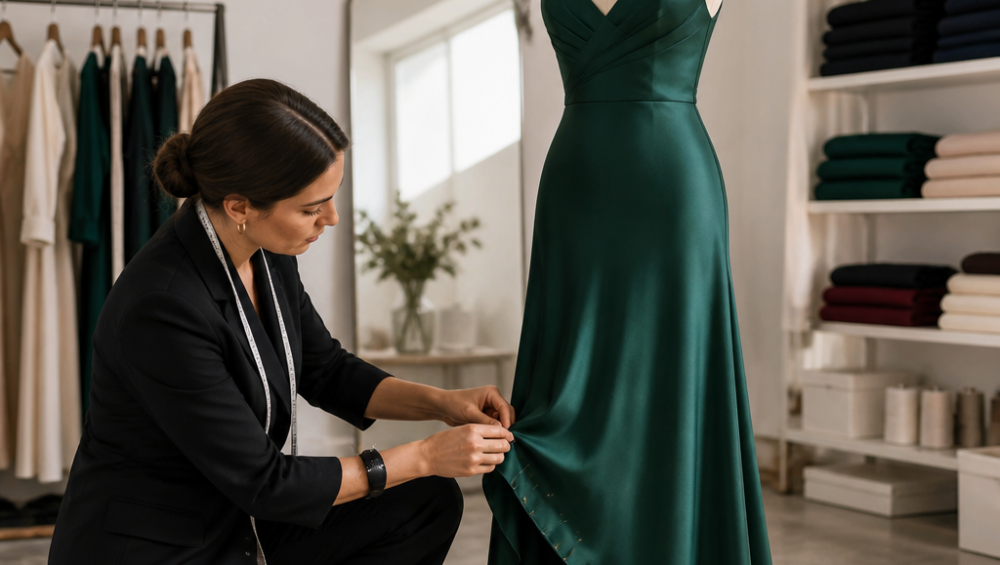
Getting bridesmaid dress alterations right for a whole group is genuinely hard. You are managing different body types, different schedules, different comfort levels with tailors, and a hard deadline that does not move. One bridesmaid who leaves her fitting too late can derail the entire visual cohesion you spent months planning. This guide walks you through exactly how to coordinate fittings for your whole party, what alterations to expect, how to handle the logistics, and how to avoid the most common mistakes that turn dress-day into a stressful scramble.
Table of Contents
- Why Group Alteration Coordination Matters
- Quick Takeaways
- The Ideal Alteration Timeline for a Bridal Party
- The Most Common Bridesmaid Dress Alterations
- How to Coordinate Fittings When Your Party Is Scattered
- Handling Different Body Types and Sizes in One Alteration Plan
- Alteration Approach Comparison
- What to Bring to Every Bridesmaid Fitting
- Frequently Asked Questions
- References
Why Group Alteration Coordination Matters
A single bridesmaid dress that fits poorly in photos pulls the eye immediately. The problem is almost never the dress style and almost always the fit. Bridal party dresses are cut to standard sizing, which almost never matches any individual bridesmaid perfectly off the rack. That means every member of your party should expect at least one alteration, and most will need two or three.
The coordination challenge is real: your bridesmaids live in different cities, have different schedules, and may have wildly different levels of urgency about getting to a tailor. As the person organizing this, your job is to remove friction and set a firm timeline early.
Quick Takeaways
| Key Insight | Explanation |
|---|---|
| Order dresses 4-6 months out | This gives enough runway for production, shipping, and at least two rounds of fittings before the wedding day. |
| Schedule first fitting 8-10 weeks before the wedding | Starting early allows time for multiple adjustments without rush fees or last-minute panic. |
| Hem alterations are the most universal need | Most bridesmaid dresses are made to a standard length, so almost every bridesmaid will need a hem regardless of height. |
| Bridesmaids should wear their wedding-day shoes to every fitting | Hem length is determined by heel height. The wrong shoes at a fitting means the hem will be wrong on the day. |
| Rush alterations typically cost significantly more | Leaving fittings to the last few weeks can mean paying 50-100% extra for expedited work. Plan to avoid this entirely. |
| Complex alterations can take 3-4 weeks | Bodice restructuring, adding or removing sleeves, and neckline changes require more time than simple hems. |
| A 30-Day Fit Guarantee provides real peace of mind | Choosing an alteration specialist that stands behind their work means post-fitting adjustments are covered if something shifts. |
Coordinating a bridal party alteration plan works best when the bride takes the lead and sets non-negotiable deadlines, rather than leaving each bridesmaid to figure it out independently. The goal is a consistent, professional result across the whole group, not just individual dresses that happen to be the same colour.
The Ideal Alteration Timeline for a Bridal Party
Timing is the single most important factor in whether bridal party alterations go smoothly or become a crisis. The timeline below is not a suggestion. Treat it as a minimum standard.
4-6 Months Before the Wedding: Order Dresses
Order all bridesmaid dresses at least four to six months before the wedding date. If your party is geographically spread out or the dresses are custom-sized or made-to-order, push this to six to eight months. Production and shipping delays are common, and you want the dresses in hand with time to spare before fittings begin.
8-10 Weeks Before: First Fitting
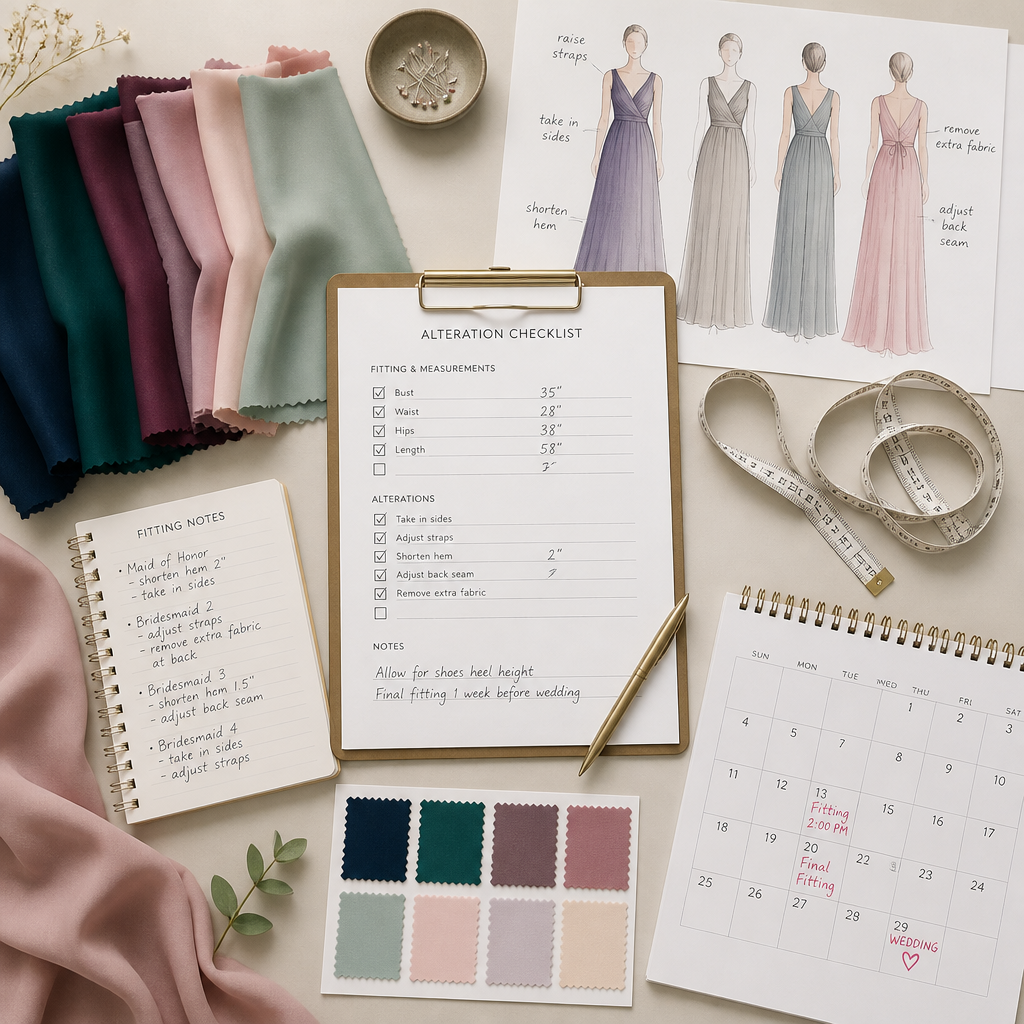
The first fitting should happen eight to ten weeks before the wedding. This is the appointment where the tailor assesses the dress on the wearer, identifies every alteration needed, and takes precise measurements. At this stage, nothing is cut yet. The goal is a clear, complete list of what needs to change.
4-6 Weeks Before: Alteration Work and Follow-Up Fitting
Simple alterations like hems and strap adjustments are typically completed within one to two weeks. More complex work, such as taking in the bodice or restructuring the back, can take three to four weeks. A second fitting at this stage confirms the work is correct before any final finishing.
1-2 Weeks Before: Final Fitting and Pickup
The final fitting is a check, not a correction session. If the previous fittings were done properly, this appointment should be brief. The bridesmaid tries on the finished dress, confirms everything is right, and picks it up. Anything discovered at this stage should be minor.
Pro tip: Build a group calendar reminder at each of these stages and send it to every bridesmaid the moment dresses are ordered. Waiting to remind people closer to the date is how fittings get skipped.
The Most Common Bridesmaid Dress Alterations
Knowing what alterations to expect means your party will not be surprised by the cost or the scope of work. Here are the alterations that come up most consistently with bridesmaid dresses.
Hem Alterations
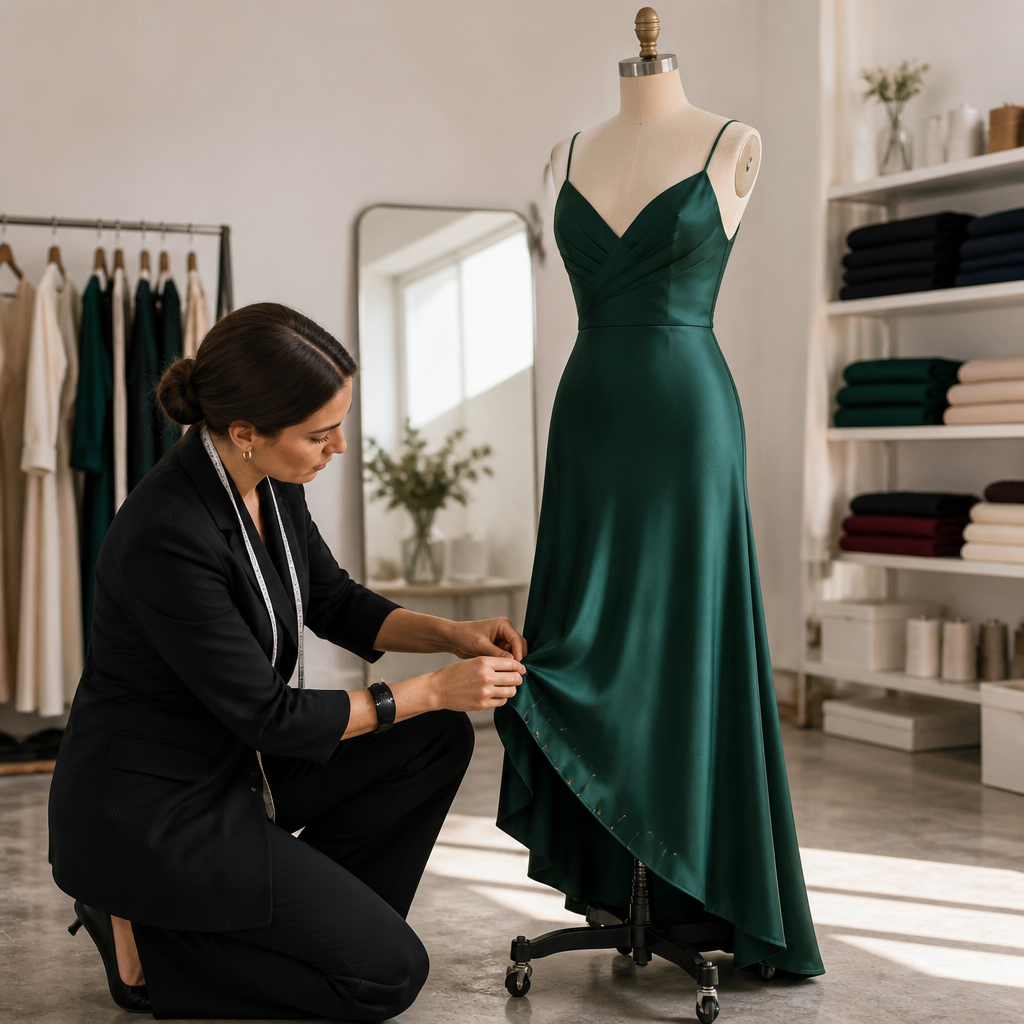
Hemming is the most common alteration across the board. Bridesmaid dresses are designed to a standard length, which means nearly every bridesmaid will need some adjustment depending on her height and the heel height she plans to wear. This is also one of the more straightforward alterations, though dresses with beading or embellishments at the hem take significantly more time because the decorative elements must be removed and reattached.
Taking In the Sides or Bodice
Bridesmaid dresses are often ordered in a size that fits the largest measurement, then taken in to fit the waist and bodice. This is extremely common and is one of the alterations that requires more fitting appointments, because even small adjustments to the bodice affect the silhouette significantly. Plan for this to take two to three weeks in the alteration schedule.
Strap and Shoulder Adjustments
Straps that are too long are a near-universal issue. When straps sit too loose, the entire dress drops and the neckline shifts. Strap shortening is fast work for an experienced tailor but must be done precisely, because even a centimetre difference affects the overall drape. Every bridesmaid with a strapped style should have her straps assessed at the first fitting without exception.
Back and Closure Adjustments
Zip closures, lace-ups, and button backs often need adjustment, particularly if the dress was ordered to fit the bust and is now slightly loose or tight through the back. This is a more involved alteration and affects the foundation of how the dress sits, so it should be flagged early in the fitting process.
Pro tip: Ask the tailor to check the closure at every fitting, not just the first. Dresses shift after initial alterations, and a closure that seemed fine at the first appointment can gap after the bodice is taken in.
How to Coordinate Fittings When Your Party Is Scattered
One of the most common complaints from brides is that bridesmaids who live in different cities end up with wildly inconsistent alteration results. One bridesmaid uses a skilled local tailor, another uses a friend’s recommendation that turns out to be unreliable, and someone else leaves it entirely too late. The solution is standardization.
Use a Single Trusted Alteration Specialist Where Possible
If your bridesmaids are concentrated in or near one city, having everyone go to the same professional alteration service is the most reliable approach. It means consistent technique, consistent fit standards, and a single point of accountability if something needs to be revisited. For bridesmaids in the same region, scheduling a group fitting day is genuinely efficient and even enjoyable as part of the pre-wedding experience.
Set Non-Negotiable Deadlines for Out-of-Town Bridesmaids
For bridesmaids who are genuinely remote, give them the same timeline requirements and make the deadlines firm. Ask for a photo of the dress on their body after their first fitting. This is not about micromanaging. It is about catching problems early, when there is still time to fix them. A photo at the eight-week mark will tell you immediately if something is wrong with the fit.
Account for Travel to Wedding Destination
If any bridesmaid is traveling a significant distance to the wedding, her final fitting needs to happen before she leaves home. Trying to sort alterations in an unfamiliar city in the final week before the wedding is a scenario to avoid entirely. Build this into the schedule explicitly.
Handling Different Body Types and Sizes in One Alteration Plan
No two bridesmaids have the same proportions, and the alterations needed will vary considerably from person to person even within the same dress style. This is normal and expected. The key is making sure no one in the party feels left out of the fitting process or surprised by how much work their dress needs.
Order to the Largest Measurement
The standard practice is to order each dress to fit the bridesmaid’s largest measurement, whether that is the bust, waist, or hips, and then alter down from there. This approach is correct because it is much easier to take a dress in than to let it out, and most fabric does not have unlimited seam allowance for letting out. Make sure every bridesmaid understands this from the moment she is measured.
Set Realistic Expectations About Alteration Scope
A bridesmaid who ordered to her bust size may need significant waist and hip alterations. This is not a sign that anything went wrong. It is simply how standard sizing works on real bodies. Communicating this upfront prevents frustration when the tailor presents a longer list of work than the bridesmaid expected.
Different Dress Styles in the Same Colour
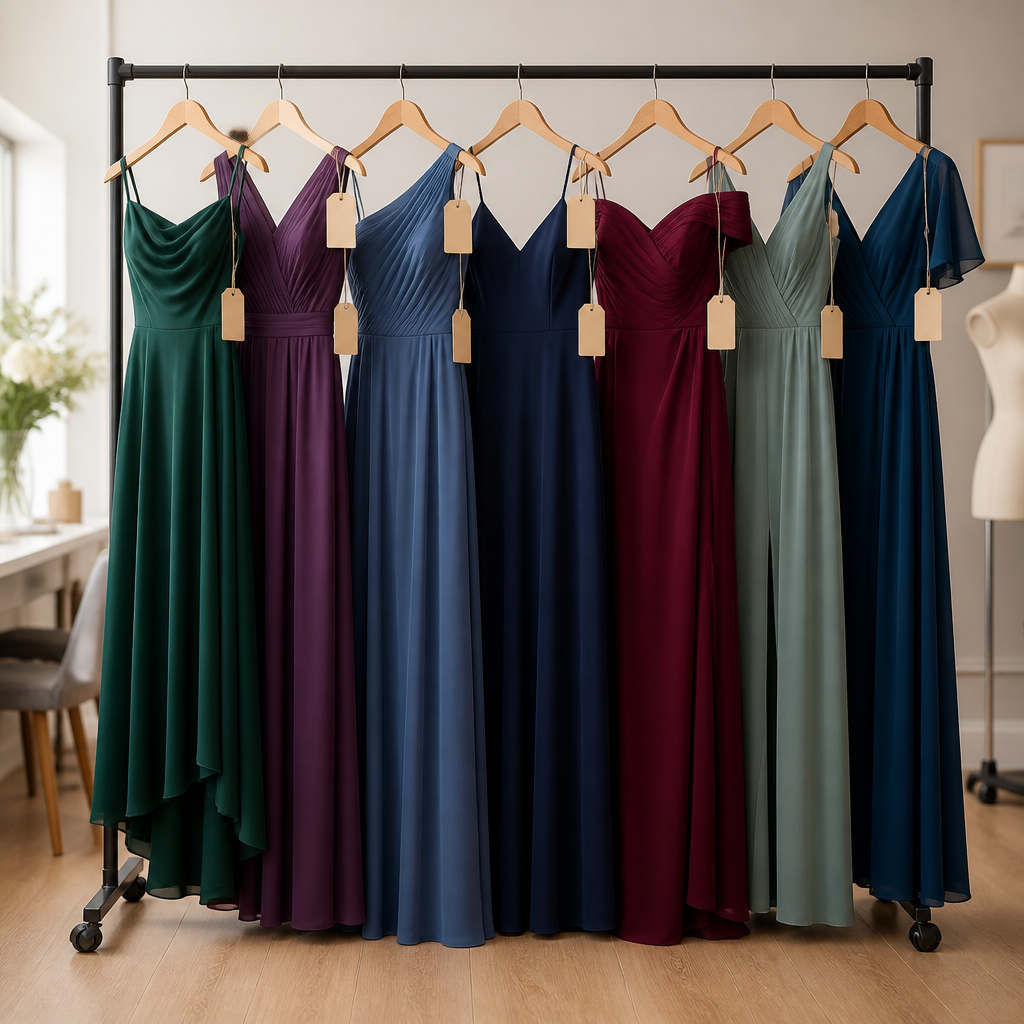
Many bridal parties now use a consistent colour palette while allowing each bridesmaid to choose a silhouette that flatters her own body type. This approach actually simplifies the alteration process, because each person’s dress is being altered to suit her specific shape rather than forcing every body into one cut. The alteration work is still the same in scope, but the results are typically more flattering and the bridesmaids are more comfortable throughout.
The fit of a dress matters far more than its style. A well-fitted version of a simple design will always photograph better than an ill-fitted version of an expensive one.
Alteration Approach Comparison
Not all approaches to managing bridal party alterations produce the same outcome. The table below compares three common approaches based on the factors that matter most for a whole party.
| Approach | Best For | Key Risks |
|---|---|---|
| Group fitting at one professional service (all bridesmaids attend the same location) | Parties based in or near the same city. Ensures consistent results, single point of contact, and efficient group scheduling. | Requires all bridesmaids to be local or willing to travel for fittings. Not practical for geographically spread parties. |
| Individual fittings at the same service chain (each bridesmaid visits the nearest location of the same provider) | Parties spread across a region but near locations of a multi-location alteration specialist. Consistent standards without requiring travel. | Some variation between locations. Requires confirming each location offers the same services and has bridal alteration experience. |
| Independent tailors chosen by each bridesmaid | Out-of-country or truly remote bridesmaids with no other option. | Highest risk of inconsistent results. No shared accountability. Requires the bride to verify each tailor’s credentials and track progress closely. |
What to Bring to Every Bridesmaid Fitting
A fitting appointment where someone has forgotten their shoes, worn the wrong undergarments, or brought the wrong accessories wastes everyone’s time and often produces inaccurate results. Set these expectations clearly before the first appointment.
The Fitting Appointment Checklist
Every bridesmaid should bring the actual shoes she will wear on the wedding day. Not similar shoes, not approximate heel height. The exact shoes. Hem length is pinned to the shoe, and anything else produces an incorrect result. She should also wear or bring the undergarments she plans to wear with the dress, because the fit of the bodice and the shape of the silhouette change depending on what is worn underneath.
If the bride has specified jewellery or accessories that will be worn, having them at the fitting helps the tailor understand the full look and make decisions accordingly, particularly around necklines and straps. Any alterations that were discussed at a previous appointment should also be confirmed verbally at the start of each subsequent appointment, so nothing is missed in the handoff between appointments.
What the Tailor Needs From You
A professional alteration specialist will want to know the wedding date at the first appointment, any previous alterations that have already been done to the dress, the specific shoes being worn, and whether any custom details are expected. Being upfront about the timeline allows the tailor to schedule the work realistically and flag any concerns early.
At Stitch It, walk-ins are welcome and same-day service is available for many alterations, but for bridal party alterations involving multiple fittings or more complex work, booking in advance is always the smarter approach. The 30-Day Fit Guarantee means that if anything needs to be revisited after pickup, it is covered without argument.
Frequently Asked Questions
How long does it take to alter a bridesmaid dress?
Simple alterations like hemming or strap adjustments typically take one to two weeks. More complex work, such as taking in the bodice, restructuring the back, or altering a neckline, can take three to four weeks. For a whole bridal party, scheduling fittings eight to ten weeks before the wedding gives enough time for multiple rounds without rushing.
Who pays for bridesmaid dress alterations?
This varies by party and by tradition, but the most common arrangement is that each bridesmaid pays for her own alterations. Some brides choose to cover alteration costs as part of the overall bridesmaid experience, particularly if the dress required is expensive or difficult to fit off the rack. Whatever the arrangement, establish it clearly and early to avoid awkwardness.
Can all bridesmaids be fitted at the same time?
Yes, and for parties based in the same city this is often the most efficient approach. A group fitting appointment allows the tailor to assess everyone together, ensures consistent standards across the party, and is typically more enjoyable for the bridesmaids than individual visits. Contact your alteration service in advance to arrange a group booking, as it requires enough staff to handle multiple fittings simultaneously.
What should bridesmaids do if they lose or gain weight between fitting and the wedding?
This is genuinely common and not something to be embarrassed about. The important thing is to notify the tailor as early as possible. A small weight change can often be managed with a final fitting adjustment. A significant change that occurs after the final fitting is more challenging and may require additional work or cost. This is one reason why the final fitting should be scheduled no earlier than one to two weeks before the wedding.
Do all bridesmaids need the same alterations?
No. Each person’s alteration needs are specific to her body measurements and the dress size she ordered. It is entirely normal for one bridesmaid to need only a hem while another needs a hem, bodice adjustment, and strap shortening. The goal is that every dress fits perfectly on the day, not that every bridesmaid had identical work done.
Is it better to use one alteration service for the whole party or let each bridesmaid find her own tailor?
Using a single professional alteration service for the whole party, or at minimum a service with multiple locations that all operate to the same standard, produces the most consistent results. When each bridesmaid finds her own tailor independently, quality varies and there is no unified accountability. For the best outcome across the whole group, centralized bridal alterations managed through one trusted provider is the clear choice.
When should the final fitting happen before the wedding?
The final fitting should be scheduled one to two weeks before the wedding. Earlier than that and there is still time for a body change to affect the fit. Later than that and there is no time to address any remaining issues. For bridesmaids who are traveling to the wedding from another city, the final fitting must happen before they leave home.
If you have coordinated bridal party alterations before, or if you are a bridesmaid who has navigated the fitting process, share what worked and what you would do differently. Your experience could save someone else a lot of stress.
We would love your feedback and any insights you would share with others. What perspective would you add?