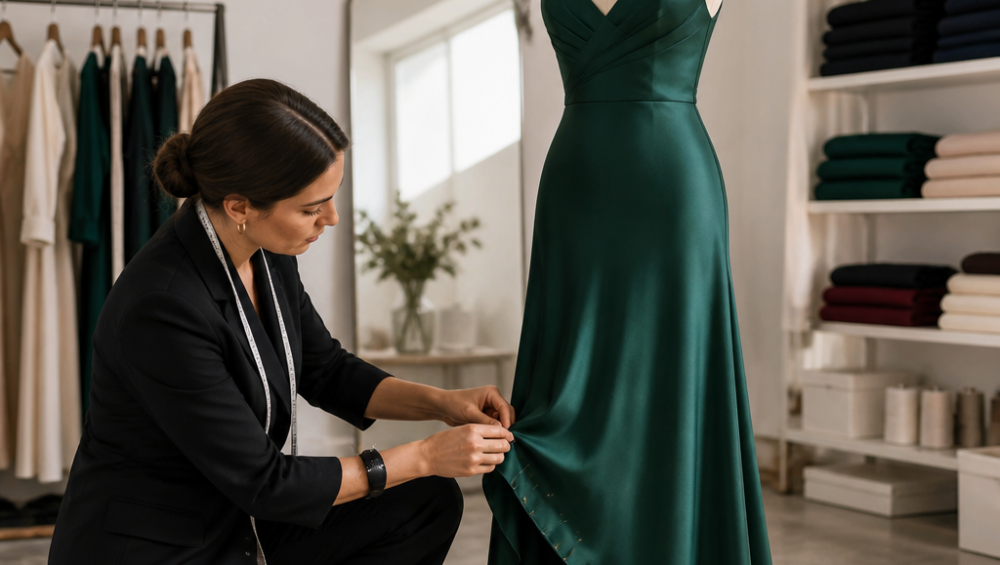
A wedding guest outfit usually looks fine on the hanger and then starts to look off in the first photos. The shoulder seam sits a little too far down, the hem catches your heel, or the jacket pulls when you raise a glass. Wedding guest outfit alterations are the difference between “I picked something nice” and “I looked like I planned this.” Before you RSVP yes and lock in your travel plans, check the fixes that matter most, because some take a day and others need a full fitting cycle.
Table of Contents
- Shoulders and Armholes Come First
- Hem Length and Shoe Height
- Waist, Bust, and Back Adjustments
- Suit Alterations for Wedding Guests
- Fabric and Lining Challenges
- Timeline, Rush Options, and Booking
- Frequently Asked Questions
- References
Shoulders and Armholes Come First
A bridal alterations guide from The Knot makes a point that carries over to wedding guest wear: fit problems are best handled during a fitting, and small changes like tightening straps can prevent problems you would otherwise only notice later. Shoulder seams are the hardest part of a garment to correct after the fact, so they belong at the top of your list. Check them before anything else.
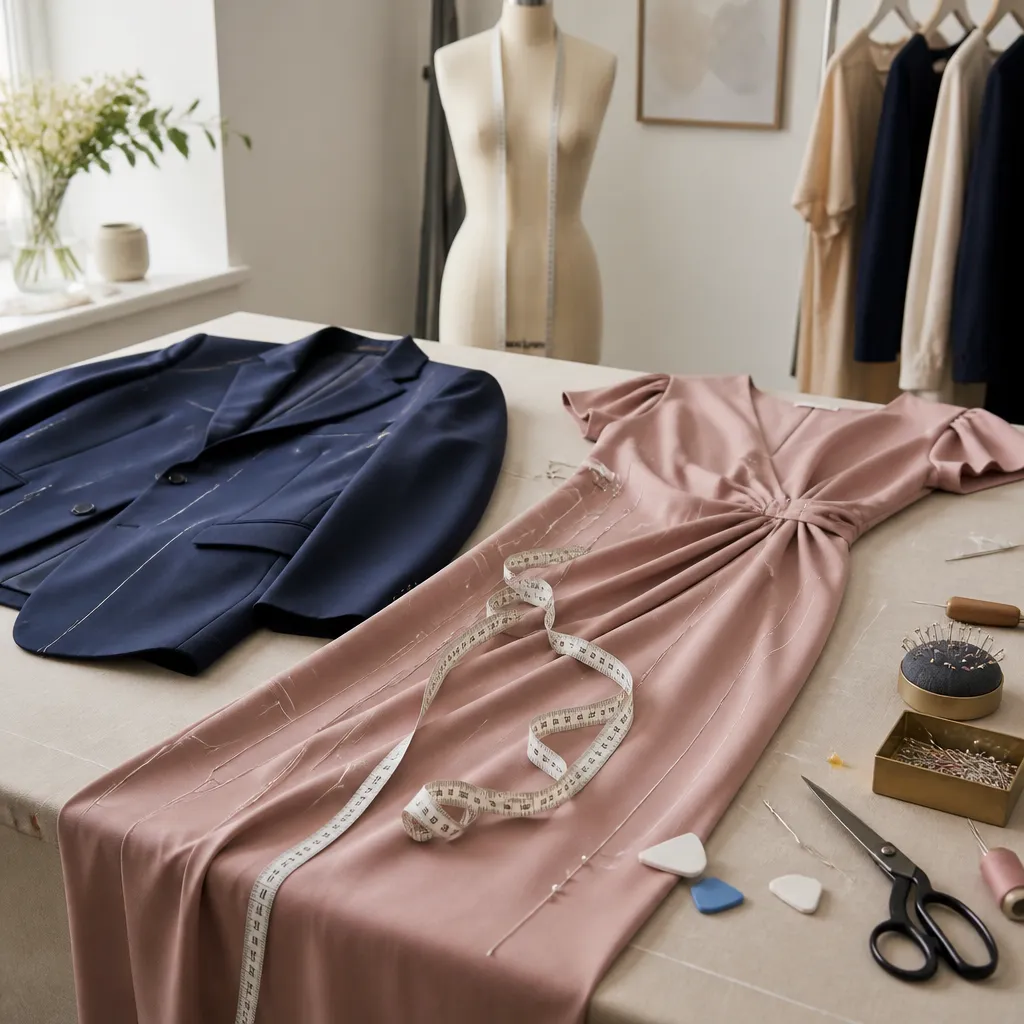
In practice, a seam that sits half an inch past your shoulder point makes everything below it hang wrong. Sleeves look longer than they should, the bodice pulls across the chest, and a fitted sheath starts to wrinkle at the back. A tailor can take in or reshape many shoulder seams, but a dress with a fixed bodice or a jacket with built-in padding has less room to move than most people expect.
Armholes That Pull or Gape
Armholes are the other half of the problem. A high or tight armhole restricts your arm and makes a sleeveless dress gape at the side. Lift both arms overhead, then reach forward as if you were hugging someone. If the fabric pulls across the back or the underarm lifts away from your body, the armhole needs work before the day.
Straps and Neckline Placement
Spaghetti straps, thin halter ties, and narrow shoulder straps need adjusting at the fitting, not after. Straps that look even when you stand can slip after an hour of dancing. Ask the tailor to check the strap length with the bra you plan to wear, because a different cup or strapless base changes the whole line.
Pro tip: Bring the exact bra or shapewear you will wear to the wedding. Strap length and neckline placement change with every undergarment, and a fitting done without them is only a guess.
Hem Length and Shoe Height
Hemming is the most common quick alteration, and our hems start at $14.89, but the right length depends on the shoes you choose. A hem that lands at the floor in flats can end up dragging on the ground once you wear three-inch heels. Hemming a dress without the shoes is the single most common reason guests end up stepping on their own hem during the ceremony.
Measure With the Shoes You Will Wear
Bring the actual shoes to the fitting, and stand on a hard floor rather than carpet. Carpet compresses and hides the true length. Ask the tailor to check the hem both standing and with a slight forward lean, which is the position you take when you step up stairs or walk across grass at an outdoor venue.
Why Layers and Slits Change the Math
Dresses with a slip, a chiffon overlay, or a side slit need a different approach than a single-layer hem. Each layer can be cut separately so the overlay floats slightly above the lining. A slit needs to be set so it opens when you walk but does not expose more leg than the dress was designed to show. Ask whether the hem will be done as a double-layer or a single line, because that changes the price and the time needed.
Pro tip: Ask for the hem to be measured in the shoes you will wear and confirm the height in inches on the ticket. A written measurement prevents the classic mistake of picking up a dress that was hemmed for flat shoes.
Waist, Bust, and Back Adjustments
Waist, bust, and back fixes are where a guest outfit goes from acceptable to tailored. These changes affect how the garment moves against your body, so they are harder to judge from a rack or a quick try-on. A dress that is too loose at the waist will bunch and shift all evening, and a bodice that does not fit at the bust will gape whenever you bend.
Taking In a Waist Without Changing the Line
A waist can usually be taken in from the side seams or the back seam, but the amount you can remove depends on how the dress is built. Lined bodices and dresses with boning have less flexibility than a simple crepe sheath. Ask the tailor to keep the waistline where the dress was designed to sit, because moving a seam even an inch can make a fitted dress look shapeless.
Bust Gaping and Dart Placement
Gaping at the bust is usually a dart problem rather than a size problem. If the dart sits too low or too high, the fabric will pull open when you lean forward. A tailor can move or reshape darts to bring the fabric back to your body, which often fixes the issue without changing the size of the garment. Test it by bending forward and looking down at the neckline in a mirror.
Back Closures and Zippers
Back zippers and button closures are often overlooked. A zipper that pulls, puckers, or sits too far from the spine will show every time you turn. Replacing a zipper is a more involved job than a hem, so ask about it at the first fitting. If the closure is hard to fasten alone, consider whether a different style would be a better choice for the wedding.
Suit Alterations for Wedding Guests
Suit alterations for wedding guests follow a clear order, and the most common mistake is starting with the trousers. The jacket sets the proportions of the entire outfit, so it should be fitted first. Trouser length comes last, after you have chosen the shoes, because the break depends on what you wear with them.
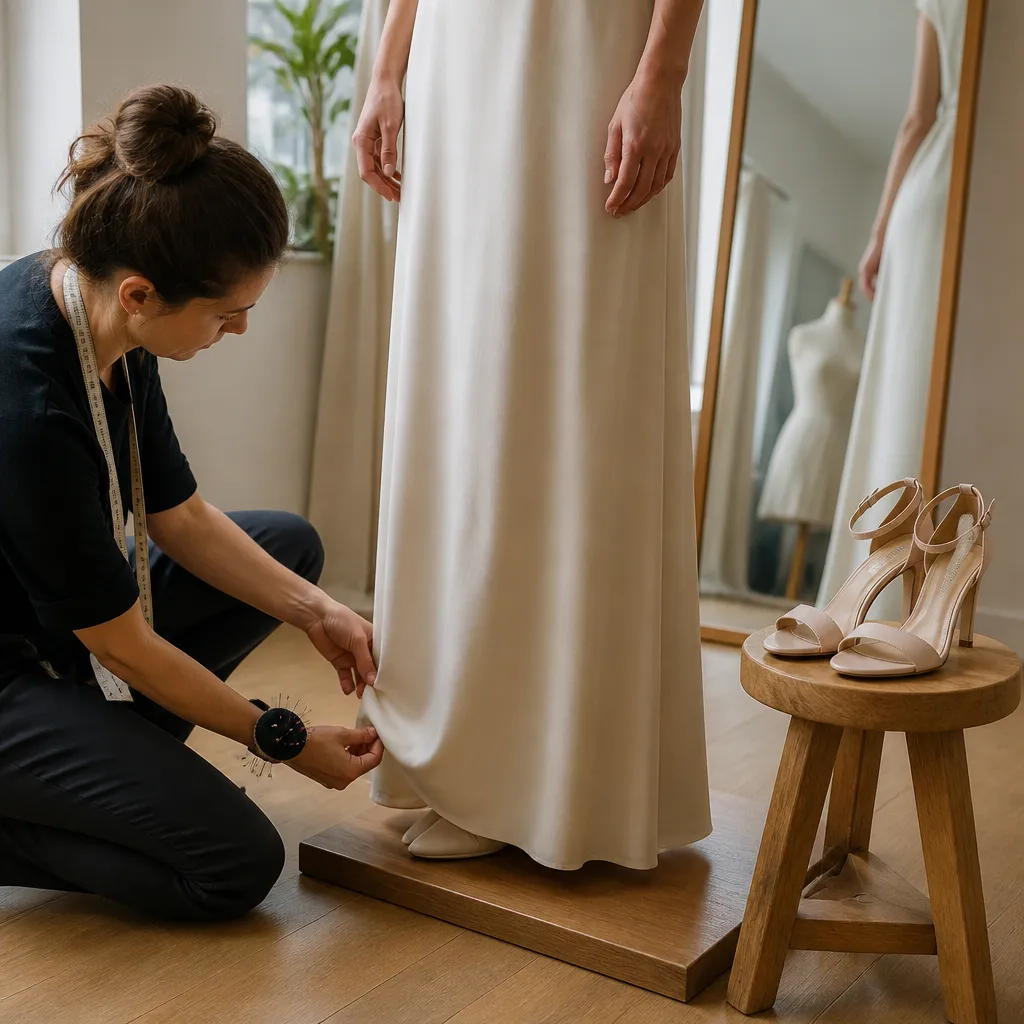
Suit alterations often look simple on paper but involve several decisions at once. A jacket that fits through the shoulders can still have sleeves that are too long, and fixing the sleeve length changes how the jacket hangs at the back. Ask the tailor to check the jacket with your shirt on, including the cuff of the shirt, because the shirt cuff should show a small amount below the jacket sleeve.
Jacket Sleeves and Shoulders First
Jacket sleeves should end at the base of your thumb when your arms are relaxed. Shoulder seams should sit at the edge of your shoulder bone with no divot or ripple below the collar. If the shoulder is too wide, a tailor can reduce it, but this is a larger job that adds time, so decide early whether the suit is worth the work.
Trouser Length and Taper
Trouser length is a matter of style as much as fit. A slight break, where the fabric just touches the shoe, suits most guests. A full break looks dated at many venues, while a cropped hem can be right for a daytime or outdoor event. Ask for the taper to match the leg you want, but make sure the knee and seat still move comfortably when you sit.
Matching the Suit to the Venue
A suit that fits well for a ballroom evening can look too formal for a barn or a beach ceremony, but the fit rules stay the same. Focus on the shoulders and length, then decide how much polish the outfit needs. A well-fitted suit in a simpler fabric often looks better than an expensive suit that pulls across the chest.
Fabric and Lining Challenges
Fabric decides how much work an alteration takes and how long it will need. A cotton dress can be hemmed in an afternoon, while a silk or lined garment can need several days of careful handling. Many people do not realize that the fabric, not the size of the change, determines the timeline.
Silk, Chiffon, and Slippery Fabrics
Silk, chiffon, and satin slip under the needle and shift on the table, which makes precise seams harder. Marks can be left behind on some fabrics, so tailors often test a small area before committing. Expect more time for these fabrics, and avoid pinning or heavily marking the garment yourself before it reaches a professional.
Lined Blazers and Lined Trousers
Lining is the hidden variable in any jacket or trouser alteration. Altering a lined blazer means taking the outer fabric and the lining through each change, and the two layers do not always move together. Seamstresses generally note that lined pieces like blazers and lined slacks take more time and skill than simple hems, so give them a longer window.
A blockquote sums up the point: the garment that looks perfect at the rack is only half finished until the fitting has been done in the shoes, the undergarments, and the movement you will actually use on the day.
A fit problem you can spot from across the room is a fit problem that will show up in every photo from the day.
Timeline, Rush Options, and Booking
Timing is the part of wedding guest outfit alterations that people underestimate most. A rushed fix can be done well, but only when the job is simple and the tailor has room in the schedule. Booking early gives you the flexibility to correct anything that does not fit at the first fitting.
Working Backward From the Date
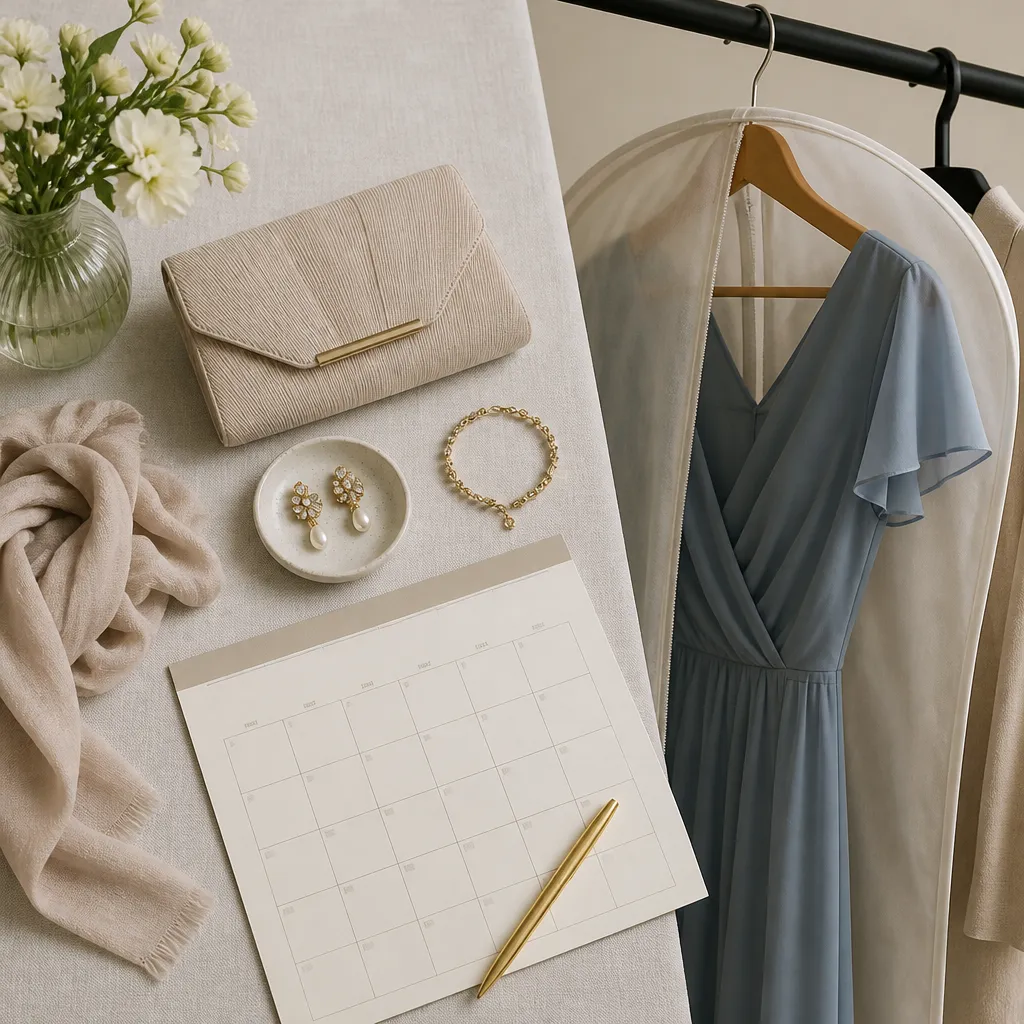
Start with the wedding date and count backward. Schedule the first fitting as soon as you have the outfit and shoes, then leave room for a second fitting and pickup. For lined jackets or delicate fabrics, plan at least a few weeks, because each stage can reveal a fit issue that needs another pass.
Pro tip: Do not wait until the week of the wedding to book the first appointment. A first fitting that reveals a shoulder problem needs time to fix, and a single missed day can turn a small job into a stressful one.
Same-Day and Rush Walk-Ins
Same-day and rush walk-in service exists for guests who are in a hurry, and it works well for simple hems and minor adjustments. Rush work is less suitable for structural changes that need multiple fittings. If your outfit needs a shoulder fix or a lined jacket taken in, ask about the schedule before you assume it can be done in a day.
Frequently Asked Questions
How early should I book wedding guest outfit alterations?
Book the first fitting as soon as you have the outfit and the shoes you plan to wear. For simple hems, a short lead time is usually enough, but for lined jackets, delicate fabrics, or outfits with several changes, plan for a few weeks so you have room for a second fitting.
Can a tailor fix a suit I already bought online?
Yes, most tailors can adjust a suit bought online, but the jacket is the limit. Sleeve length and waist can usually be changed, while shoulder width is harder to correct. Ask for a fit check before you commit to a larger job.
Are dress alterations worth it for a guest dress bought off the rack?
Usually, yes. Off-the-rack dresses are cut for an average fit, and the shoulders, hem, and bust are the areas most likely to need a change. A few targeted fixes often make a moderately priced dress look custom.
How much do hems cost at Stitch It?
Hems at Stitch It start at $14.89, and pricing is transparent and upfront before any work begins. More complex changes such as lined garments or multi-layer dresses will be quoted separately after a fitting.
What should I bring to a wedding guest fitting?
Bring the shoes you plan to wear, the bra or shapewear you will wear under the garment, and any jewelry or belt that affects the fit. For suits, bring the shirt you will wear, because the shirt cuff and collar affect the jacket length and fit.
Which alteration surprised you most the first time you wore a wedding guest outfit, and how did you catch it before the day?