Most people have worn pants that are too long. A few probably still are, right now, shuffling along and dragging fabric across the floor. Pant hemming is one of the most common clothing alterations out there, but it is also one of the most frequently botched, either by a rushed DIY attempt at home or by a shop that does not take the time to measure properly before cutting. This guide covers everything you need to know: how to measure correctly, which hem type fits which pant, what to expect from a professional, and the mistakes that cause people to ruin a perfectly good pair of trousers before they ever got started.
Table of Contents
- Quick Takeaways
- Why the Right Hem Length Matters More Than You Think
- How to Measure Your Inseam Correctly
- Types of Pant Hems and When to Use Each
- DIY vs. Professional Hemming: An Honest Comparison
- What Happens During a Professional Pant Alteration
- Common Pant Hemming Mistakes and How to Avoid Them
- Frequently Asked Questions
- References
Quick Takeaways
| Key Insight | Explanation |
|---|---|
| Always measure while wearing the shoes you plan to wear | Heel height directly changes where your hem should fall. Measuring barefoot and then wearing dress shoes will throw your length off by an inch or more. |
| The hem style must match the pant fabric and occasion | A blind hem suits dress pants and formal trousers. A visible topstitched hem belongs on jeans and casual wear. Mixing these up looks unprofessional. |
| Never cut fabric before confirming the final pinned length | Cutting is permanent. Pin, try on, walk around, then cut. Skipping the try-on step is how people end up with pants that are too short. |
| Original hems on jeans are worth preserving | The original hem on quality denim has fading and wear built into it. A tailor who uses a chain stitch or hem-preserving method protects that look. |
| Pant hemming starting from $14.89 at Stitch It | Professional hemming at Stitch It is affordable, fast, and backed by a 30-Day Fit Guarantee, making it a practical first choice before attempting DIY. |
| Hem allowance must be factored in before cutting | A standard hem allowance is typically 1 to 1.5 inches for dress pants. If you cut to the finished length, there is nothing left to fold, and the hem will unravel. |
| Formal and bridal pants require a specialist, not a quick fix | Lined trousers, wide-leg formalwear, and bridal separates need a professional who understands how linings interact with the outer fabric when the hem is altered. |
Why the Right Hem Length Matters More Than You Think
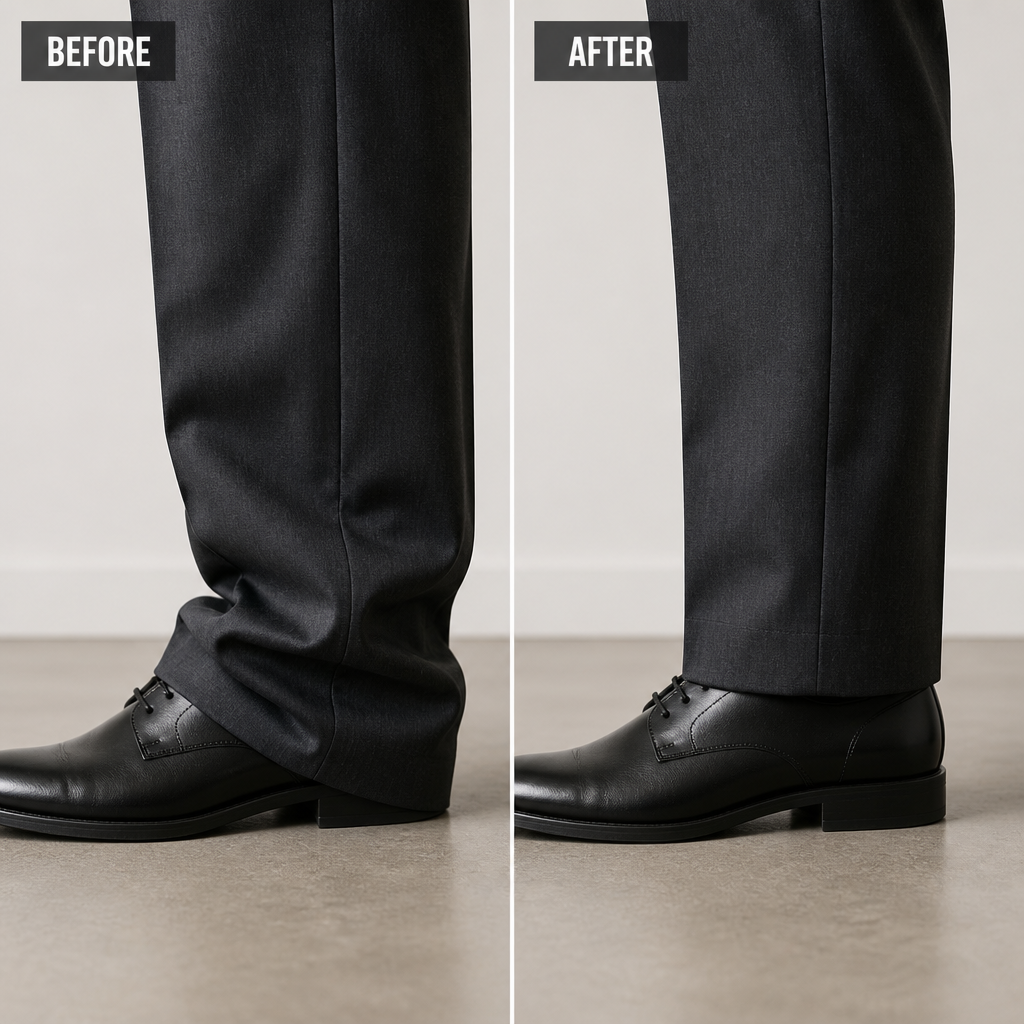
A badly hemmed pair of pants does not just look sloppy. It changes how the entire outfit reads. Dress trousers that pool at the ankle drag the eye downward and make the leg look shorter. Pants that are hemmed too short expose too much sock and throw off the silhouette of a whole suit. The hem is not a finishing detail. It is a structural part of how the garment fits and functions.
This is especially true for formal occasions. A wedding, a job interview, or a graduation ceremony is not the moment to discover that your trousers are half an inch too long. Getting the hem right in advance is one of the few alterations that genuinely changes how put-together you look, and it costs far less than most people expect.
Pant hemming also has a real effect on how you move. Pants that are the correct length let you walk, climb stairs, and sit down without the fabric bunching or catching under your heel. That comfort and ease of movement is worth the small investment in getting it done properly.
A well-hemmed pant does not announce itself. It simply makes everything else about the outfit look intentional. That invisibility is the whole point.
How to Measure Your Inseam Correctly
The inseam is the distance from the crotch seam to the bottom of the pant leg. Getting this measurement right is the single most important step in pant hemming. A measurement taken carelessly will result in a hem that is off, regardless of how skillfully it is sewn afterward.
Measuring Yourself or Being Measured by Someone Else
Stand straight and wear the shoes you plan to pair with the pants. Have someone measure from your crotch down to where you want the hem to fall at your ankle. Do not substitute a sock-height measurement for a shoe measurement. The difference between flat shoes and a dress heel can easily be an inch to an inch and a half.
If no one is available to measure you, the most reliable alternative is to use a pair of pants that already fit you perfectly. Lay them flat on a surface, fold one leg over the other, and measure from the crotch seam to the bottom of the hem. That number becomes your target inseam length for the pair being altered.
The Break: How Much Fabric Should Touch Your Shoe
The break refers to the slight fold of fabric that forms where the trouser meets the top of the shoe. Different breaks suit different contexts.
- No break: The hem falls exactly at the top of the shoe with no fabric fold. Clean and modern, suits slim-fit trousers and tailored looks.
- Slight break (half break): A small fold at the front of the shoe. The most versatile choice for dress pants and business wear.
- Full break: A more pronounced fold. Traditional for classic suiting, but can look heavy on slimmer silhouettes.
When you go in for a professional hem, tell the tailor which break you prefer. If you are unsure, a slight break works for almost every situation.
Pro tip: When going to get your pants hemmed professionally, wear the shoes you intend to pair with those pants. Do not wear whatever happens to be on your feet that day. The hem is set for the shoes you are wearing at the fitting, and changing footwear afterward can make the length feel wrong.
Types of Pant Hems and When to Use Each
Not every hem is the same, and using the wrong type on the wrong pant is one of the most common errors in alteration work. The construction of the hem must match the fabric weight, the pant style, and the occasion.
Blind Hem
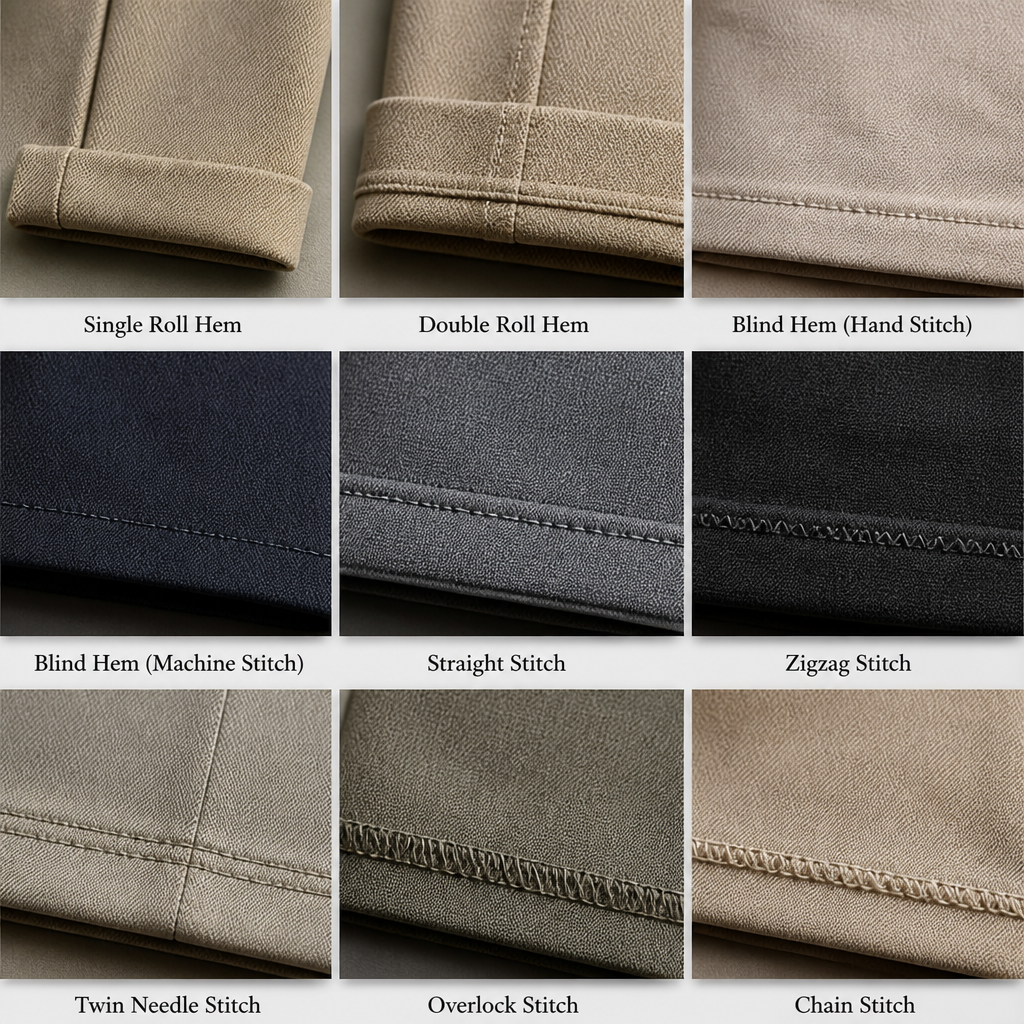
A blind hem is stitched so that almost no thread shows on the outside of the pant leg. The stitches catch only a thread or two of the outer fabric, making the hem nearly invisible from the right side. This is the standard for dress pants, tailored trousers, and any formal or office wear where a visible stitch line would look unfinished. Hand-finished blind hems are the mark of quality tailoring and give the hem a softer hang than machine-finished versions.
Topstitched Hem
A topstitched hem uses visible parallel stitching along the bottom edge of the pant. It is practical, durable, and entirely appropriate for jeans, chinos, cargo pants, and casual wear. The visible stitching is not a flaw. On denim especially, it is a deliberate design feature.
Cuffed Hem
A cuffed hem folds the fabric up at the bottom of the pant to create a visible rolled band. It adds a slightly more formal, traditional look to dress trousers and is common in classic suiting. Cuffs add visual weight to the hem, which works well on fuller-cut trousers but can overwhelm a slim fit.
Chain Stitch Hem (Jeans)
Original selvedge denim and many premium jeans use a chain stitch on the hem. When pants are bought too long and need shortening, preserving the original hem is often preferred because it retains the unique fading, texture, and worn-in character at the hem line. A tailor experienced in denim work can shorten the pants from the waist or use a hem-preservation technique to keep the original stitching intact. This is a niche skill but an important one for anyone who cares about the look of their denim.
DIY vs. Professional Hemming: An Honest Comparison
DIY hemming is genuinely achievable for casual pants, provided you are comfortable with a sewing machine or needle and thread. But the gap between a clean professional hem and a home attempt widens considerably as the fabric gets finer and the occasion gets more formal. Here is an honest side-by-side comparison.
| Factor | DIY at Home | Professional Tailor (e.g., Stitch It) |
|---|---|---|
| Cost | Low upfront; cost of thread and hem tape | Starting from $14.89 at Stitch It; transparent pricing |
| Finish quality | Acceptable for casual pants; inconsistent on dress pants | Clean, even, and matched to the fabric type |
| Time | 30 to 60 minutes minimum; longer for lined pants | Same-day or rush service available for walk-ins |
| Risk of error | High; irreversible cuts are common | Low; 30-Day Fit Guarantee covers mistakes |
| Lined or formal pants | Difficult; linings require separate handling | Handled correctly as standard |
| Bridal or formalwear | Not recommended | Specialist service available |
The honest answer for most people: DIY hemming is fine for a pair of casual cotton trousers or lounge pants. For dress trousers, suits, bridal wear, or any garment you cannot afford to ruin, a professional is the right call. The cost difference between the two options is small, and the risk difference is not.
Pro tip: If you are searching for pants alteration near me or looking up hem pants near me, Stitch It locations across Canada accept walk-in customers with no appointment needed. Bring the shoes you plan to wear with the pants to get the most accurate hem length pinned on the spot.
What Happens During a Professional Pant Alteration
A lot of people drop their pants off at an alteration shop without knowing what is actually happening to them. Understanding the process helps you communicate clearly with the tailor and catch any issues before they become permanent.
Step 1: The Fitting
You put the pants on with the correct shoes. The tailor pins the hem at your preferred break length, checking both legs for evenness. This step is where accurate measurement happens. A good tailor will have you walk a few steps to confirm the pinned length moves correctly and does not bunch or drag.
Step 2: Marking and Cutting
The tailor marks the new hem line, unpins, and then measures the hem allowance above that line. For dress pants, this is typically around 1 to 1.5 inches of allowance. The excess fabric is cut away. The original hem stitching is removed if needed.
Step 3: Pressing and Sewing
The new hem is folded up, pressed with an iron to set the crease, and then sewn. The stitch type depends on the pant: blind hem for dress trousers, topstitch for casual wear. Pressing the hem after sewing gives a clean, flat finish that hand-sewing alone cannot achieve.
Step 4: Quality Check
A professional alteration shop checks the finished hem for evenness across both legs and confirms the stitching is secure. At Stitch It, every alteration is backed by a 30-Day Fit Guarantee. If something is not right, it gets corrected. That accountability is something a home alteration cannot offer.
For formalwear alterations and bridal alterations, there are additional steps. Lined pants require the lining to be hemmed separately at a slightly shorter length than the outer fabric, so it does not peek below the hem. Failing to handle the lining correctly is one of the most visible signs of a poorly executed alteration.
Common Pant Hemming Mistakes and How to Avoid Them
Most hemming disasters are preventable. The same errors come up repeatedly, whether someone is hemming at home or rushing through a poorly managed alteration appointment.
Measuring Barefoot When You Plan to Wear Heels
This is the most common measurement mistake. Heel height lifts your body relative to the floor and changes where the hem falls. Always bring the shoes to the fitting. This applies equally to men with dress shoes versus casual sneakers. A two-centimetre height difference in the shoe sole is enough to make a hemmed trouser look too short or too long.
Cutting Without Leaving Hem Allowance
If you cut the pant to the finished length and then try to fold up a hem, there is nothing left to fold. The fabric will fray, and the hem cannot be sewn properly. The correct approach is to mark the finished length, then cut above that line to leave allowance for the fold.
Not Pressing the Hem Before and After Sewing
A hem that has not been pressed looks lumpy and uneven, even if the stitching is technically correct. Pressing with an iron sets the crease and makes the folded edge lie flat. This step is not optional. It is what separates a clean hem from one that looks like a home repair.
Using the Wrong Thread Colour
Thread that does not match the fabric colour shows on both the inside and outside of the hem. For a blind hem on dress pants, thread should match as closely as possible. On a topstitched hem on jeans, matching the original thread colour preserves the garment’s intended look.
Hemming Formal Pants Without Handling the Lining
Lined dress trousers and formal pants have an inner lining that must be addressed separately when the hem is altered. If the lining is ignored, it either bunches inside the leg or hangs below the outer hem. Both outcomes look unprofessional and can cause discomfort when wearing the pants. This is one of the clearest arguments for taking lined trousers to a professional rather than attempting it at home.
Pro tip: If your pants have an existing hem you love, especially on premium denim or vintage trousers, ask the tailor specifically about hem-preservation techniques before they begin. Not every shop offers this by default, but Stitch It’s experienced staff can advise on the best approach for your specific garment. Bring it up at the fitting stage, not after cutting has already happened.
Frequently Asked Questions
How much does it cost to get pants hemmed professionally?
At Stitch It, pant hemming starts from $14.89. Pricing varies depending on the pant type, fabric, and whether the pants are lined or require a cuffed hem. Transparent, upfront pricing means you know the cost before any work begins, with no surprise charges at pickup.
How long does a professional pants alteration take?
Turnaround time depends on the shop and the service requested. Stitch It offers same-day and rush services for walk-in customers at many locations, making it practical even when you need pants ready quickly. Standard alterations are typically completed within a short window, and the shop will give you an accurate estimate at drop-off.
Can I hem pants with a sewing machine at home?
Yes, for casual pants on a basic topstitched hem, a sewing machine at home works fine provided you measure carefully, leave the right hem allowance, and press the fold before sewing. For dress pants requiring a blind hem, lined trousers, or any formal or bridal garment, the risk of an uneven or visible stitch line is high enough that professional alteration is strongly recommended.
What is the difference between a blind hem and a regular hem?
A blind hem is stitched so that the thread is nearly invisible from the right side of the fabric, catching only a thread or two of the outer layer. It is the standard finish for dress pants, tailored trousers, and formal wear. A regular topstitched hem has visible parallel stitching and is correct for jeans, casual pants, and sportswear. Using a blind hem on jeans would look out of place, just as a topstitched hem on dress trousers would look unfinished.
How do I know how much to hem off my pants?
The best approach is to put the pants on while wearing your intended shoes, then have someone pin the hem at your preferred break length. If you are measuring yourself, compare against a pair of pants that already fit you perfectly by measuring the inseam from crotch seam to hem. When going to a professional tailor, this measurement happens at the fitting, so simply bring the right shoes and communicate the break style you prefer.
What is a “break” and which one should I choose?
The break refers to the fold or crease that forms where the trouser leg meets the top of the shoe. No break means the hem sits at the very top of the shoe with no fold, giving a clean and modern look. A slight or half break leaves a small crease at the front and is the most versatile choice for most dress pants. A full break creates a more pronounced fold and suits traditional, full-cut suits. For most people, a slight break is the safest and most flattering option across different shoe and trouser styles.
Can Stitch It hem formal pants and bridal wear?
Yes. Stitch It specialises in a wide range of alteration types including formalwear, bridal, uniform, and everyday clothing. Formal and bridal pants often involve lining, specialty fabrics, and precise length requirements, all of which require professional handling. The 30-Day Fit Guarantee applies to these services, so if the hem is not right, the correction is covered.
Have you recently had pants hemmed and wish you had known something beforehand? Share your experience in the comments, because other readers are making that same appointment right now.
References
- Guide to the different types of hems used in garment construction and tailoring
- Step-by-step breakdown of blind hems and stitched hems for different pant types
- Overview of professional pants hemming costs and what factors affect the price
- Practical instructions for measuring and sewing a pants hem at home