You pull a skirt from the closet, turn in front of the mirror, and notice the problem right away: one side hangs a full inch lower than the other. An uneven hem fix is one of the most common requests we see at the counter, and it is rarely a sign that the garment is ruined. In most cases a tailor can correct the line, but the result depends on what caused the drop, how much fabric remains in the hem allowance, and how the piece is constructed. This guide covers the causes, the repairs that work for skirts and dresses, and what a realistic outcome looks like before you hand the garment over.
Table of Contents
- Quick Takeaways
- Why Hemlines Go Uneven in the First Place
- Can a Tailor Fix an Uneven Hem?
- How a Tailor Marks an Even Hem
- Hem Fixes by Garment Type
- Comparing Hem Repair Methods
- What to Expect on Cost, Timing, and Results
- Before You Drop Off a Garment
- Frequently Asked Questions
- References
Quick Takeaways
| Key Insight | Explanation |
|---|---|
| Most uneven hems start with a marking error | The hem was measured while the garment hung unevenly or on a body that was not standing square, so the fault is in the fitting, not the fabric. |
| Check the hem allowance before asking for changes | A hem that has been let down before may have little fabric left, and a tailor can only lengthen a hem as far as the original allowance permits. |
| Measure from the floor, not from the waist | A garment is not measured from the bottom up the way a hem is usually measured, so the reference point has to be set deliberately on the piece. |
| Lined and pleated pieces need extra steps | The lining and outer fabric must be adjusted together, and each pleat has to be re-pressed, or the line will look crooked again within a few wears. |
| Wear the shoes you plan to wear to the fitting | Heel height changes where a hem falls, so a mark made in flats can look wrong with heels, and the reverse is also true. |
| Expect a re-hem, not a rebuild | Most uneven hem fixes are a re-marking and re-stitch, which is a routine job, but a badly cut hem may need trimming that cannot be avoided. |
Why Hemlines Go Uneven in the First Place
Most uneven hems start before the needle touches the fabric. The original hem was marked or pinned under conditions that did not match how the garment hangs on a body, and the error only shows up after the piece has been worn. The three causes below account for most of the uneven hems we see come through the door.
Hanging Garments and Uneven Marking
When a hem is measured while the garment is draped over a chair or lying flat on a table, the fabric pulls in different directions. A skirt pinned in one position can drop on the side where the fabric was stretched by a pocket, a slit, or a heavy seam. Measure the same piece in two orientations and you may get two different answers.
In practice, the fix starts by identifying which side was stretched, not which side looks lower. The low side is often the one that was pulled taut during pinning, so lifting it without understanding why it dropped usually creates a new problem on the next wear.
Body Asymmetry and Posture
Few people stand perfectly level. One hip often sits higher, one shoulder carries a bag, and one knee bends more when standing at a counter. A hem marked on a client standing square will look different once that client walks, sits, or leans, and this is why a fitting that ignores posture produces a line that looks crooked the moment it is worn.
Fabric Stretch and Bias Cut
Bias-cut skirts and fluid dresses are the biggest offenders. The grain of the fabric runs diagonally, so the hem stretches and relaxes as the wearer moves. A hem that is pinned flat on a table can look fine on the hanger and then drop after a few wears, and no amount of careful pinning fully prevents this on very soft silks.
Can a Tailor Fix an Uneven Hem?
Yes, in most cases. A tailor can take up the low side, let down the high side, or re-mark the entire circumference and re-stitch the hem to a new line. The real question is whether the garment has enough fabric and structure to support the correction without leaving a visible mark.
The hem is the easiest place to hide a mistake and the hardest place to correct one cleanly, because every fix uses up fabric that was meant to be there.
When a Tailor Can Fix It Cleanly
Clean results are most likely when the hem has a usable allowance, the fabric is stable such as cotton, wool, or a structured crepe, and the garment has a simple finish like a single-fold or narrow rolled hem. Under those conditions, a tailor can lift one side by a modest amount and re-stitch with an invisible hand stitch. A small correction on a stable fabric is usually invisible.
A simple skirt hem is a routine job at the bench. The tailor will press the new line, check it from the front, side, and back, and only then trim the excess fabric. That order matters, because trimming before the line is confirmed is how a small problem becomes a remake.
When the Hem Has No Room Left
Some hems are already at the end of their useful length. If a garment has been let down before, the old crease line may still show, and the fabric may be faded or scorched where the fold sat. Alteration professionals are limited by the allowances the original manufacturer left in the garment, so a hem can only be lengthened as far as the seam allowance permits. If that room is gone, the honest answer is that the hem cannot be dropped further without a visible line.
Why Some Hems Need Re-Cutting
Occasionally a hem has been cut so unevenly that no amount of re-stitching will produce a level line. When the variance is larger than the allowance can absorb, the correct answer is a trim, not a stitch. A good tailor will tell you this before cutting, and will not spring a surprise charge on you after the scissors come out.
How a Tailor Marks an Even Hem
The marking step decides the outcome more than the sewing does. A precise line set at the right height on the right body produces a hem that holds, while a rushed mark produces a hem that looks crooked from the first wear. The steps below are the sequence we follow before any fabric is cut.
Wearing the Right Shoes for the Fitting
Ask the client to bring the shoes they will wear with the garment. A two-inch heel changes where a hem falls compared with flats, and that difference can be enough to make a correct mark look wrong. Stand the client on a level surface and confirm that their posture is relaxed and normal, not pulled up for the fitting.
Measuring From the Floor, Not From the Waist
A hem is measured from the floor up to the desired line, using a hem marker or a level straightedge. The common mistake is to measure from the waist or a seam and assume the result will be even. Published hemming guides make the same point: a garment is not measured from the bottom up the way a hem is usually measured, so the reference has to be set deliberately on the piece itself.
Pro tip: Ask for the hem to be checked while the client sits, walks, and stands on the same shoes. A line that looks even at rest may tilt when the garment moves, and a three-way check catches that before any stitching starts.
Checking Symmetry in the Mirror and on the Body
Once the mark is set, we check symmetry from at least three angles: front, side, and back. Look at the low point of the hem in each view. If the low point moves when the client turns, the mark needs to be reset before pinning, because the problem lies in the fitting, not the sewing.
Hem Fixes by Garment Type
The right fix depends heavily on what the hem sits on. A straight pencil skirt, a lined A-line dress, and a pleated trouser each need a different approach, and mixing them up is how a simple job turns into a remake. The sections below cover the three types we handle most often.
Straight and A-Line Skirts
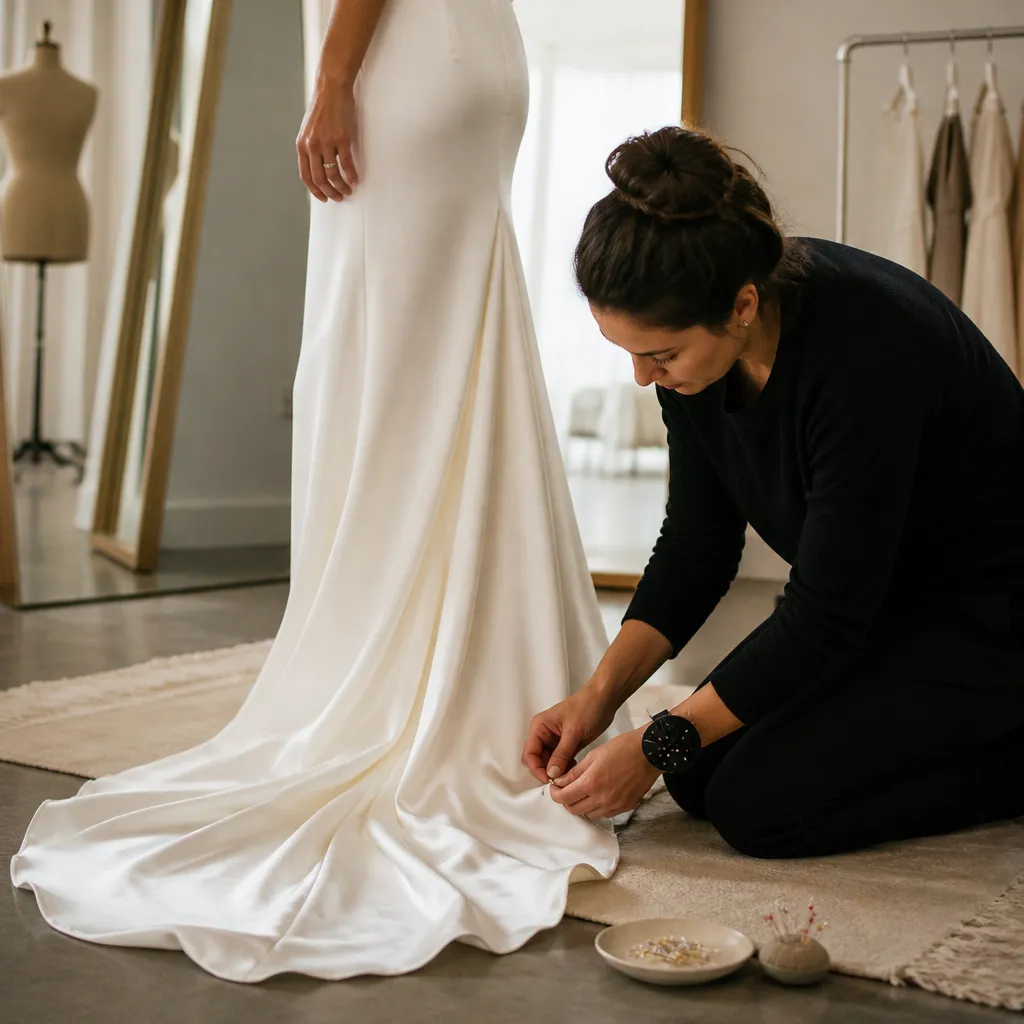
Most skirts with a single-fold hem can be corrected by lifting the low side and re-stitching a new line. If the skirt has a slit or a vent, the tailor has to work around that point, so the hem will not be perfectly symmetrical right at the opening. Ask how the vent will be finished before the work starts.
Dresses With Linings or Pleats
Lined dresses are harder because the lining and outer fabric must be adjusted together. A lining cut shorter than the shell will show above the hem, and a lining cut too long will pucker. Pleated hems follow the same logic: each pleat has to be re-pressed so the fold lines up, or the pleats will fall at different heights.
Trousers and Cuffs
Trouser hems are less about a single curve and more about the break. A pair of trousers that is even at the back can still look uneven at the front because the fabric falls differently over the foot. Cuffed trousers need the cuff folded to the same depth on both legs, and a tailor should check both legs while the client wears the same pair of shoes before cutting.
Comparing Hem Repair Methods
Three repair approaches cover most uneven hem fixes. They differ in how much fabric they use, how visible the change is, and how long they take. The table below compares them so you can see which one suits your garment before you ask for the work.
| Repair Method | Best For | Main Tradeoff |
|---|---|---|
| Full re-hem on a new marked line | Even length all the way around, especially on skirts and dresses | Uses up hem allowance, so the garment may not go any lower afterward |
| Partial lift at the low side or seam | Small height differences that sit on one side or one seam | Can distort the line if the lift is pushed too far |
| Reshaped hem with a new finish or facing | Fabrics where the original hem line must stay as is, or where the old crease is visible | More labor and usually a higher price than a simple re-stitch |
Choosing Between the Three Methods
For most skirts, a full re-hem is the right answer because it resets the line for the whole garment. Partial lifts make sense when one side is off by a small amount and the rest of the hem is already correct. A reshaped finish is worth the extra cost when the garment is delicate or when the hem is visible on a formal piece.
A tailor who recommends one method without looking at the hem is guessing. Ask to see the garment on you, and ask why the method was chosen over the alternatives.
Where Each Method Goes Wrong
The partial lift goes wrong when the tailor pushes it too far, creating a bump where the lifted section meets the rest of the hem. The full re-hem goes wrong when the allowance has already been used up. A reshaped finish goes wrong when the new facing is wider than the old one and shows on the outside of the garment.
What to Expect on Cost, Timing, and Results
Expectations matter as much as stitching. At our shop, hems start from $14.89, and the final price depends on the garment, the fabric, and how much work the line requires. Walk-ins can ask about same-day and rush options, though availability changes with the season, and the weeks before the winter holidays are usually our busiest period for formalwear.
Pricing for a Standard Hem
A standard hem on a straight skirt is the simplest job and sits near the starting price. Lined dresses, pleated hems, and garments that need a reshaped finish cost more because they take more bench time. Ask for a quote that names the garment and the method, so you can compare it with the original price of the piece.
Turnaround: Same Day Versus Rush
Same-day service works when the hem is a simple re-stitch and the tailor has the time. Rush service is useful for an event, but it does not change the need for a correct mark. A rushed mark produces a crooked hem that has to be redone, which costs you more time than waiting a day would have.
What a Good Result Looks Like
A good result is a hem that looks even in the mirror, when the garment moves, and when the wearer sits and walks. Expect small variations to be reduced rather than erased, especially on bias-cut or heavily worn garments. Our 30-Day Fit Guarantee gives you a window to come back if something has shifted after the first few wears.
Before You Drop Off a Garment
A few minutes of preparation prevents most repeat visits. Bring the garment, the shoes, and any notes about the length you want. The steps below are the ones we would take ourselves before handing over a piece.
Note the Length You Want and Why
Tell the tailor whether you want the hem exactly where it was or slightly shorter. A shorter hem may need the full allowance, which can change whether a fix is possible at all. Knowing your target before the fitting saves a second appointment.
Check the Inside of the Hem First
Look at the hem from the inside. If you see a faded crease, a fused interfacing edge, or a serged finish that is coming loose, mention it when you drop the garment off. These details decide whether the hem can be let down, and they show the tailor what the original maker intended.
Pro tip: Wear the same undergarments and shapewear to the fitting that you plan to wear with the finished piece. Slips, padding, and boots can shift a hem by enough to change where the tailor marks it.
Ask How the Fit Guarantee Applies
Ask how the 30-Day Fit Guarantee applies to hems. Knowing the window and what counts as a fit issue helps you decide whether to come back after a few wears. Keep your receipt and note how the garment was worn at the fitting, since that is the reference point for any follow-up.
Frequently Asked Questions
Can a tailor fix an uneven hem on a lined dress?
Usually yes, but the lining and outer fabric have to be adjusted together. If the lining is cut differently from the shell, it will show above the hem, so ask the tailor to check both layers before stitching.
How much can a hem be let down?
Only as far as the original fabric allows. Alteration professionals are limited by the allowances the original manufacturer left in the garment, so a hem that has already been let down several times may have no room left.
Is a full re-hem always better than a partial lift?
No. A partial lift is the better choice when only one side is off by a small amount and the rest of the hem is correct, because it keeps more of the original length and uses less fabric.
Why does my hem look fine at home but uneven when I wear it?
The mark was probably made on a standing body or with shoes that differ from the ones you wear. Movement, posture, and footwear all change where a hem falls, so check the garment in the shoes you plan to wear.
How long does an uneven hem fix take?
A simple skirt hem can often be done the same day if the tailor is not busy. Lined, pleated, or reshaped hems take longer because they need more bench time and careful pressing.
What should I do if the hem still looks uneven after the fix?
Bring the garment back soon and show the tailor exactly how it hangs and when the line looks off. A good shop will check the mark against your posture and footwear before deciding whether a further adjustment is needed.
Tell us which garment you had re-hemmed and whether the fix held up after a few wears, since your experience helps other readers know what to ask for.
We would love your feedback and any insights you would share with others. What perspective would you add?